Anthropic's $16.8B Quarter: AI Unit Economics for Founders
Anthropic reportedly pulled in $16.8 billion in a single quarter. Forget the headline. This breakdown of AI unit economics shows what that number means for what you pay per API call, how you price your product, and which models you bet on.
Quick answer: Anthropic's reported $16.8B Q3 shows AI demand still accelerating and lab economics improving, giving big labs room to compete on price. For your startup, the discipline is simple: track cost per AI task, keep your product portable across models, avoid single-vendor lock-in, and price on value delivered, since token prices keep falling.
Key numbers at a glance
- $16.8B reported Q3 2026 revenue, up 44.8% from $11.6B in Q2.
- ~$6.49B raised across 19 disclosed AI financings in a single October week.
- $1.6B+ raised by four AI agent companies (TypeSafe AI, Manus, Arena, Nous) in that same week.
- $7,500 in Claude products and credits Anthropic now offers accepted founders.
- Nov 9 is the earliest rumored IPO marketing window, or after the US midterms.
- $0 is what model loyalty is worth when prices keep falling. Portability is the moat.
- $67 billion annualized run rate implied by the $16.8B Q3 quarter
- 2 cents median cost per task, against 40 cents at the 95th percentile when agent loops run away
- $2 billion raised by Axiom Solutions in the same week for the power and cooling backbone of AI data centers, beside $475 million into fault tolerant quantum hardware, which shows where the infrastructure money is going while labs fight on price.
- $10,000 a month is the inference bill below which the guide says do not self host, with $10,000 to $50,000 as the benchmark seriously zone, which turns a philosophy debate into a bill threshold.
Last reviewed: October 2026.
| Fact | Detail |
|---|---|
| Reported Q3 revenue | ~$16.8 billion (unaudited, via Oct 14 investor event) |
| Q2 revenue | ~$11.6 billion (44.8% quarter-over-quarter growth) |
| Possible IPO marketing | As early as the week of November 9, or after US midterms |
| AI infra financings (Oct 5-12) | ~$6.49 billion across 19 disclosed rounds |
| AI agents raised (same week) | $1.6B+ across TypeSafe AI, Manus, Arena, Nous Research |
| Anthropic founder package | Up to $7,500 in Claude products + API credits |
Relevant ads will appear here once AdSense is connected.
On October 14, at an investor event, Anthropic reportedly shared a number that made the whole startup world sit up: $16.8 billion in revenue for Q3 2026, up from $11.6 billion in Q2. That is 44.8% quarter-over-quarter growth, at a scale where growth like that is not supposed to happen. Reuters, the Financial Times, the New York Times, and CNBC all carried it within a day.
Here is the thing: you are not an Anthropic investor, so the headline is not the point. The point is what a number that big tells you about the market you are building in. It tells you demand for AI is still accelerating. It tells you the economics of the biggest AI labs may be turning favorable, which changes how they will price and what they will prioritize. And it tells you that if your startup's AI costs are a mystery to you right now, that mystery is about to get expensive.
This is a founder's translation of the $16.8B quarter: what it signals, the one metric to track, the multi-model playbook from TechCrunch Disrupt, the build-vs-buy math, and five moves to make this quarter.
What Just Happened: The $16.8B Quarter
Let us put the number in context. $16.8 billion in one quarter means Anthropic is on a roughly $67 billion annualized run rate, growing 45% quarter over quarter. For comparison, that quarterly figure is larger than the entire annual revenue of most public software companies. And it is unaudited, shared at an investor event, which means the real story will only be confirmed if IPO filings go public.
Reports also mention IPO marketing possibly starting the week of November 9, or later after the US midterms. Whether that timing holds or slips, the direction is clear: the largest AI labs are preparing for public markets, and public markets demand a story about margins, not just growth.

Why should a founder with ten customers care? Because your vendor's economics become your economics. When a lab is growing 45% a quarter, it is investing in capacity, which is good for you. When it prepares for an IPO, pricing, contract terms, and product priorities can shift, which is why flexibility matters more than loyalty right now.
What Does $16.8B Actually Tell Us About AI Unit Economics?
AI unit economics is the discipline of measuring the full cost of each AI-powered task against the value it creates, so you can price your product, plan margins, and switch models without surprises.
Three signals are hiding inside that number.
- Demand is not saturating. 44.8% QoQ growth at this scale means enterprises are still expanding AI usage, not just experimenting. The build-out phase is not over.
- The money is moving to bottlenecks. In the same week, Axiom Solutions raised $2 billion for the power-and-cooling backbone of AI data centers, and investors put $475 million into fault-tolerant quantum hardware. The AI boom is now being priced in electrons and kilowatts, not just tokens.
- Agents are the new funding magnet. TypeSafe AI (roughly $870 million), Manus, Arena, and Nous Research raised more than $1.6 billion between them in one week. If you are building agents, you are in the hottest lane of the market, which is both an opportunity and a warning about competition.
The practical read: the AI wave has moved from the model layer to the infrastructure and application layers. Founders win now by controlling a bottleneck (distribution, data, workflow) or by being ruthlessly efficient at the application layer.
Cost Per Task: The One Metric That Matters
Forget cost per token. The metric that decides whether your AI startup lives or dies is cost per completed task: the full API spend, including retries, tool calls, and context, divided by the number of times your product actually did the job.
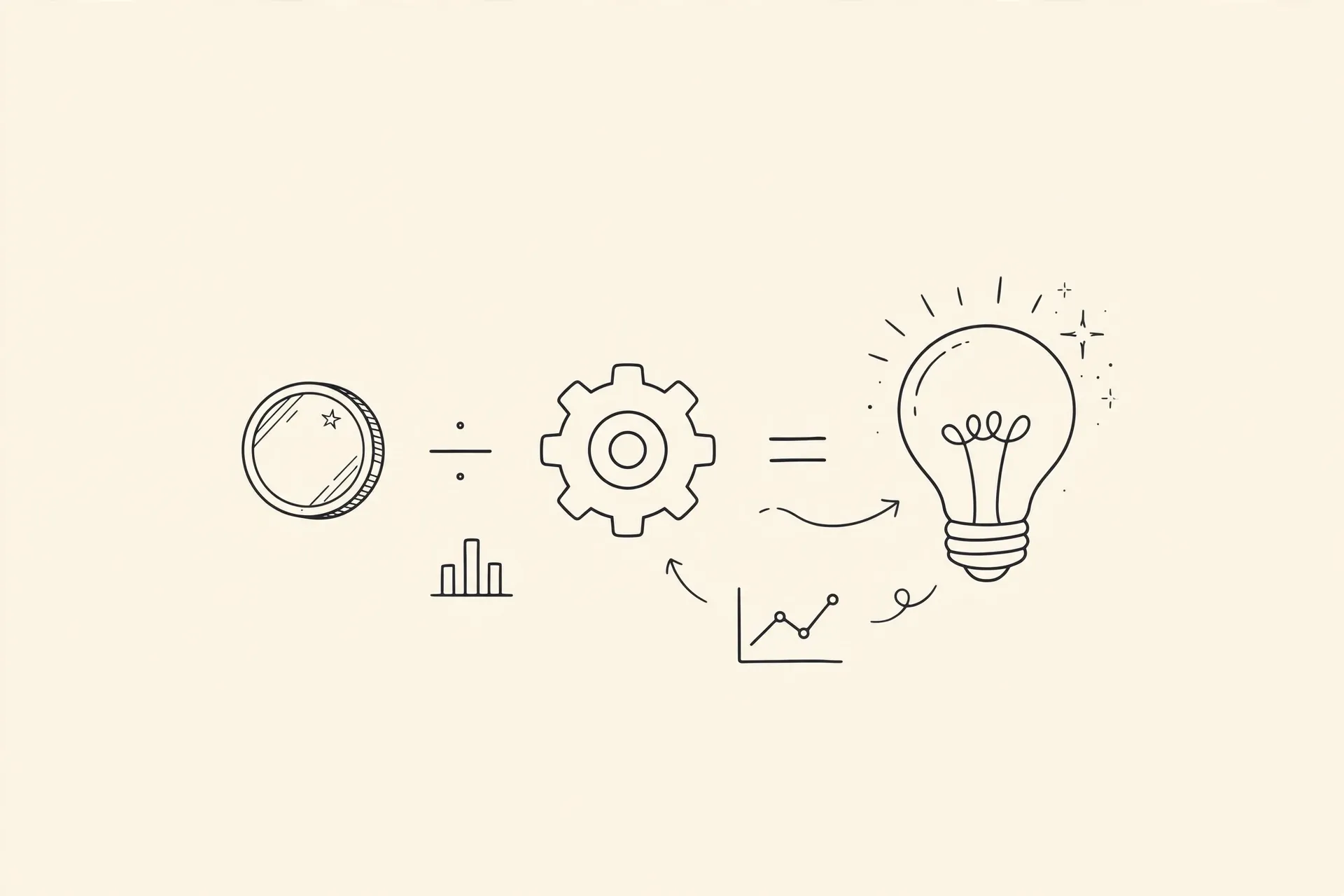
Here is how to compute it this week. Pick your most common user action. Instrument it: log input tokens, output tokens, and the number of model calls including retries. Multiply by current list prices. That is your cost per task. Now compare it to what you charge, or to the human labor it replaces. If the ratio is not at least 5 to 1 in your favor, your margins are fragile.
Two traps to avoid. First, averaging: your median task might cost 2 cents while your 95th percentile costs 40 cents because of runaway agent loops. Cap iterations and set spend alerts per task. Second, stale prices: model prices have fallen dramatically over the last two years. If you priced your product on 2024 token costs, you are either overcharging (and vulnerable to competitors) or leaving margin on the table. Re-run the math every quarter.
The Multi-Model Playbook: Tokenmaxxing in 2026
Tokenmaxxing is the practice of routing every task to the cheapest model that can complete it well, trimming API spend without changing what the product does.
At TechCrunch Disrupt 2026 (October 13 to 15 in San Francisco), one of the most talked-about sessions was literally called The Real Tokenmaxxing: how the best AI companies navigate a multi-model world. The panel brought together CapitalG's Mo Jomaa, Together AI's Vipul Ved Prakash, and Pathway's Zuzanna Stamirowska, and the message was blunt: choosing a model is no longer a one-time architecture decision.

The playbook that emerged:
- Route by job, not by brand. Use the cheapest model that clears your quality bar for each specific task. Classification, extraction, and drafting rarely need the frontier model. Save the expensive calls for the 10% of tasks where quality differences actually matter.
- Evaluate continuously. Keep a small, fixed eval set and run it against new models as they ship. Open models keep improving, and the price-performance crown changes hands every few months.
- Abstract the provider. A thin interface that isolates model-specific API calls, plus prompts stored as data rather than buried in code, lets you switch vendors in days instead of months.
- Watch the open frontier. Together AI and similar platforms exist precisely because open models are now good enough for a growing share of production workloads, often at a fraction of API prices.
This is the opposite of how most startups built in 2023, when everyone hardcoded one vendor. The winners in 2026 treat models like cloud compute: fungible, benchmarked, and swapped without drama.
Build or Buy? The DeepSeek Rack Lesson
Should you just run the models yourself? This week gave us a vivid data point: indie hacker dax reported that his new self-hosted DeepSeek rack beats every inference vendor he tested on price and performance. For high-volume, predictable workloads, self-hosting can win.
But run the full math before you get inspired. A rack means hardware capex, power, cooling, networking, and your time babysitting GPUs instead of building product. The break-even point is high: you need sustained, predictable token volume in the hundreds of millions per month before self-hosting beats API pricing plus zero ops burden.
The decision rule: if your monthly inference bill is under $10,000, do not self-host. Optimize prompts, cache aggressively, and route to cheaper models instead. Between $10,000 and $50,000, benchmark seriously, because you are in the zone where it can go either way. Above that, with stable workloads, get quotes. And whatever you choose, keep the abstraction layer from the previous section, so the decision is reversible.
How Do You Price When Models Keep Getting Cheaper?
Model prices fall. Your prices should not have to. The founders getting this right price on value delivered, not on tokens consumed.

Marc Lou, the indie founder behind a string of profitable micro-SaaS products, put it well this month: with no investors to please, he priced his new MailCheap at $19 against Beehiiv's $109 and was profitable from day one. The lesson is not to be cheap. It is that when your costs are low and falling, you can pick your price based on positioning, not on covering token bills.
Three pricing rules for AI products in 2026:
- Never expose token costs to customers. Charge per seat, per workflow, or per outcome. The moment your pricing is per-token, every model price cut becomes a margin crisis.
- Build a cost buffer into every tier. Your heaviest users will always find the expensive edge cases. Price so that your 95th-percentile user is still profitable.
- Revisit pricing when your cost per task drops 50%. Do not automatically cut prices. Ask first whether the savings should fund growth, better margins, or a more aggressive tier to undercut competitors.
The IPO Problem: Your Vendor Is Going Public
Here is the uncomfortable part of the $16.8B story. Anthropic is reportedly heading toward public markets. Public companies optimize for predictable revenue, which means enterprise contracts, usage commitments, and pricing discipline. None of that is bad, but it does mean the generous, flexible terms of the private era can tighten.
Protect yourself with contract hygiene, starting now:

- Keep at least two vendors production-ready. Even if 90% of traffic goes to one, the ability to shift 100% in a week is negotiating leverage and insurance.
- Avoid deep commitments without outs. Annual commits can make sense at scale, but only with performance SLAs and termination rights that actually work.
- Watch for bundling. As labs push suites (models plus tools plus agents), make sure you are buying the bundle because you want it, not because the standalone API quietly got worse.
- Take the free money. Anthropic's expanded Claude Startups package offers up to $7,500 in Claude products and API credits to accepted founders, including a year of Claude Team. If you are eligible, that is runway. Just budget your unit economics at list prices so the product survives when credits expire.
The Macro Shadow Nobody Is Talking About
One more signal from the week's news that most founders missed: AI data centers are now big enough to move inflation. September CPI coverage noted data-center demand pushing up core inflation, the so-called Froot Loop effect, and the Fed is watching consumer sentiment that just hit a five-month low.
What does macro have to do with your startup? Two things. First, if AI infrastructure spending keeps straining power grids and supply chains, compute costs could stop falling as fast, or even blip upward in specific regions. Your cost-per-task math should include a stress scenario. Second, enterprise buyers get cautious when sentiment drops. Longer sales cycles mean you need more runway per dollar of ARR, which makes efficient AI spending a survival skill, not just a margin optimization.

Your 5-Move AI Economics Playbook for Q4
- Instrument cost per task this week. One dashboard, per action, with p50 and p95. You cannot improve what you cannot see.
- Run the multi-model eval. Take your top three tasks, test them against two cheaper alternatives (one API, one open model), and route anything that passes your quality bar to the cheaper option.
- Stand up vendor number two. Even a 5% traffic shadow deployment counts. Portability you have never tested is portability you do not have.
- Decouple pricing from tokens. If any tier is priced per token or per call, redesign it around seats, workflows, or outcomes before the next price cut forces your hand.
- Apply for founder credits, but budget at list price. Programs like Anthropic's $7,500 Claude package extend runway. Your business model should not depend on them lasting forever.

The Indie Counterpoint: Small Teams, Same Wave
One more frame worth stealing from this week's news cycle. While giants raise billions, indie builders like Marc Lou and Tibo are shipping profitable products with tiny teams and rented intelligence. Tibo runs ten agents at once. Marc Lou's three-day-old product hit three-figure MRR and profitability on day one. The $16.8B quarter and the $19 product are the same story told at different scales: intelligence is getting cheaper, and the winners are the ones who convert cheap intelligence into something customers pay for.
If you want the tactical version of running lean on AI, our AI agents playbook covers the tools and workflows, and the agentic commerce guide shows where AI agents are becoming buyers, not just tools. Pair those with the economics in this article and you have both sides of the equation.
The bottom line
Treat frontier models like wholesale electricity. When Anthropic reports $16.8B at 44.8% quarterly growth, one rule holds. Token prices keep falling. Never build your margin on the model layer itself. Labs sell cheaper intelligence every quarter. Your edge must sit one layer up: distribution, data, or workflow.
Apply it by routing each task to the cheapest model that clears your quality bar. Keep a second vendor production-ready, and price per outcome instead of per token. The article's $10,000 monthly threshold works as a gut check. Below it, your only job is prompts and routing, not racks.
One 2026 warning stands: IPO marketing could start as early as November 9. Public companies tighten terms. Anthropic's $7,500 founder credits expire. Budget your unit economics at list prices, and test your portability before you need it.
Cap iterations and set spend alerts per task. Averages hide the damage: a median task at 2 cents looks cheap until a runaway loop pushes the 95th percentile to 40 cents. The cap is the control, not the price list.
Copy the indie counterpoint, not the lab press release. Marc Lou priced MailCheap at $19 against Beehiiv at $109 and was profitable from day one, because falling intelligence costs reward the seller who passes the saving on and prices per outcome instead of per token. When your cost per task drops 50 percent, revisit pricing the same week, because a competitor who reprices first takes the customers you kept overcharging.
FAQ
Is Anthropic's $16.8B number official?
No. The $16.8 billion figure came from an October 14 investor event and was reported by attendees and news outlets, not from audited financial statements. Treat it as a strong directional signal, not a certified number. Formal financials will only appear if an IPO filing goes public.
How do I calculate my AI cost per task?
It depends on volume and model choice. Measure your input and output tokens per completed task, multiply by current API prices, and add a margin for retries and tool calls. Then re-run the math quarterly, because model prices have been falling fast. If your cost per task is rising while model prices fall, your prompts or architecture need work.
Should my startup self-host models to save money?
For most startups, yes. Running your own inference only wins at very high, predictable volume, like the self-hosted DeepSeek rack that beat commercial vendors on price and performance. Below that scale, API pricing plus your engineering time is almost always cheaper.
How do I avoid getting locked into one AI vendor?
Build a thin provider interface that isolates model-specific calls, keep prompts and evaluations portable, and avoid features that only one vendor offers unless they are core to your product. Then you can switch models when the price or performance math changes, instead of being stuck.
The Verdict
Anthropic's $16.8B quarter is not a story about Anthropic. It is a story about what happens when the most important input to your product gets dramatically cheaper to produce and dramatically more valuable to sell. The labs will be fine. The question is whether your startup captures the difference or leaks it.
The founders who win this cycle will share three traits: they know their cost per task to the cent, they can switch models without rewriting their product, and they price on value while their costs fall. Do the five moves above this quarter and you will be one of them. For the implementation side, our one-person AI business stack shows how solo founders run all of this with no team, and our GEO guide covers getting cited by the very AI systems this article is about.
Relevant ads will appear here once AdSense is connected.
Want more practical guides like this?
Browse all 80 guides across 10 categories, no fluff, no paywall.
Browse all guides →