Small Business Saturday 2026: The Prep Checklist
November 28, 2026, is five weeks away, and it is the one day of the year when shoppers walk in already wanting to buy small. Here is the full prep checklist: one offer, honest pricing math, stock, promotion, and the day itself.
The short answer: Small Business Saturday 2026 falls on Saturday, November 28, right between Black Friday and Cyber Monday. Pick one simple offer, check that the discount still leaves you a profit, stock your best sellers plus gift packaging, and promote it in three places: your storefront, your email list, and your Google listing.
Key numbers at a glance
- November 28, 2026 Small Business Saturday, the day after Black Friday (November 27) and before Cyber Monday (November 30)
- 15 percent of annual revenue is what over half of 500 surveyed owners in the 2025 Amex Shop Small study estimated the day contributes, at most
- 5 weeks from October 23 to the event, enough for one offer, one restock, and one promotion cycle done properly
- 3 emails are all the promotion most shops need: announcement, reminder, and thank you
- 2 to 3 days for Google Maps updates to show, so listing fixes belong in the two-weeks-out window, not the final week
- 1 offer beats five. A single clear deal is easier to promote, easier to staff, and easier for shoppers to remember
- 1.6 sales to break even is what a 20 percent discount demands on a $40 item costing $18: at $32 you keep $14 instead of $22, so every discounted sale needs about 1.6 sales to stand even.
- Spend $50, get $10 off in December is the future reward the guide suggests instead of a deep cut, turning a one-day buyer into a December return visit.
- 2010, when American Express started the event, is how long Small Business Saturday has been running, and it has grown into the biggest single day of the year for many local shops.
- First 50 shoppers get a freebie is the timed bonus the guide suggests as an alternative to a deep cut, beside morning-only pricing, because a bonus that runs out creates urgency without training buyers to wait for a discount.
Last reviewed: October 2026.
There is a strange thing about the Saturday after Thanksgiving. Shoppers who would haggle over a dollar on any other weekend walk into small shops that day in a generous mood. They came to buy from a neighbor, not to hunt the lowest price on the internet. American Express started the event in 2010, and it has grown into the biggest single day of the year for many local shops.
The numbers back that up. In the 2025 American Express Shop Small Impact Study, over half of the 500 small business owners surveyed estimated that Small Business Saturday sales contribute up to 15 percent of their annual revenue. Read that number honestly. It comes from owners with physical locations, and it is a ceiling, not a forecast for every shop. But even half of that would make November 28 the most important Saturday of your year, and it is five weeks away, which is exactly enough time to prepare without panic.
Most prep guides for this day fail in the same way. They hand you fifty tasks and no order. This one is built the other way: one offer, one pricing check, one stock run, one promotion plan, and a day-of routine. Do those five things and you are ahead of most shops on your street.
Why is this Saturday different from any other sale day?
Small Business Saturday is the annual shopping event on the Saturday after Thanksgiving that encourages shoppers to support local, independently owned businesses.
Black Friday belongs to the big chains. They win on price, advertising budgets, and doorbuster lines. Small Business Saturday is the one day the contest flips. Shoppers are not comparing your candle to a warehouse price. They are buying a gift and a story at the same time, and they feel good about it. That mood is your real advantage, and it is worth more than a 30 percent discount you cannot afford.
The timing helps too. November 28 sits at the start of the gift-buying season, not the end. A shopper who discovers you that Saturday can come back three more times before Christmas. Every email address or social follow you collect on the day is a December sale waiting to happen. Treat the Saturday as the start of your holiday season, not as a one-day clearance event, and the math changes completely.
There is also a practical point owners miss. The Saturday crowd is local. These are people who live within a few miles, and they will remember whether your shop was calm and welcoming or chaotic and picked over. A good first visit brings them back in January, when the chains are quiet and your regulars keep the lights on. A bad one sends them back to the mall.
Step 1: pick one offer, and make it easy to explain
One offer. Not a sale rack, a coupon book, and a loyalty launch all at once. Shoppers decide in about three seconds whether your deal is worth their attention, and a deal they cannot repeat back to a friend is a deal that will not travel.
Good offers for this day share three traits. They are simple to say in one sentence. They feel special to the day, not like a permanent price cut. And they protect your margin, which is step 2. Some formats that work well:
- A bundle: three items that go together, priced below buying them separately. Bundles move slower stock alongside best sellers and raise the average sale without touching your headline prices.
- A gift with purchase: a small item, a sample, or a handwritten card over a spending threshold. It feels generous, costs you little, and gives the shopper something to show a friend.
- A timed bonus: the first 50 shoppers get a freebie, or morning-only pricing. Scarcity gets people in early, which spreads your crowd across the day instead of bunching it at noon.
- A future reward: spend $50 on Saturday, get $10 off in December. This is the smartest offer for shops that want January traffic, because it turns a one-day buyer into a repeat visit.
Pick the format that fits what you sell. A bakery does well with a bundle box. A boutique does well with a gift with purchase. A service business, like a salon or a studio, does well with a future reward, because the second visit is where the real money lives. Write the offer down in one sentence and test it on someone outside your business. If they cannot repeat it back, simplify it.
Step 2: check the math before you announce anything
This is the step most shops skip, and it is the step that decides whether the day helps or hurts. A discount only works if you still make money after it, and the break-even point is easy to compute.
Take a product that sells for $40 and costs you $18 including packaging and card fees. At full price you keep $22. At 20 percent off you sell it for $32 and keep $14. That is fine, as long as the discount brings in enough extra sales to beat what you would have sold anyway. The question to answer is: how many extra units do you need? At $14 profit instead of $22, you need about 1.6 sales for every sale you would have made at full price, just to stand even. If your Saturday crowd is mostly regulars who would have bought anyway, a deep discount just hands them money.
| Offer on a $40 item (cost $18) | Sale price | Profit per sale | Extra sales needed to break even |
|---|---|---|---|
| No discount | $40 | $22 | None, this is the baseline |
| 10 percent off | $36 | $18 | About 1.2x normal volume |
| 20 percent off | $32 | $14 | About 1.6x normal volume |
| Bundle: $40 item plus $8 item for $44 | $44 | $18 | Moves slow stock, profit holds |
That table is why bundles and gifts with purchase beat straight percentage cuts for most small shops. They lift the total sale instead of cutting the margin on it. If you run the numbers and the discount does not work, change the offer, not your hopes. A smaller discount with a gift feels just as generous to a shopper and leaves you whole.
One more pricing trap: shipping and fees. If you sell online too, remember that card fees, packaging, and any free shipping promise come out of the same margin. Price the Saturday offer for the channel it runs in, and do not let an online coupon quietly eat the profit your in-store day earned.
Step 3: stock, packaging, and the store itself
Three weeks out, order for the day, not for the month. Look at last November's best sellers, or if this is your first year, your best sellers from the last 90 days. Order enough of those to survive a day at twice your normal Saturday volume, plus gift packaging for all of it. Running out of your best product at 1 pm is the most common avoidable failure of the day, and it is worse than a small discount, because the shopper leaves with nothing and a story about your empty shelves.
Gift packaging deserves its own line in your budget. A plain bag and tissue paper cost little and change how a purchase feels. Shoppers on November 28 are buying gifts, and a present that looks ready to hand over is a present that gets bought on impulse. Add a small card with your shop name and December hours. It costs cents and it is the cheapest December advertising you will ever buy.
Walk your shop like a first-time visitor a week before the event. Is the offer visible from the door? Is the price on everything, so nobody has to ask? Is there a clear path to the counter, and does the counter have room for bags, a card reader, and a sign-up sheet? Small frictions become long lines on a busy day, and long lines send shoppers to the next shop on the street.

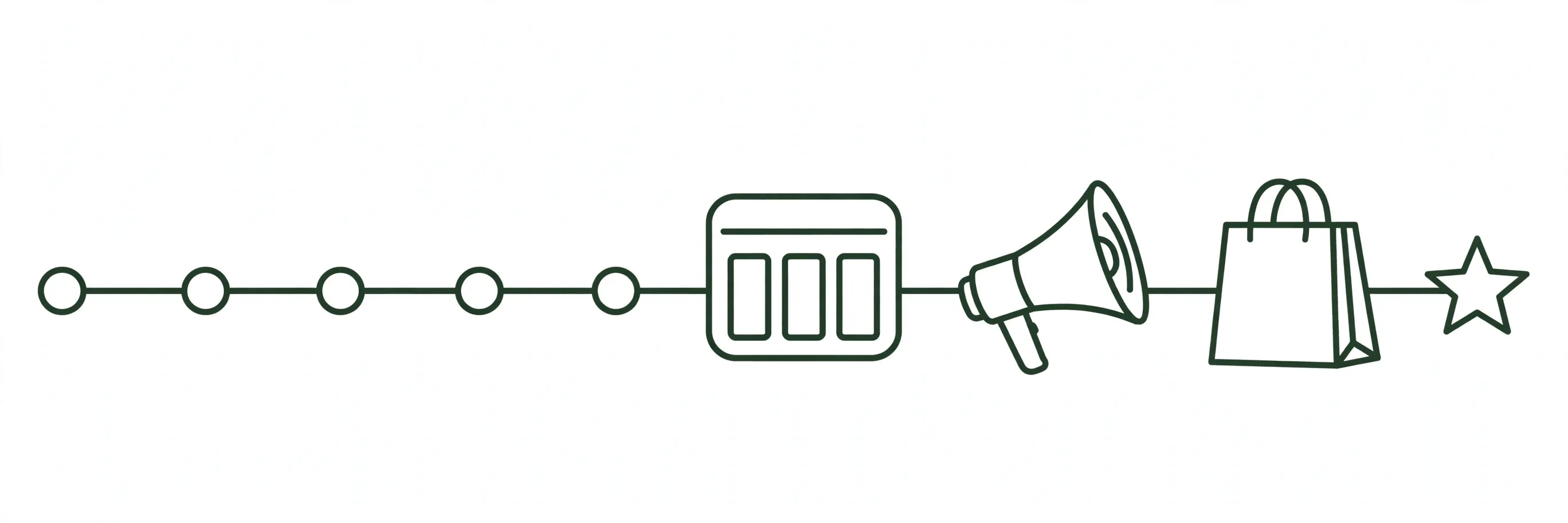
Step 4: the 5-week Small Business Saturday countdown
A countdown plan is a week-by-week schedule that puts each prep job in the week where it still has time to work, instead of piling everything into the final days.
From October 23, the calendar breaks down cleanly. Use it as written, or shift it by a week if you are starting late, but keep the order. Each stage has one job, and the order matters because some jobs need lead time that money cannot buy back.
- 5 weeks out, by October 24: lock the offer and run the pricing math. Order stock and packaging now, while suppliers still have normal lead times.
- 4 weeks out, by October 31: tell neighboring shops what you are planning and agree on one joint move, like a shared map, a stamp card, or extended hours on the same day. Shoppers visit streets, not single shops.
- 3 weeks out, by November 7: update your Google Business Profile, your website hours, and your social profiles. Post the offer with the date. Check the Shop Small map listing if you accept Amex.
- 2 weeks out, by November 14: send the announcement email and open any preorders. Map changes take two to three business days, and shoppers need a reminder before the week fills up.
- Week of, November 23 to 27: pack bundles, price everything, charge card readers and phones, and restock after Black Friday. Prep at home saves time on every sale at the counter.
- Day of, November 28: sell, bag, collect emails and follows, and take photos. Every buyer you can reach again is a December sale.
- After, November 29 to December 5: thank buyers, compare results against your goal, and push December orders while gift season is still open.
If you are reading this late and have only a week, do the short version: lock one offer, fix your Google listing, send one email, stock your top five products, and put a sign-up sheet by the register. A tested checkout and a stocked shelf matter more than a perfect social calendar.
Step 5: promote in three places, not thirty
Small shops do not need a campaign. They need three channels done well. First, your storefront and your street: a window sign with the offer and the date, and a joint move with neighboring shops. A shared stamp card, where shoppers collect a stamp at three shops for a small prize, costs almost nothing and pulls foot traffic to every shop on it.
Second, your email list, if you have one. Three short emails are enough: an announcement two weeks out, a reminder the day before, and a thank you the day after with a December reason to return. Write all three in one sitting and schedule them, so the busy week does not eat your promotion time. If you do not have a list yet, start one on the day itself with a simple sign-up sheet and a clear reason to join, like early access to December stock.
Third, your online listings. Your Google Business Profile is where nearby shoppers check hours and directions, and it is free. Add a post about your Saturday offer, confirm your holiday hours, and add fresh photos of the shop dressed for the season. Social media comes fourth, not first: a few honest posts showing the shop getting ready will beat a week of generic sale graphics, because people follow people, not flyers.
For social ideas that actually convert on a small budget, our Threads marketing guide and our WhatsApp marketing guide cover the two cheapest channels for a local shop, and both work with a phone and an hour a week.

Step 6: the day itself, hour by hour
Open on time, with the offer visible from the door and the best sellers near the front. Greet people by name when you can, and say the offer out loud instead of assuming the sign did the work. Shoppers who feel noticed buy more and complain less, and on a busy day that is worth real money.
Staff for the peak, not the average. If you can afford one extra pair of hands from 11 am to 3 pm, take it. The extra person runs the register while you talk to shoppers, wraps gifts, and restocks the front table. A line at the register is the fastest way to lose a sale you already won, so keep the checkout clear and the card reader charged.
Collect contacts all day, fairly and clearly. A sign-up sheet by the register with a plain explanation, like early access to December arrivals, works better than a pushy ask at the counter. Take photos of the shop, the crowd, and the products people loved, with permission, because those photos are your thank-you email and your December social posts. When the day ends, count three numbers before you go home: total sales, new contacts collected, and what sold out first. Those three numbers are next year's plan.

Online-only? Stretch the Saturday across the weekend
If you sell only online, the one-day format works against you, because nobody walks past your website. Run the same offer from Saturday through Cyber Monday, and put your effort into the email announcement and a clear homepage banner. Your version of foot traffic is your list and your existing followers, so the announcement email matters more than any other single task.
Online sellers also get one advantage physical shops do not: you can test. Run the offer to half your list on Saturday morning and check the open and order rates before the reminder goes out. If a bundle beats a percentage discount, shift the reminder to push the bundle. Small tests across a weekend can teach you more about your pricing than a whole quarter of guessing.
Do not forget the unglamorous checks. Run a test order with every discount code before Saturday, load your product pages on a phone, confirm stock levels and holiday shipping cutoffs, and turn on abandoned cart reminders. A broken code on your biggest weekend is a worse problem than a weak offer, because it costs you the shoppers who already decided to buy.

What mistakes quietly eat the day?
The first mistake is discounting your regulars. If most of your Saturday crowd already shops with you, a deep discount just pays them for loyalty they already had. Use a gift or a future reward instead, and save percentage cuts for winning new shoppers.
The second is promoting everywhere and finishing nowhere. A half-written email, a stale Google listing, and three social posts that say nothing will lose to one good email and a correct listing. Pick the channels you can actually finish and do them properly.
The third is forgetting December. The Saturday is the start of gift season, not the end of it. Every buyer who leaves without a reason to return is a sale you will have to win again at full advertising cost. A thank-you email, a December offer, and a photo of their purchase in your shop's feed are cheap ways to keep the relationship warm.
The fourth is running out of the thing people came for. Check stock on Friday night, not Saturday morning. Put your best sellers where hands can reach them, keep a backup box under the counter, and when something sells out, offer the closest alternative plus a rain check instead of a shrug.
The bottom line
The bottom line: November 28 rewards readiness, not discount depth. One clear offer, pricing math that leaves you a profit, stocked best sellers, and three promotion channels done well will beat a bigger sale announced in a panic.
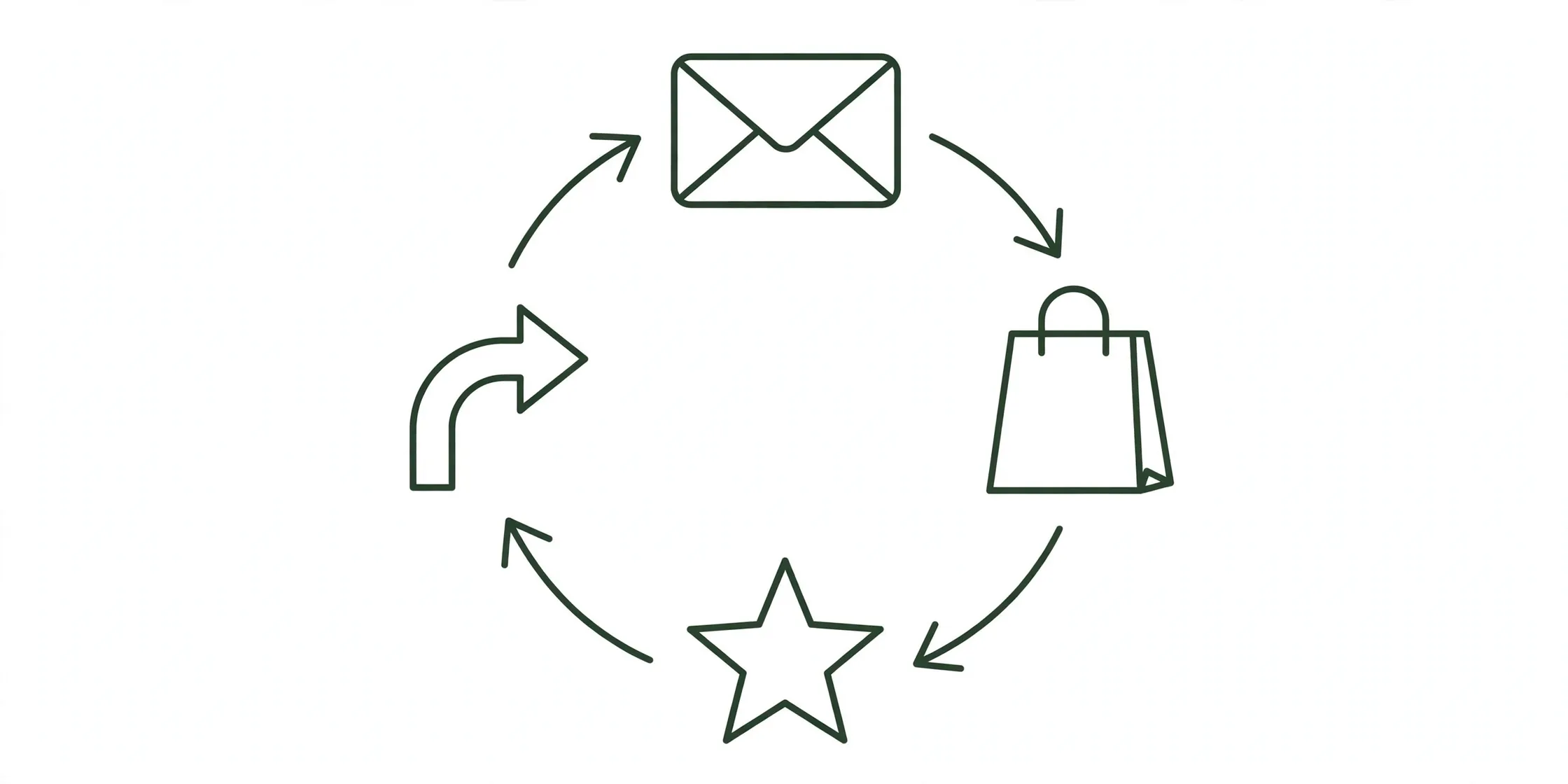
Start this week with the offer and the math, because stock and supplier lead times are the only parts you cannot rush later. Fix your Google listing two weeks out, send the announcement email, and keep the day itself calm: greet people, keep the register clear, and collect contacts for December.
When the day ends, count sales, new contacts, and what sold out first. Those three numbers, written down the same night, are your entire plan for next November, and they are worth more than any generic checklist.
The future reward is the smarter Saturday offer because it protects November margin and buys December traffic at the same time. A 20 percent cut needs 1.6 sales to break even and trains buyers to wait for discounts, while spend $50, get $10 off in December keeps full margin on the day and gives the buyer a reason to come back when the shop is quiet. Stretch the same offer on your website from Saturday through Cyber Monday for online buyers, and let the reward, not the discount, do the retention work.
Make the day a joint move, not a solo sale. Agree one shared move with neighboring shops by October 31, like a shared map, a stamp card, or extended hours on the same day, staff the peak with one extra pair of hands from 11 am to 3 pm, and collect emails and follows at the till all day, because the buyers you capture on November 28 are the December orders you do not have to advertise for. Running out of your best product at 1 pm is the most common avoidable failure, and it is worse than a small discount, because the shopper leaves with nothing and a story about empty shelves.
Frequently asked questions
When is Small Business Saturday 2026?
Small Business Saturday 2026 is Saturday, November 28, the day after Black Friday on November 27 and two days before Cyber Monday on November 30. Thanksgiving falls on Thursday, November 26.
Is Small Business Saturday worth preparing for?
For shops with local foot traffic and giftable products, yes. In the 2025 American Express Shop Small Impact Study, over half of 500 surveyed small business owners estimated Small Business Saturday sales contribute up to 15 percent of their annual revenue. Treat that as a ceiling for a strong local shop, not a promise for every business.
What is the best Small Business Saturday offer?
One simple offer you can explain in a sentence, priced so you still make money after the discount. Bundles and gifts with purchase usually beat deep percentage discounts, because they protect your margin and move slower stock. Test the math before you announce anything.
How do I get listed for Shop Small?
Keep your Google Business Profile accurate with correct hours, photos, and a post about your Saturday offer, and check the American Express Shop Small map for your listing if you accept Amex. Map updates can take two to three business days, so do this at least two weeks before November 28.
I sell only online. Does Small Business Saturday still apply?
Yes, with a small shift. Run the same offer on your website from Saturday through Cyber Monday, push it to your email list, and frame it as supporting small makers. Online-only sellers often do better stretching the event across the weekend than squeezing it into one day.
For the money side of the season, read our small business loan guide before borrowing for holiday stock, and our October 2026 funding trends for the wider picture on where small business money is moving right now.
Want more practical guides like this?
Browse all 80 guides across 10 categories, no fluff, no paywall.
Browse all guides →Explore Business guides