Disability Insurance for Self-Employed 2026: Income Guide
Only about 5 percent of independent workers carry disability protection, yet your ability to work is your biggest asset. Here is the own-occupation clause, the cost math, and the shopping steps that close the gap.
The short answer: if you are self-employed and your income stops when you stop working, disability insurance is the missing paycheck. A true own-occupation policy that pays to age 65 costs roughly 1 to 3 percent of your income. Buy it before you need it, because after a diagnosis the door closes.
Key numbers at a glance
- 5 percent of independent workers carry short-term disability protection, per iHire's 2026 independent worker benefits report
- 40 percent of independent workers have medical insurance, and only about 20 percent hold life insurance, in the same report
- 1 to 3 percent of annual income is the typical cost of long-term disability coverage, for example $1,000 to $3,000 a year on $100,000 of income
- 24 months the point where many group policies switch from own-occupation to any-occupation, and claims start getting denied
- 85 percent approximate approval rate for self-employed own-occupation claims at a major carrier, versus about 60 percent for any-occupation claims
- 90 days the most common elimination period, matching a 3-month emergency fund
- $3 million is about what a 35 year old earning $100,000 a year will earn before age 65, not counting raises, which is the income the policy protects.
- 10 to 20 percent is the premium gap between own-occupation and any-occupation cover, or $200 to $400 a year on a $2,000 premium, against a claims approval gap of about 85 percent versus 60 percent.
Last reviewed: October 2026. Premiums and definitions vary by carrier, health, and occupation class, so treat figures here as planning ranges, not quotes.
Here is a question most self-employed people never ask themselves until it is too late. If you could not work for six months starting tomorrow, where would the money come from? Not the business revenue, because for most solo operators revenue stops when they stop. Not savings, unless you have six months of expenses sitting untouched. Not a spouse's income, unless that covers everything alone. For most founders and freelancers, the honest answer is nowhere, and that nowhere is a gap you can close for about the price of a streaming subscription or two each month.
The gap is bigger than most people think. iHire's 2026 report on independent workers found that only about 40 percent have medical insurance, roughly 20 percent hold life insurance, and just 5 percent carry short-term disability protection. Think about that. Solo workers insure their phones and their laptops, but not the one asset that pays for everything else: their ability to earn. A broken laptop costs $1,500 to replace. A broken back costs a year of income.
This guide covers the whole decision: what disability insurance actually replaces, why own-occupation wording matters more than price, how to size the benefit, what the policy costs at different incomes, and the shopping steps that get you covered without overpaying. It is written for founders, freelancers, and solo operators, the people with no HR department and no group plan to fall back on.
What disability insurance actually replaces
Disability insurance replaces a portion of your income, usually 60 to 70 percent of pre-disability earnings, when illness or injury prevents you from working, for a defined benefit period.
Start with the most common misunderstanding. Disability insurance does not pay your medical bills. Health insurance does that. Disability insurance pays your life bills: rent, groceries, loan payments, and the business costs that do not pause because you did. A surgeon with a hand injury, a designer with severe back pain, a consultant with a cancer diagnosis, all three face the same problem, which is that their income is tied to their body and brain showing up, and neither health insurance nor savings replaces a paycheck for long.
There are two kinds. Short-term disability covers weeks to months, often 3 to 6 months, and is the product almost nobody self-employed carries, per the iHire data. Long-term disability covers years, often to age 65 or 67, and is the product that protects against the catastrophic case. Most self-employed people should think of it this way: your emergency fund is your short-term disability plan, and a long-term policy is your everything-after-that plan. If your emergency fund covers 3 months, a 90-day elimination period lines up neatly, and the policy takes over from there.
The math of the risk is worth sitting with. A 35-year-old earning $100,000 a year will earn about $3 million before age 65, not counting raises. A disability at 40 that lasts to 65 wipes out most of that. The policy that protects it costs $1,000 to $3,000 a year. That is the cheapest catastrophic coverage in personal finance, and it is the one most solo operators skip.

Own-occupation versus any-occupation: the clause that decides claims
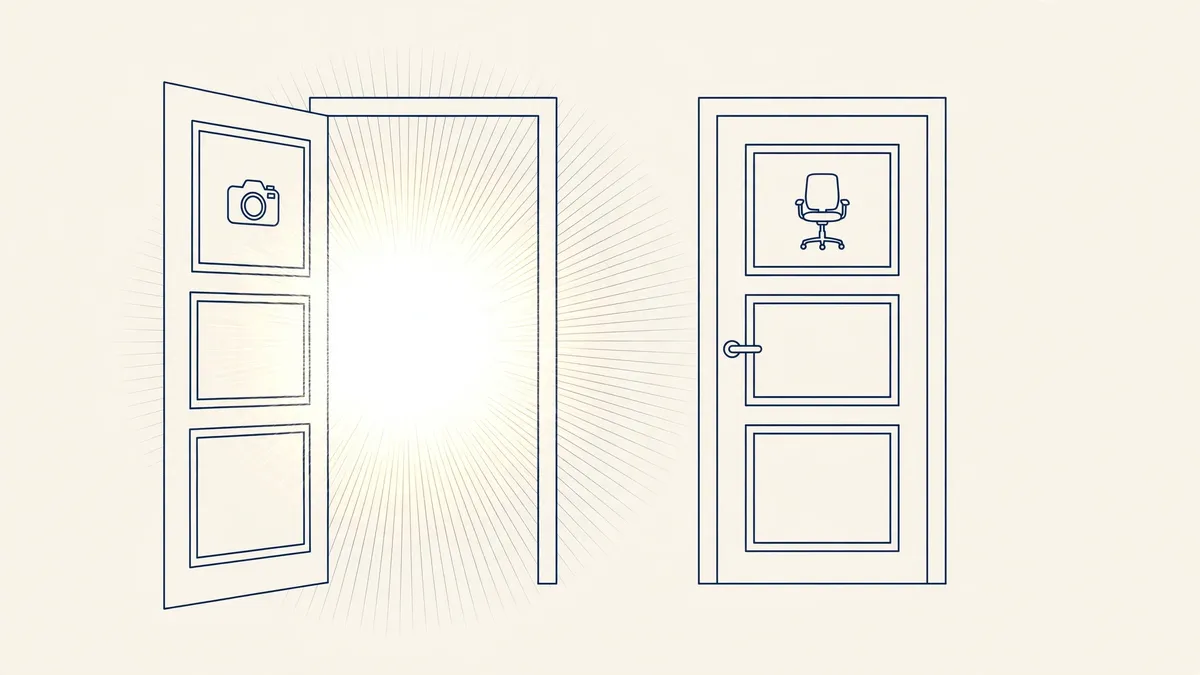
If you remember one thing from this article, make it this. The definition of disabled in your policy matters more than the premium, the carrier's brand, or any rider. There are three versions, and they are not close to equal.
True own-occupation pays if you cannot perform the duties of your specific occupation, even if you could work in another field. A dentist who loses fine hand control cannot practice dentistry, so the policy pays, even if she could teach or consult. This is the gold standard, and for self-employed specialists it is close to non-negotiable.
Modified own-occupation pays under the own-occupation standard for a defined period, often the first two years, then switches to any-occupation. This is cheaper than true own-occupation, and it is the version most group policies use. It is also the version behind the most painful claim stories, because a condition that is covered in year one becomes uncovered in year three when the definition changes.
Any-occupation pays only if you cannot perform any work at all, or any work you are reasonably suited for by training. For a self-employed specialist, this is close to useless for the most likely disabilities. A graphic designer with severe wrist damage might still be able to answer phones somewhere, and under an any-occupation definition that theoretical job can end the claim.
The premium difference is smaller than people expect. Industry comparisons put the gap between own-occupation and any-occupation at roughly 10 to 20 percent. On a $2,000 annual premium, that is $200 to $400 a year. The claims difference is enormous: one major carrier reports about 85 percent of self-employed own-occupation claims approved and paid in full, against an industry-wide any-occupation approval rate near 60 percent, largely because the any-occupation standard leaves room to argue that some theoretical job exists. Pay the extra 10 to 20 percent. This is not the place to save money.
How much coverage you need, and what it costs
Carriers typically cap benefits at 60 to 70 percent of your pre-disability income. The cap exists because benefits are usually tax-free when you pay premiums with after-tax dollars, and a tax-free 65 percent roughly equals a taxed 100 percent for many earners. Do not try to insure 100 percent of income. Carriers will not sell it, and the tax math means you do not need it.
| Annual income | Monthly benefit at 60 percent | Typical annual premium (1 to 3 percent) |
|---|---|---|
| $50,000 | $2,500 | $500 to $1,500 |
| $100,000 | $5,000 | $1,000 to $3,000 |
| $200,000 | $10,000 | $2,000 to $6,000 |
| $300,000 | $15,000 | $3,000 to $9,000 |
Your actual premium depends on age, health, occupation class, and the riders you choose. A 30-year-old office-based consultant pays far less than a 50-year-old roofer, because the risk is genuinely different. Younger and healthier is cheaper, which is another reason to buy sooner rather than later. Every year you wait, the premium rises and the chance of a disqualifying health event grows.
One trap for self-employed buyers: income documentation. Carriers base benefits on provable income, usually tax returns from the last one or two years. If you aggressively minimize taxable income, your insurable income is lower too, and so is your benefit. Founders who show $30,000 of taxable income on a business that really nets $90,000 will find their disability benefit capped near the $30,000 figure. If you plan to buy coverage, talk to your accountant about the tradeoff before your next return, not after a claim.

What elimination period should self-employed founders choose?
An elimination period is the waiting time between disability and the first benefit check. Common options are 30, 60, 90, and 180 days. Longer waiting means a lower premium, but it also means a longer stretch you fund yourself.
The right choice is mechanical, not emotional. Look at your actual accessible savings, not the number you wish you had. Three months of expenses saved means a 90-day elimination period fits. Six months saved means a 180-day period can cut your premium meaningfully. If you have one month saved, a 30-day period costs more but is honest, and the real fix is building the fund, not buying a cheaper policy that leaves you uncovered for 90 days you cannot fund.
This is also where the emergency fund and the policy meet. Our emergency fund guide sizes the fund first, and the elimination period should follow that number, not the other way around. A policy with a 90-day elimination period and a 2-month emergency fund has a one-month hole in the middle, and holes are where financial plans fail.

Why is a benefit period to age 65 the standard recommendation?
A benefit period is how long payments last once they start. Options run from 2 years to 5 years to 10 years to age 65 or 67. The shorter options are cheaper, and they are tempting, but they leave the catastrophic case uncovered.
A 2-year benefit period covers the common case, a bad injury or a treatable illness with a real recovery. It does not cover the rare case that ruins finances, a permanent or decade-long disability starting at 40. The premium difference between a 5-year period and a to-age-65 period is modest relative to the gap it closes, which is why to-age-65 is the standard recommendation for prime earning years. If budget forces a compromise, take a longer elimination period before you shorten the benefit period. A 180-day wait with to-age-65 coverage beats a 30-day wait with a 2-year cap, because the catastrophic case is the one you are insuring against.
Riders worth paying for, and ones to skip
Future increase option. Lets you raise coverage as income grows, without new medical underwriting. For a growing freelancer, this is the most valuable rider on the list. Income that doubles in five years should be insurable without a new health exam.
Cost of living adjustment. Raises benefits with inflation during a long claim. A $5,000 monthly benefit fixed in 2026 buys far less in 2046. If you buy to-age-65 coverage, this rider is what keeps it real.
Residual or partial disability. Pays a partial benefit if you can work part-time but at reduced earnings. Many disabilities are partial, not total, and without this rider a part-time return to work can end your full benefit even though your income is still halved.
Business overhead expense. A separate policy that pays business costs, rent, utilities, and employee salaries, while you are disabled. If you have staff or a lease, this is what keeps the business alive for your return. Solo operators with no fixed costs can skip it.
Skip the bells and whistles. Return-of-premium riders and exotic add-ons raise the price a lot for a little value. Put that money into a longer benefit period or a true own-occupation definition instead.
Shopping steps: how to actually buy it
Step 1: document your income. Pull your last two tax returns and a profit and loss statement. Your benefit will be based on provable income, so get the numbers straight before you talk to anyone.
Step 2: use an independent broker, not a captive agent. An independent broker quotes multiple carriers, and carrier appetite for your occupation class varies a lot. One carrier may rate a personal trainer as high risk and another as standard. Shopping widely is worth real money here.
Step 3: insist on true own-occupation language in the quote, and read the definition yourself before signing. Do not accept a summary. The definition paragraph is the policy.
Step 4: choose the elimination period from your emergency fund, the benefit period to age 65 if the budget allows, and the riders above in order: future increase, cost of living, residual, then business overhead if you have fixed costs.
Step 5: complete underwriting honestly. Medical exams and records checks are normal. Hiding a condition risks a denied claim later, which is worse than a higher premium now. If one carrier declines or rates you heavily, another may not, so a decline is a reason to shop more, not to quit.

Mistakes that leave people uncovered
Assuming health insurance covers income. It covers bills, not paychecks. The most common and most expensive confusion in this whole topic.
Buying any-occupation to save 15 percent. The savings are small and the claim risk is large. This is the mistake the 24-month definition switch stories are made of.
Understating income on tax returns, then expecting full benefits. Benefits follow provable income. Aggressive tax minimization has a disability cost nobody mentions.
Waiting for a health scare to apply. Underwriting gets harder and pricier with every year and every diagnosis. The best time to buy was when you were healthy. The second best time is now, while you still are.
Skipping the residual rider. Partial disabilities are common, and returning to part-time work without partial benefits can cut your income twice: once from the disability, once from losing the claim.

The bottom line
The bottom line: if your income stops when you stop working, you need disability insurance, and you need the true own-occupation version with a benefit period to age 65. It costs 1 to 3 percent of your income, and it is the only product that replaces the paycheck itself.
Start this week. Pull your tax returns, find an independent broker, and get quotes with true own-occupation language and a 90-day elimination period matched to your emergency fund. The iHire numbers say 95 percent of independent workers have not done this. Being in the 5 percent is the cheapest financial security you will ever buy.
Do not let a low taxable income quietly cap your benefit. Founders who show $30,000 of taxable income on a business that really nets $90,000 will find their disability benefit capped near the $30,000 figure, because carriers pay on provable income. Fix the income documentation before you buy, or the cheapest policy you can find will pay out on a business you do not actually run.
Frequently asked questions
How much disability insurance do I need as a freelancer?
Carriers typically cover 60 to 70 percent of provable pre-disability income. On $100,000 of income that is about $5,000 a month. Since benefits are usually tax-free when you pay premiums with after-tax dollars, that 60 to 70 percent roughly replaces your after-tax pay.
Is own-occupation coverage really worth the extra premium?
Yes, for self-employed specialists. The premium gap is roughly 10 to 20 percent, while the claims gap is large: about 85 percent approval for own-occupation claims at a major carrier versus about 60 percent for any-occupation claims. The definition decides whether a real disability pays.
What elimination period should I choose?
Match it to your emergency fund. Three months of expenses saved means a 90-day elimination period. Six months saved means a 180-day period can cut your premium. Never choose a waiting period longer than the savings you actually have.
Can I get disability insurance with a pre-existing condition?
Sometimes, with exclusions or a higher premium, and sometimes not. It depends on the condition and the carrier. A decline from one carrier is not a final answer, since another carrier may underwrite the same risk differently. An independent broker is how you find out.
Does disability insurance cover mental health conditions?
Many policies do, often with a limited benefit period for mental health claims, commonly 24 months, unless the condition is organic. Read the mental health limitation in any quote carefully, because it is one of the most common surprises in a claim.
For the wider picture, read our term life insurance cost and coverage guide for the other half of income protection, our no-exam life insurance guide if a medical exam is a barrier, and our emergency fund guide to size the savings that cover your elimination period.
Want more practical guides like this?
Browse all 80 guides across 10 categories, no fluff, no paywall.
Browse all guides →Explore Insurance guides