Email Marketing for Small Business: The Holiday-Ready Playbook for 2026
Social reach rents you an audience by the day. An email list is an audience you own, which is why email marketing for small business still pays. With Black Friday on November 27 and Cyber Monday on November 30, this is the month to build the list, fix the flows, and plan a short sequence that respects the inbox and still sells.
The short answer: email marketing in 2026 still beats social media for holiday sales, because you own the list. Start now, not in Thanksgiving week. Build the list, fix your five core flows, and send a short Black Friday sequence from November 27 to 30. Segmented emails earned 11 percent higher average order value in Mailchimp's 2025 peak season data.
Key numbers at a glance
- $47.5 billion in US online spending Adobe expects during Cyber Week 2026, including $12.9 billion on Black Friday alone
- 57.4 percent of US online holiday spending Adobe expects to come from mobile in 2026, so design every email for a phone first
- 11 percent higher average order value from segmented and personalized emails during Black Friday and Cyber Monday, per Intuit Mailchimp
- 2x weekend order rates versus weekdays in the 2025 peak season, even though businesses sent about 60 percent fewer messages on weekends
- 56x fewer emails sent by the top 10 percent of performers by click rate during Black Friday and Cyber Monday, versus other senders
- November 27, 28, and 30, 2026 are Black Friday, Small Business Saturday, and Cyber Monday, the three dates the holiday playbook is built around
- About 0.5 percent unsubscribe rate is normal for sales mail, a spike above 1 percent means the message, frequency, or targeting was wrong, and spam complaints above 0.1 percent are a warning light
Why does email still pay when social reach keeps shrinking?
A post on social media reaches a slice of your followers, on a good day, for a few hours. An email reaches an inbox your customer chose to join, and it waits there until they open it or delete it. That difference is why email marketing for small business still earns its keep in November, and why it is worth real money then, when ad prices spike and every feed is a shouting match. Adobe expects $47.5 billion in US online spending during Cyber Week 2026, and $12.9 billion of it on Black Friday, November 27. You do not need a share of all of it. You need your own list to show up and buy.
Email marketing is sending useful messages to people who chose to join your list, so you reach buyers directly instead of renting attention from a social feed.
Mailchimp's look at the 2025 peak season carries a lesson most small shops miss. Weekend order rates ran twice weekday rates, even though businesses sent roughly 60 percent fewer marketing messages on weekends. The gap was not magic. Fewer brands competed on weekends, so the ones that sent a relevant message stood out. The same study found segmented, personalized emails drove 11 percent higher average order value during Black Friday and Cyber Monday. Relevance pays. Volume alone does not.
The sharpest number in that study is about restraint. The top 10 percent of email performers by click rate during Black Friday and Cyber Monday sent 56 times fewer emails than other senders. They did not win by shouting louder. They won by sending fewer, better messages to people who had shown interest. If your plan for November is "email everyone every day," rewrite it. Your list will punish you with unsubscribes, spam complaints, and a sender reputation that takes months to repair. Our broader Black Friday marketing playbook covers the full holiday plan; this guide goes deep on the email half, which is where most small shops leave money on the table.
How do you build your list before November, not during it?
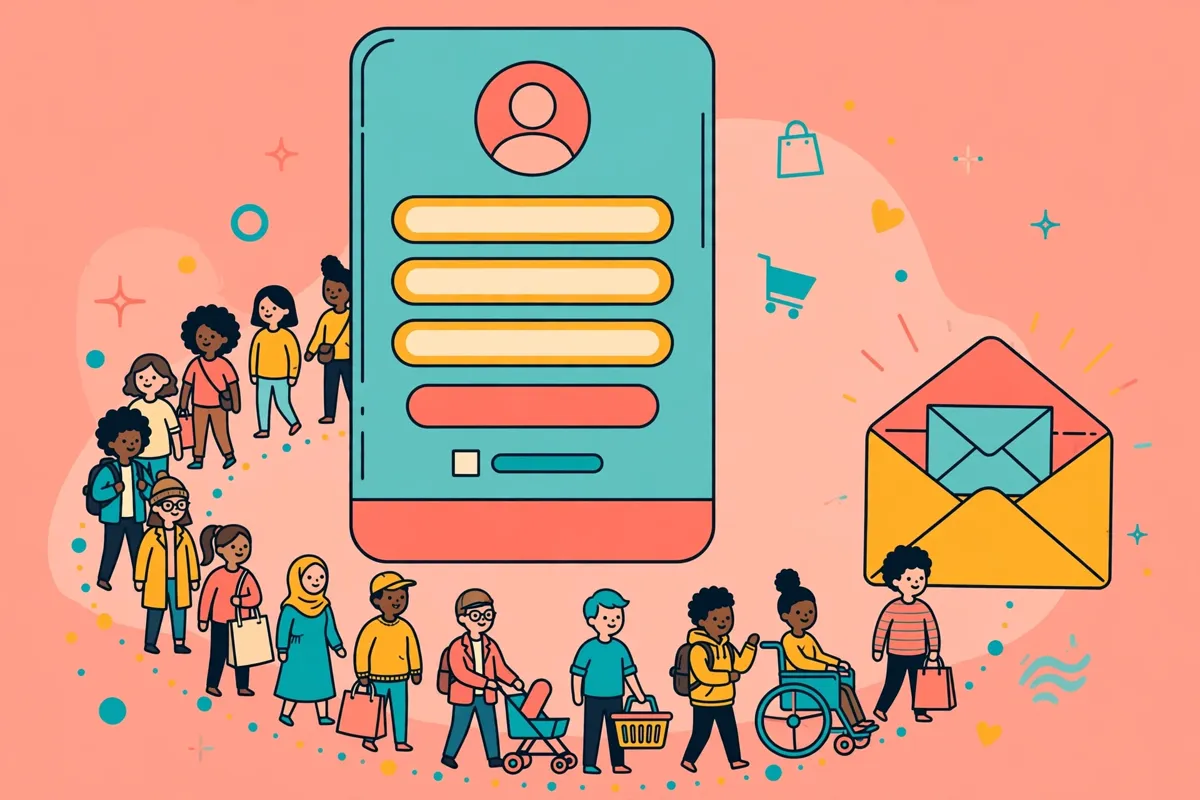
Every subscriber you add in October is a free audience in November. Every subscriber you chase during Black Friday week costs you attention you should spend on selling. Email marketing for small business starts with the signup points you already own. Your website needs one clear form above the fold, not a popup that fires three seconds after arrival. Your checkout needs a checked-by-choice email opt-in, not a pre-ticked box that breeds spam complaints. Your shop counter needs a small sign with a QR code and a reason to join: early access to the holiday sale, a gift guide, or a first-order discount you can actually afford.
Ask for SMS consent at the same time, but keep it separate and honest. A phone number is not a bonus field on an email form. It is a second channel with its own rules, and texting someone who only agreed to email is a fast way to lose both. A simple line works: "Get a text when the sale starts, plus one final-hours reminder. No other texts." Then keep that promise exactly.
Clean the list you have before you grow it. Remove hard bounces, suppress people who marked you as spam, and segment by engagement: opened in the last 90 days, bought in the last year, never bought. Warm the engaged segment through October with useful emails, a gift guide preview, a behind-the-scenes note, a customer story, so your November sends land in inboxes that recognize you. A cold list blasted on Black Friday is how small senders end up in spam. If your emails already land in spam or promotions, fix that first with our email deliverability guide, which covers authentication, list hygiene, and the warm-up routine in plain steps.
What are the five flows that sell while you sleep?
In email marketing for small business, campaigns get the glory, but flows do the quiet work. A flow is an automated series triggered by what a customer does, and five of them cover most small business revenue. Set these up before you write a single Black Friday campaign.
First, the welcome flow: three emails over seven days. Email one delivers whatever you promised at signup and introduces one bestseller. Email two tells a short customer story and answers the top question new buyers ask. Email three offers a gentle first-order reason to buy, with a deadline you mean. Second, browse and cart abandonment: one reminder within a few hours, one more the next day with a review or a common question answered, and no discount until the third message, if you discount at all. Discounting on the first reminder trains customers to abandon on purpose.
Third, post-purchase: a thank-you and a shipping note, then a how-to-use-it email timed to delivery, then a review request a week later. This flow turns one sale into a second, because a customer who knows how to use what they bought comes back. Fourth, winback: after 90 days of silence, one "we miss you, here is what is new" email, then one offer, then silence. Chasing dead addresses hurts deliverability more than it helps sales. Fifth, VIP early access: your best 10 percent of customers get the sale 48 hours early, at the same price everyone else will pay. Early access beats a deeper discount, because it rewards loyalty without teaching everyone to wait for a bigger cut.
What Black Friday calendar actually works?
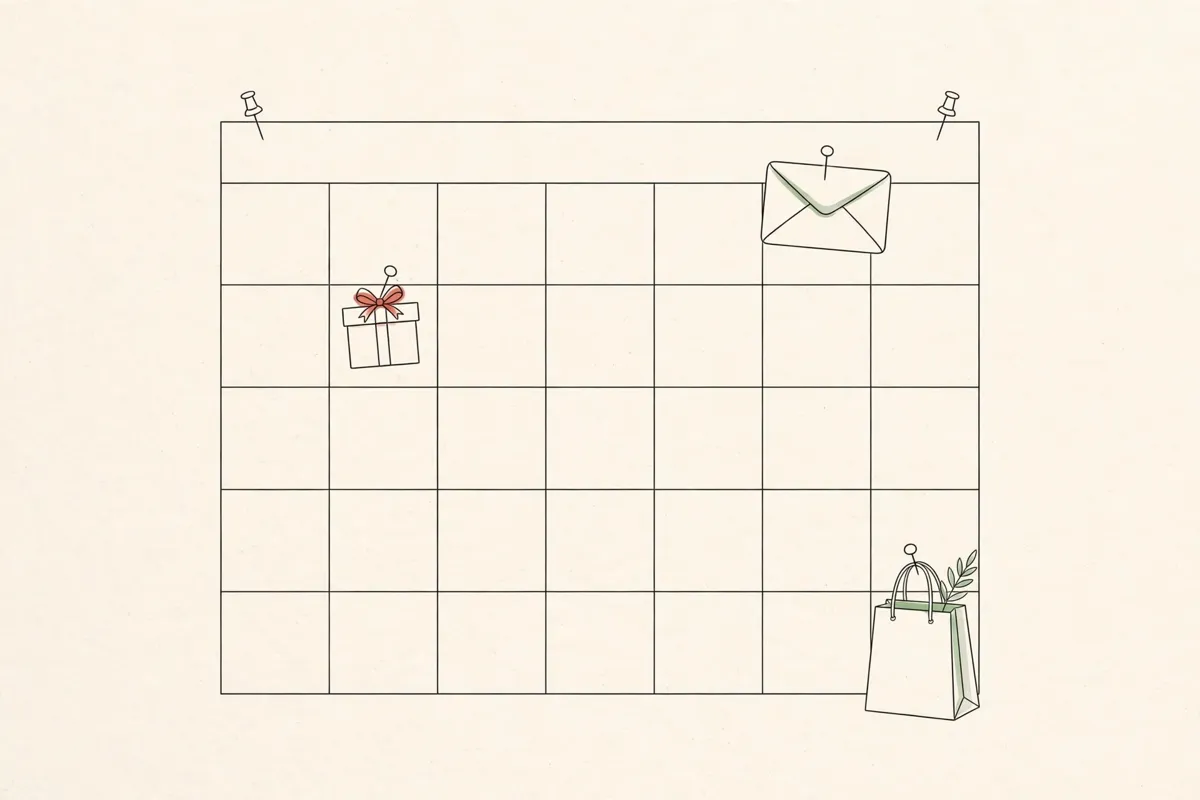
Black Friday falls on November 27, 2026, Small Business Saturday on November 28, and Cyber Monday on November 30. Work backward from those dates, and schedule everything by Thanksgiving week, because nothing gets built well on the day itself. Here is a calendar sized for a small team, not an agency with twenty staff.
November 2 to 8: send a save-the-date note and switch your signup forms to holiday wording. November 9 to 15: give VIPs early access and send one product spotlight to engaged non-buyers. November 16 to 22: send a gift guide that helps people decide, grouped by recipient or budget, not a wall of products. November 23 to 26: one teaser, then a light touch on Thanksgiving itself, or skip it. Many brands send a short note with the offer link on Thanksgiving evening and nothing more.
November 27: a morning launch email to everyone, a midday send to a segment that matches the offer, and an evening reminder only to non-buyers. November 28 to 29: pivot to Small Business Saturday and bestsellers, or a low-stock note if stock is genuinely low. November 30: a Cyber Monday final-hours email, and that is your one last-chance message. Say it once. Saying it twice kills the trust the first one built. December 1 to 10: thank-you emails, shipping deadline reminders, and a post-purchase flow that starts the next sale. Two rules hold across all of it: suppress anyone who already bought from further sale messages, and never fake a deadline. Customers remember.
What subject lines get opened, without tricks?
Subject lines fail for two reasons: they promise something the email does not deliver, or they say nothing at all. "Big sale inside" says nothing. "Your 20 percent ends tonight, plus free shipping over $50" says something, and it can be checked. Keep subject lines under about 50 characters so phones show the whole line, put the useful word first, and match the preview text to the first line of the email, because that is what most inboxes show next to it.
Twelve lines you can adapt, grouped by job. For VIP early access: "Early access opens tonight for past customers" and "You get first pick, before Friday." For the launch: "Black Friday is live, free shipping over $50" and "The gift guide pick is back in stock." For reminders: "Still thinking about it? Two questions answered" and "Last call tonight, no extension." For post-purchase: "Your order ships today, here is what to expect" and "Three ways customers use it most." For winback: "We added the size you asked about" and "Still want it? A smaller nudge, not a blast." Avoid fake urgency ("closing forever" for a sale that returns next week), all-caps shouting, and emoji piles that read as spam. Test two subject lines on 20 percent of your list each, then send the winner to the rest. One test per campaign is enough. Ten tests is procrastination.

Design for the phone first, the desktop second
With mobile driving an expected 57.4 percent of US online holiday spending in 2026, your email is a phone screen first. Use a single column, one idea per email, and a button big enough to tap with a thumb, at least 44 pixels tall, with real text on it like "Shop the sale" rather than an image of a button. Put the offer and the button in the first screenful, because many readers never scroll.
Images should support the message, not carry it. If images fail to load, your email must still make sense, so write the offer in text, add alt text to every image, and keep total image weight modest so it loads on a slow connection. Check dark mode, because white text on a transparent logo turns invisible there. Send a test to your own phone and to one Android and one iPhone if you can borrow them, and click every link before you schedule. A broken discount code on Black Friday morning is a story customers tell their friends.
What should you measure, and what should you ignore?
Open rate used to be the headline metric. It no longer is, because Apple Mail privacy protection loads tracking pixels whether a person reads or not, which inflates opens for Apple users. Use opens as a rough direction, not a verdict. The numbers that decide your next campaign are click rate, revenue per send, unsubscribe rate, and spam complaint rate.
Revenue per send is the honest one: total revenue from the campaign divided by emails delivered. If a campaign to 5,000 people earns $2,000, that is $0.40 per send. A smaller, segmented send that earns $1,500 to 2,000 people is $0.75 per send, and it cost you fewer unsubscribes. Watch unsubscribes per campaign: a steady rate under about 0.5 percent is normal for sales mail, while a spike above 1 percent means the message, the frequency, or the targeting was wrong. Spam complaints above 0.1 percent are a warning light. Pause, clean the list, and send only to engaged readers until it falls.
After each campaign, write down three lines: what went out, what it earned per send, and what you will change next time. That log, kept for a season, beats any dashboard, because it records decisions, not just numbers. If social still drives your discovery, pair email with it deliberately: our Threads marketing playbook and WhatsApp marketing guide cover the channels that bring people to the list, while email is the channel that turns them into repeat buyers.
| Fact | Number | Source or note |
|---|---|---|
| Segmented sends, average order value lift | 11 percent higher | Mailchimp 2025 peak season data |
| Top 10 percent of senders by click rate | Sent 56 times fewer emails | Black Friday and Cyber Monday |
| Weekend sends vs weekday sends | Twice the order rates, about 60 percent fewer messages | Mailchimp 2025 peak season data |
| Mobile share of US online holiday spending | 57.4 percent expected in 2026 | Adobe forecast |
| SMS, when it helps | Three moments only: early access, sale starts, final hours | Consent required, daytime hours only |
What is your 30-day plan, starting October 30?
Week 1, October 30 to November 5: audit the list, remove bounces and complainers, and build the three segments, engaged, buyers, and quiet. Check that all five flows work, with test orders placed by you, not by hope. Switch signup forms to holiday wording and add SMS consent where you have not asked for it.
Week 2, November 6 to 12: write the gift guide and the VIP early access email, and schedule both. Photograph or refresh the three products you will feature, because a tired photo sells nothing. Week 3, November 13 to 19: write the full Black Friday sequence, test every code and link, and schedule it through Cyber Monday. Brief anyone who answers customer messages on the offer terms, so replies match the email.
Week 4, November 20 to 30: send the teaser, open VIP access, launch on November 27, and close on November 30 with one final-hours message. Then stop selling and start thanking. December is for post-purchase flows, reviews, and the quiet work of keeping the customers November brought you. That is the whole game. A list you treat well in November is still buying in February, long after the sale banners come down.
Email marketing rewards shops that respect the inbox. Grow the list honestly, send less but send it better, and let the holiday calendar do its work in order. Start with the flows this week, and November will feel like a season you planned, not a week you survived.
Further reading: the Black Friday email calendar that pays, Black Friday email strategies and five brands that got it right, and the holiday shopping days small businesses overlook.
The bottom line
Judge the list by dollars per send, not by size or opens. A campaign to 5,000 people earning $2,000 is $0.40 per send, while a smaller segmented send earning $1,500 to 2,000 people is $0.75 per send with fewer unsubscribes. That ratio is the whole Black Friday plan in one number: clean the list, segment by engagement, send fewer better emails, and let the weekend gap and VIP early access do the work a bigger blast cannot.
Win the weekend instead of blasting Friday: weekend order rates ran twice weekday rates on about 60 percent fewer messages, so put the best segmented send where the orders already are, and let the rest of the list wait.
Frequently asked questions
How often should a small business send marketing emails?
One useful email a week is a good baseline, rising to three or four well-targeted sends during Black Friday week itself. Frequency matters less than relevance: a segmented send to buyers earns its place, while a daily blast to everyone earns unsubscribes. Watch your unsubscribe rate after each send and pull back if it spikes.
What is the best email platform for a small business in 2026?
Pick the one you will actually use weekly. Mailchimp, Klaviyo, and ConvertKit all cover forms, flows, and segments for a small list, and Klaviyo fits shops on Shopify best. The platform matters less than the setup: authenticated sending, a clean list, and the five flows in this guide, working before November.
Do I need SMS as well as email for Black Friday?
SMS helps for three moments only: early access, sale starts, and final hours. It is not a second newsletter. Ask for consent separately, send only what you promised, and keep texts inside daytime hours. Used that way, SMS lifts the email plan. Used as a blast channel, it burns the list faster than email ever could.
Why are my emails going to spam?
Usually a mix of unauthenticated sending, a cold or purchased list, and content that looks like bulk mail. Check SPF, DKIM, and DMARC, remove bounces and non-openers, and send to engaged readers first. Our deliverability guide walks through each fix in order.
How do I grow my list without buying subscribers?
Offer something worth an address: early access, a gift guide, a useful checklist, or a first-order discount you can afford. Put the form where buyers already are: checkout, the shop counter, and the top of your site. Never buy a list. Bought addresses complain, bounce, and damage the reputation your real subscribers depend on.
Want more practical guides like this?
Browse all 98 guides across 10 categories, no fluff, no paywall.
Browse all guides →Explore Marketing guides