Is Pet Insurance Worth It? The 2026 Numbers Say It Depends on This
Pet insurance premiums are up 17% this year and vet bills keep climbing. A clear cost breakdown shows exactly when the policy pays for itself.
Relevant ads will appear here once AdSense is connected.
In March 2026, my beagle Bruno ate a corn cob off the kitchen counter. Forty minutes later we were at the emergency vet, and by midnight we had a $4,100 bill for intestinal surgery. He was fine, thank God. My wallet was not.
We did not have pet insurance. I had looked at quotes a year earlier, decided $50 a month was too much, and closed the tab. That night in the waiting room, I did the math I should have done twelve months earlier.
This article is that math, done properly. I pulled 2026 premium data, the ASPCA's ownership cost figures, and the newest AM Best market report, and ran the break-even numbers for dogs and cats separately. The answer is not a simple yes or no. It depends on one thing, and you will know what it is by the end of this article.
1. What pet insurance actually costs in 2026
The average monthly premium for accident and illness pet insurance in the US is about $53 for dogs and about $32 for cats, according to Forbes Advisor. That is $636 a year for a dog and $384 for a cat, before you pay any deductible.
Those premiums are climbing fast. AM Best's August 2026 market report found that US pet health insurance direct written premium jumped 17% year over year in Q1 2026. The market is also heavily concentrated: the top 10 insurers account for 98% of the market, with Trupanion alone holding over 20% share. (Source: AM Best via Business Wire.)
Globally, the market was worth $9.87 billion in 2025 and is projected to reach $24.08 billion by 2034, growing at roughly 10.05% a year, per industry research (Source: GII Research). In plain terms: more pet owners are buying this, and prices keep rising.
Now stack the premium against what pet ownership costs anyway. The ASPCA estimates the first year with a dog or cat costs $1,904 to $3,221. Routine medical costs run about $225 a year for dogs and $160 for cats, and preventative medication adds roughly $185 a year for dogs and $140 for cats. So a healthy dog costs around $410 a year in routine vet care before anything ever goes wrong.
The question is not whether $636 a year is a lot of money. It is. The question is whether the insurance beats the alternative, which is paying vet bills out of pocket. That is what we will work out, line by line.
2. The three plan types, decoded
Every pet insurance product is one of three things. The names vary by company, but the structure is the same everywhere.
Accident-only is the cheapest option. It covers emergencies: broken bones, swallowed objects, snake bites, car accidents, lacerations. It does not cover illness at all. If your dog gets cancer, an accident-only plan pays nothing. Typical cost: roughly $20 to $30 a month for a dog, less for a cat.
Accident and illness is the standard plan and the one most people mean when they say "pet insurance." It covers everything accident-only covers plus illnesses: cancer, infections, allergies, digestive problems, hip dysplasia, diabetes. This is the plan behind the $53/$32 average monthly figures.
Wellness add-ons are not really insurance. They are scheduled-benefit packages that reimburse routine care: annual exams, vaccinations, flea and tick prevention, sometimes spay/neuter. They usually pay back a fixed amount per service, capped per year. They can make sense if you will use every service on the list, but they rarely generate a real saving beyond what you pay for them.
| Feature | Accident-only | Accident + Illness | Wellness add-on |
|---|---|---|---|
| Typical monthly cost (dog) | $20-$30 | ~$53 | $20-$40 extra |
| Broken bones, swallowed objects | Yes | Yes | No |
| Cancer, infections, allergies | No | Yes | No |
| Annual exams, vaccines, flea meds | No | No | Yes (capped) |
| Dental cleanings | No | Rarely (accident only) | Sometimes |
| Best for | Young, healthy, budget-focused owners | Most pet owners | Owners who want predictable routine costs |
If you already buy insurance for your health, your home, and your car, pet insurance follows the same logic: you are not insuring the expected costs, you are insuring the tail-risk ones. The wellness add-on is the exception. Skip it if you would not use every item on its list.
3. The fine print that catches everyone
Pet insurance is a reimbursement product with more exclusions than most buyers expect. Read these before you pay for anything.
Waiting periods. Coverage does not start the day you sign up. Accident coverage usually kicks in after 3 to 15 days. Illness coverage usually waits about 14 days. Orthopedic conditions, like cruciate ligament tears, can carry waiting periods of 6 to 12 months at some companies. Buy before you need it, not after the limp starts.
Pre-existing conditions are excluded. Anything your pet was diagnosed with, or showed symptoms of, before the policy started is not covered. This includes chronic conditions like allergies and ear infections. Some insurers will cover a curable condition again after 12 months symptom-free, but chronic conditions stay excluded for life.
Bilateral condition clauses. If your dog tears the cruciate ligament in the left knee, many policies will not cover the right knee when it goes later. Same with hip dysplasia on one side, then the other. Read this clause in full.
Age caps and annual limits. Some insurers will not enroll pets older than 14 (dogs) or 16 (cats), and many plans cap annual payouts at $5,000 to $10,000 unless you pay for unlimited coverage. A single round of cancer treatment can blow past a $5,000 cap, so check the number, not just the premium.
4. The break-even math, with a real example
Here is the part everyone skips, so let us do it carefully. Take a dog on the average plan: $53 a month, $250 annual deductible, 80% reimbursement.
Three years in, Bruno's corn cob surgery happens. The bill is $4,100. The insurer subtracts the $250 deductible, then pays 80% of the remaining $3,850, which is $3,080. You pay $1,020 of the bill yourself.
By that point you have paid $1,908 in premiums (36 months at $53) plus your $1,020 share of the surgery, for a total of $2,928. Without insurance you would have paid $4,100. The policy saved you $1,172 on that one incident.
Now the other scenario. Five quiet years, no claims. You paid $3,180 in premiums and got back $0. The policy cost you $3,180 for peace of mind. That is the bet, stated honestly.
Run the same math for a cat: $32 a month is $384 a year. A urinary blockage, one of the most common cat emergencies, costs around $2,000. With a $250 deductible and 80% reimbursement, the insurer pays $1,400. Two quiet years of premiums ($768) plus your $600 share is $1,368 against a $2,000 bill. You are ahead by $632 on a single incident.
A quick rule of thumb you can use at the kitchen table: multiply your monthly premium by 12, add the deductible, and ask yourself whether your pet is likely to generate a vet bill bigger than that number in the next two to three years. For a dog at $53 a month with a $250 deductible, the number is $886 a year. One emergency room visit clears it easily.
5. When the policy clearly pays for itself
Some pets are statistical certainties, and the insurers know it. That is exactly why premiums rise with age and vary by breed.
Young dogs, especially large and purebred ones. Puppies swallow things, break bones at the dog park, and develop breed-linked conditions like hip dysplasia and allergies. German shepherds, bulldogs, golden retrievers, and French bulldogs all sit in the high-claim bracket. If you own one, insurance is close to a mathematical favorite.
If a surprise $5,000 bill would land on a credit card. This is the real test. A $5,000 vet bill financed at 24% APR costs far more than $5,000. If you do not have a cash cushion, pet insurance converts an unpredictable four-figure shock into a predictable $53 a month. That is worth it even if the lifetime math is only roughly break-even.
During the puppy and kitten years. Foreign-body surgeries, parvo treatment, and broken legs cluster in the first two years of a dog's life. Enrolling at eight weeks means you lock in the lowest premium and the cleanest medical record, with no pre-existing conditions to exclude. It is the single best-timed purchase in all of pet insurance.
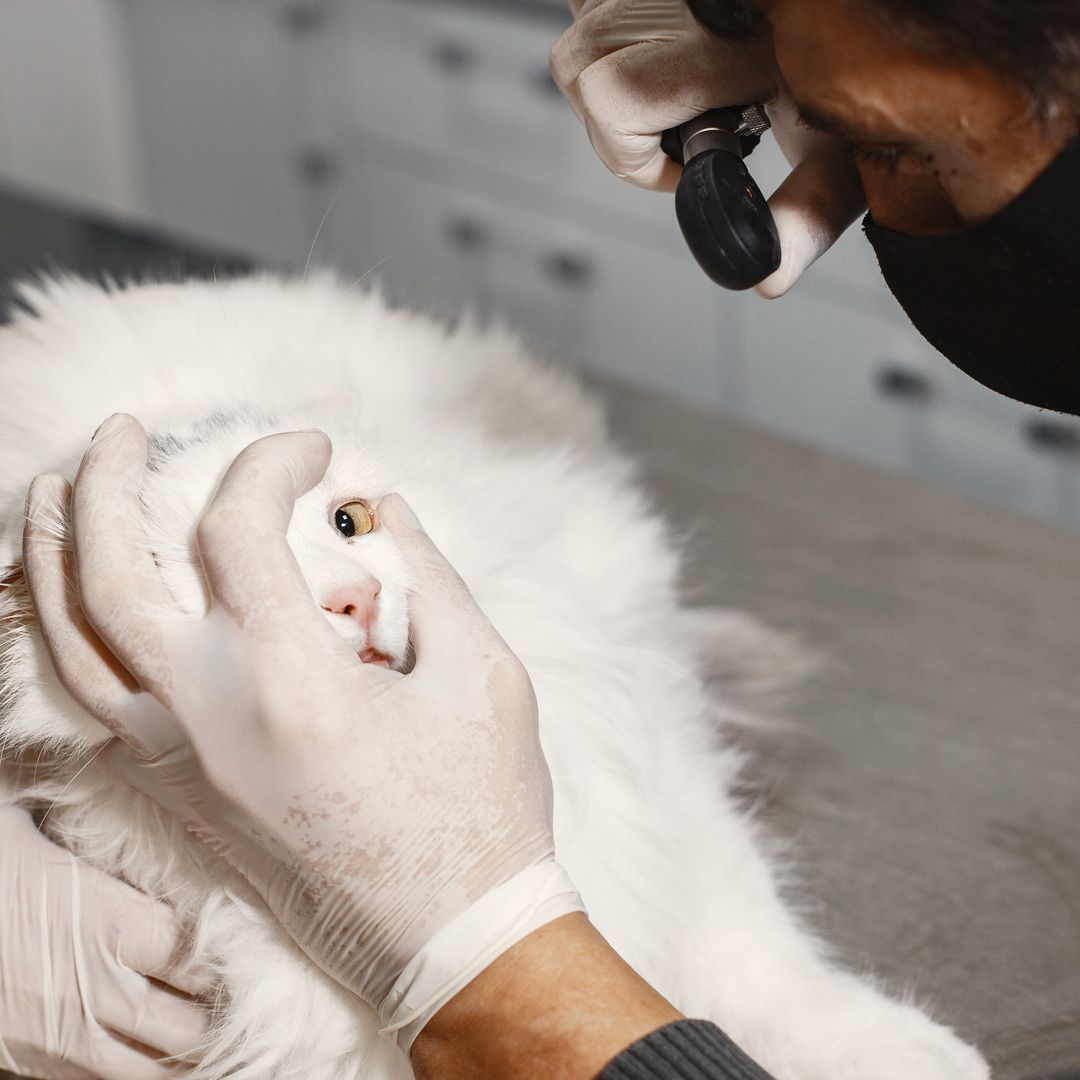
Cat owners with outdoor or accident-prone cats. Indoor-only adult cats are the lowest-risk pets to insure, but cats that roam, fight, or eat string generate emergency bills that dwarf a $384 annual premium. One blocked bladder or one abscessed bite wound and the policy has paid for years.
The logic is the same logic behind term life insurance: you buy it when the financial consequence of the bad event is one you cannot comfortably absorb. For more on how to think about which risks are worth insuring, our HDHP vs PPO breakdown walks through the same deductible-versus-premium tradeoff for human health plans.
6. When you'd be better off self-insuring
Insurance companies are profitable for a reason: on average, customers pay more in premiums than they get back in claims. If you can absorb the variance yourself, self-insuring wins.
You have a real emergency fund. If you can park $3,000 to $5,000 in a separate savings account and leave it alone, you are effectively your own insurer with a $0 deductible and 100% reimbursement. The ASPCA's routine cost figures ($225 a year for dogs, $160 for cats) plus one medium emergency every few years still come in under a decade of premiums for a healthy pet.
Healthy senior pets with clean records are rare, but check the numbers. Premiums climb steeply with age, and anything already diagnosed is excluded anyway. A 12-year-old dog might cost $120 or more a month to insure while the policy excludes the arthritis and the heart murmur you actually need covered. At that point the premium mostly buys accident coverage, and an emergency fund does the same job.
Multiple pets. Two dogs at $53 a month each is $1,272 a year in premiums. Three pets is nearly $2,000. Insurers offer multi-pet discounts, usually 5 to 10%, which barely dents the total. A single shared emergency fund of $5,000 to $8,000 often beats three separate policies, because the odds of all three pets having emergencies in the same year are low.
Relevant ads will appear here once AdSense is connected.
FAQ
How much is pet insurance in 2026?
The average accident and illness plan costs about $53 a month for dogs and $32 a month for cats, per Forbes Advisor. Accident-only plans run cheaper, roughly $20 to $30 a month for a dog. Your actual quote depends on breed, age, zip code, deductible, and reimbursement level.
Does pet insurance cover pre-existing conditions?
Almost never. Conditions diagnosed or showing symptoms before the policy starts are excluded. Some insurers will reconsider curable conditions after 12 symptom-free months, but chronic conditions like allergies, arthritis, and diabetes stay excluded permanently. This is the main reason to enroll a pet while it is young and healthy.
What does accident-only pet insurance cover?
Emergencies only: broken bones, swallowed objects, bites, cuts, car accidents, poisoning. It does not cover any illness, so cancer, infections, and allergies are all out of pocket. It is the cheapest option and works best for young, healthy pets on a tight budget.
When is the best time to buy pet insurance?
As young as possible, ideally at 8 weeks when you bring a puppy or kitten home. Premiums are lowest, no pre-existing conditions exist yet on the medical record, and waiting periods are behind you before the high-risk puppy years begin.
Is there an age limit for pet insurance?
Many insurers stop enrolling new pets at 14 years for dogs and 16 for cats, though most will keep renewing a policy you bought earlier. Premiums rise with age, so a policy bought at age 2 costs far less over its lifetime than one bought at age 8.
Can I use any vet with pet insurance?
Yes. Pet insurance is a reimbursement model, so you pay the vet, submit the claim, and get paid back. There are no networks and no referrals needed, which is one genuine advantage over human health insurance.
Your next steps
Here is the one-thing test from the start of this article: if a surprise $4,000 vet bill would go on a credit card or wreck your month, pet insurance is worth it for you. If you have the cash to absorb that bill and the discipline to keep an emergency fund, self-insuring will probably cost less over your pet's lifetime. We signed Bruno up for an accident and illness plan the week after his surgery, once the waiting period math made sense again, and we have not regretted it.
Whatever you decide, decide before the emergency. Get two or three quotes this week, compare the same deductible and reimbursement level, and read the pre-existing condition clause before you pay. If this kind of numbers-first breakdown is useful, our morning newsletter covers business, money, and AI the same way: one idea, three minutes, no fluff.
Relevant ads will appear here once AdSense is connected.