Solo 401(k) vs SEP IRA 2026: Self-Employed Guide
You earned the money yourself. Now keep more of it. This Solo 401(k) vs SEP IRA comparison breaks down the two retirement plans that matter most for freelancers and founders, with real 2026 numbers.
Quick answer: For self-employed people with no employees, the Solo 401(k) usually shelters more money because you contribute as both employee and employer, and it supports Roth contributions and loans. The SEP IRA is simpler, has one deadline, and fits high incomes where 25% of pay already hits the cap. Run the math below first.
Key numbers at a glance
- $23,500 is the 2026 Solo 401(k) employee deferral limit, before any employer contribution.
- $70,000 is the 2026 total cap for both plans (under 50), employer plus employee combined.
- $42,000+ is what a $100k earner can shelter with a Solo 401(k) vs about $18,600 with a SEP IRA.
- $0 Roth option exists inside a SEP IRA. Solo 401(k)s can hold Roth money.
- April 15, 2027 is the SEP IRA funding deadline for 2026. Solo 401(k) employee deferrals need setup by Dec 31.
- 5.2% estimated share of self-employed workers with no employer plan who max out any retirement account.
- $10,100 versus $4,460 is the 2026 tax saving gap on a $100,000 income at a 24% marginal rate: about $10,100 with the Solo 401(k) against about $4,460 with the SEP IRA.
- About $280,000 of compensation is where the two plans converge, because once 25% of pay passes $70,000 both plans hit the same cap.
- 31,000 dollars employee deferral at 50 or older is the 2026 Solo 401(k) limit with the 7,500 dollar catch-up, against 23,500 dollars under 50, and the total cap rises to 77,500 dollars at 50 or older against 70,000 dollars under 50.
- 50,000 dollars or 50 percent of the vested balance, whichever is less, is what you can borrow from your own Solo 401(k) and repay with interest to yourself over up to five years, a flexibility a SEP IRA does not offer at all.
Last reviewed: October 2026.
| Fact | Detail |
|---|---|
| 2026 employee limit | Solo 401(k): $23,500. SEP IRA: none (employer only) |
| 2026 total limit | Both capped at $70,000 (under 50) |
| Roth contributions | Solo 401(k): yes, if plan allows. SEP IRA: no |
| Loans | Solo 401(k): up to $50k. SEP IRA: no |
| Employees allowed | Solo 401(k): none (spouse OK). SEP IRA: yes, covers staff |
| 2026 setup deadline | Solo 401(k): Dec 31 for full deferrals. SEP IRA: April 15, 2027 |
| Form 5500 filing | Solo 401(k): only if assets exceed $250k. SEP IRA: never |
Relevant ads will appear here once AdSense is connected.
A freelance designer I know cleared $118,000 last year. Good money. Then she told me, over coffee, that she had saved almost nothing for retirement, because every December she means to open something and every April she is too busy filing to think straight. She is not lazy. She is just self-employed, which means nobody set up a 401(k) for her, nobody matched her contributions, and nobody sent her a reminder.
If that sounds familiar, this guide is the whole decision in one place. Solo 401(k) vs SEP IRA is the only comparison most self-employed people need, and the right answer depends on your income, your age, and whether you like paperwork. I will give you the 2026 limits, the real tax math on a $100,000 income, the Roth angle most articles skip, and a decision guide you can finish in five minutes.
Why Does This Choice Matter More in 2026?
Three things changed the math this year. First, the 2026 contribution limits went up, so the gap between the two plans is wider than it was a few years ago. Second, taxes are the one expense you can still control in a year when everything else costs more. And third, a record share of Americans now earn at least part of their income independently, which means a record share have no employer plan at all.
The cost of waiting is concrete. Every $1,000 you shelter at a 24% marginal rate saves you $240 in tax this year, and that money compounds for decades. Wait three years to decide and you have permanently lost three years of contribution room. You cannot go back and fund 2023 later.
What Is the 60-Second Answer?
Pick the Solo 401(k) if you have no employees, earn under roughly $200,000 net, want Roth options, or might want to borrow from your own plan someday. Pick the SEP IRA if you have employees, want the simplest possible setup, or missed the December 31 deadline and need to fund something by tax day.
That is the short version. The rest of this guide is the proof, because a retirement decision you cannot explain to yourself is a decision you will second-guess every year.
What Is a Solo 401(k), Really?
A Solo 401(k) is a retirement plan for a business with only you (plus your spouse) on the payroll. It lets you contribute as both employee and employer, up to a combined $70,000 for 2026.
A Solo 401(k) is a 401(k) for a business of one. You plus your spouse, if your spouse works in the business. No other employees. The trick is that you get to wear two hats: employee and employer. As the employee, you defer up to $23,500 in 2026 ($31,000 if you are 50 or older, thanks to the $7,500 catch-up). As the employer, you can add up to 25% of your compensation on top. The two hats together cannot exceed $70,000 for 2026 ($77,500 if 50+).
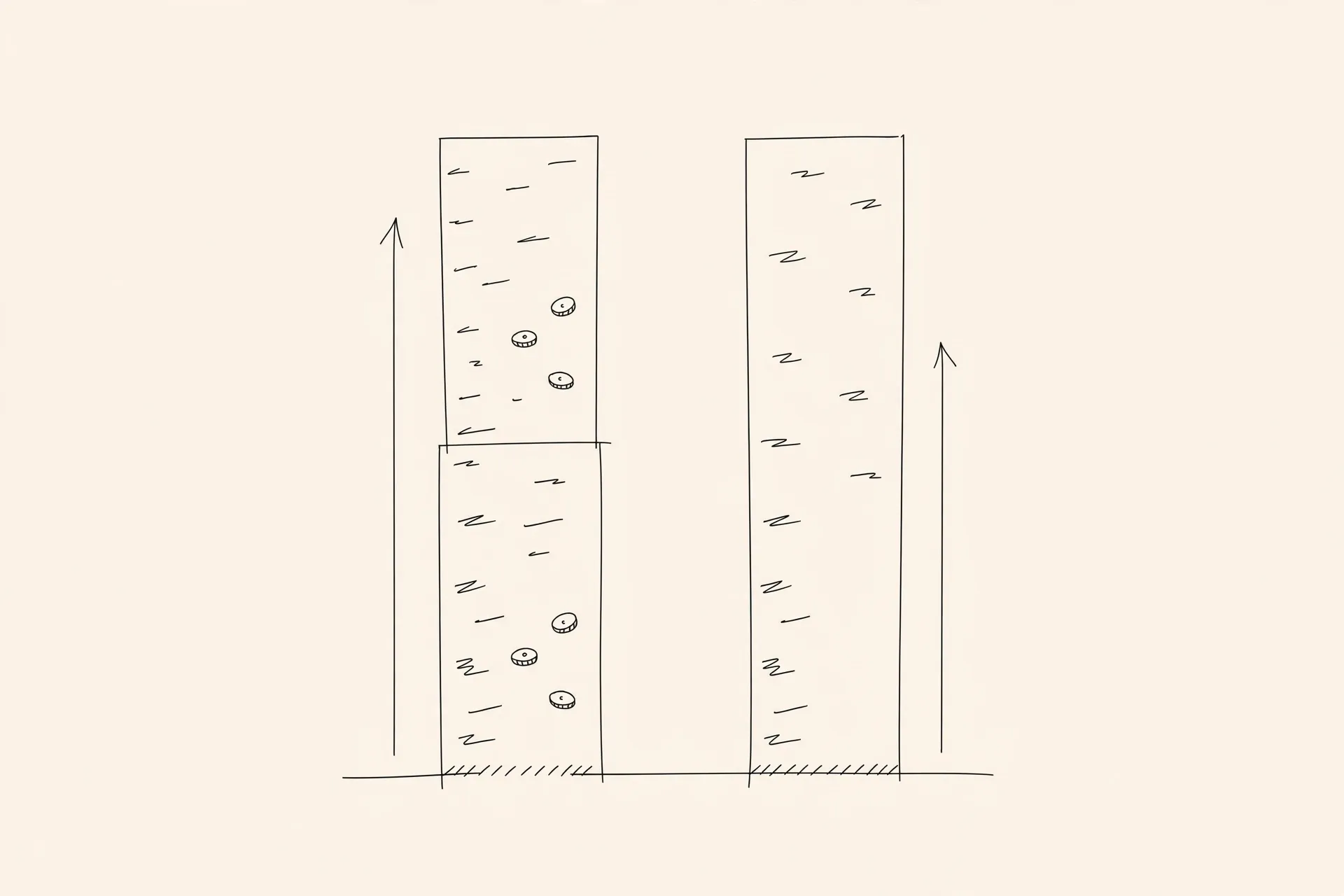
The two-hat structure is the whole advantage. At a $100,000 net income, the employee deferral alone ($23,500) already beats what many people can put in a SEP IRA, and then the employer portion stacks on top. More on the exact math in a minute.
Three extras come with the Solo 401(k). First, Roth contributions: many Solo 401(k) plans let you make after-tax Roth deferrals, so you can build tax-free retirement money even at high incomes where Roth IRAs phase out. Second, loans: you can borrow up to $50,000 or 50% of your vested balance from your own plan and pay yourself back with interest. Third, the mega backdoor Roth: some plans allow after-tax contributions beyond the $23,500, which can be converted to Roth. Not every provider offers this, so ask before you open.
The price of all this is paperwork. You need an EIN, you adopt a written plan document (your provider supplies it), and once the plan holds more than $250,000 in assets you file Form 5500-EZ each year. None of this is hard, but it is more than the SEP IRA asks of you.
What Is a SEP IRA, Then?
A SEP IRA is an employer-funded IRA that lets your business contribute up to 25% of your compensation, capped at $70,000 for 2026. There is no employee deferral and no Roth option.
A SEP IRA is the simple one. It is an IRA that your business funds with employer contributions: up to 25% of compensation, capped at $70,000 for 2026. There is no employee deferral. You cannot put in $23,500 of your own salary the way you can with a Solo 401(k). The contribution is purely a percentage of what the business pays you.

What you lose in flexibility you gain in simplicity. A SEP IRA takes about 15 minutes to open at any major brokerage. There is no annual filing, ever. And the deadline is generous: you can open and fund a SEP IRA for 2026 as late as April 15, 2027, or October 15 if you extend your return. That makes it the rescue plan for people who discover this article in March.
Two limitations to know. First, no Roth: SEP IRA contributions are pre-tax only. Second, if you have employees, a SEP IRA must cover them too, at the same percentage you give yourself. That is fair, but it can get expensive, which is one reason growing businesses often outgrow the SEP.
Where Does the Difference Show Up? The $100,000 Example
Let us make this concrete. Say you are a freelance consultant with $100,000 of net self-employment income in 2026. Here is what each plan lets you shelter.
With a SEP IRA, your limit is 25% of compensation, but compensation for this purpose is net earnings minus half your self-employment tax and minus the contribution itself. The IRS worksheet lands at roughly $18,587. Not bad, but notice the ceiling.
With a Solo 401(k), you defer $23,500 as the employee, then add about $18,587 as the employer (the same 25% calculation). Total: roughly $42,087. That is more than double the SEP IRA, on the exact same income.

At a 24% marginal tax rate, the Solo 401(k) saves you about $10,100 in 2026 taxes versus about $4,460 with the SEP IRA. The gap narrows as income rises, because once 25% of your compensation exceeds $70,000 both plans hit the same cap. That crossover happens around $280,000 of compensation, which is why high earners can reasonably choose either one.
The lesson: the lower your income, the bigger the Solo 401(k) advantage. If you earn $60,000 net, the SEP IRA caps you near $11,000 while the Solo 401(k) still lets you defer the full $23,500 plus an employer piece. For early-career freelancers, this is not close.
What About Roth? The Angle Most Articles Skip
If you expect your tax rate in retirement to be similar to today, or you simply want tax-free money later, the Solo 401(k) wins outright. Many Solo 401(k) plans accept Roth employee deferrals, which means you can put up to $23,500 a year into Roth space even if your income is far above the Roth IRA phase-out. A SEP IRA has no Roth option at all.
There is a related play worth knowing. If your Solo 401(k) provider allows after-tax contributions, the mega backdoor Roth lets you contribute well beyond $23,500 and convert the extra to Roth. Providers like Fidelity, Schwab, and several fintech 401(k) platforms support some version of this. Ask specifically before you commit, because plan documents differ.
Our Roth conversion ladder guide walks through how to move pre-tax money into Roth space strategically over low-income years. Pair that strategy with a Solo 401(k) and you have the full toolkit.
Can You Touch the Money? Loans and Flexibility
Life happens to freelancers too: a slow quarter, a medical bill, a business investment you cannot pass up. A Solo 401(k) lets you borrow up to $50,000 or 50% of your vested balance, whichever is less, and repay it with interest to yourself over up to five years. A SEP IRA offers no loans; your only option is a withdrawal, with taxes and the 10% early-withdrawal penalty if you are under 59 and a half.

Borrowing from retirement should never be plan A, and the interest you pay yourself is not a return. But as a safety valve, it beats raiding the account or taking high-interest debt. If your income is lumpy, that flexibility has real value.
One more flexibility note: Solo 401(k) assets are generally protected from creditors under federal law (ERISA), while SEP IRA protection depends on your state. If you work in a litigious field, ask your advisor, but the Solo 401(k) usually has the stronger shield.
What Are the Deadlines? Read This Before December
This is where people get burned. To make the full $23,500 employee deferral for 2026, your Solo 401(k) must be established by December 31, 2026, and your deferral election needs to be in place before year end. The employer profit-sharing piece can be funded later, up to your tax filing deadline, but the employee half is use-it-or-lose-it by December 31.
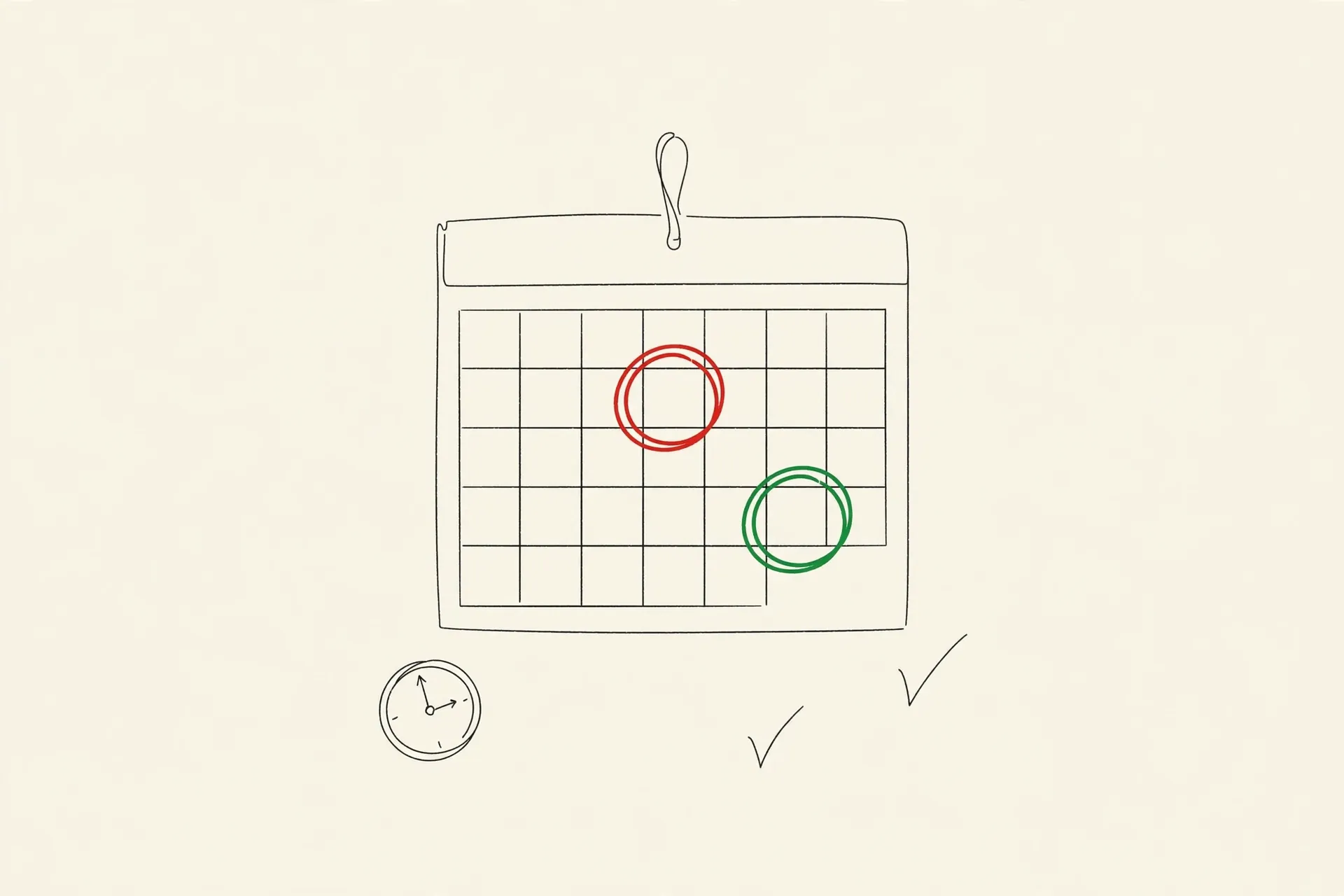
The SEP IRA is the forgiving one: open and fund by April 15, 2027 (October 15 with an extension) and it still counts for 2026. If you are reading this in February with no plan in place, the SEP IRA is your answer for last year, and you can open a Solo 401(k) for the current year going forward.
Paperwork-wise, the SEP IRA needs almost nothing: open the account, fund it, done. The Solo 401(k) needs an EIN (free from the IRS website, ten minutes), a plan adoption agreement from your provider, and eventually Form 5500-EZ once assets pass $250,000. Keep a folder. Future you will be grateful.
Who Should Pick Which? The Decision Guide
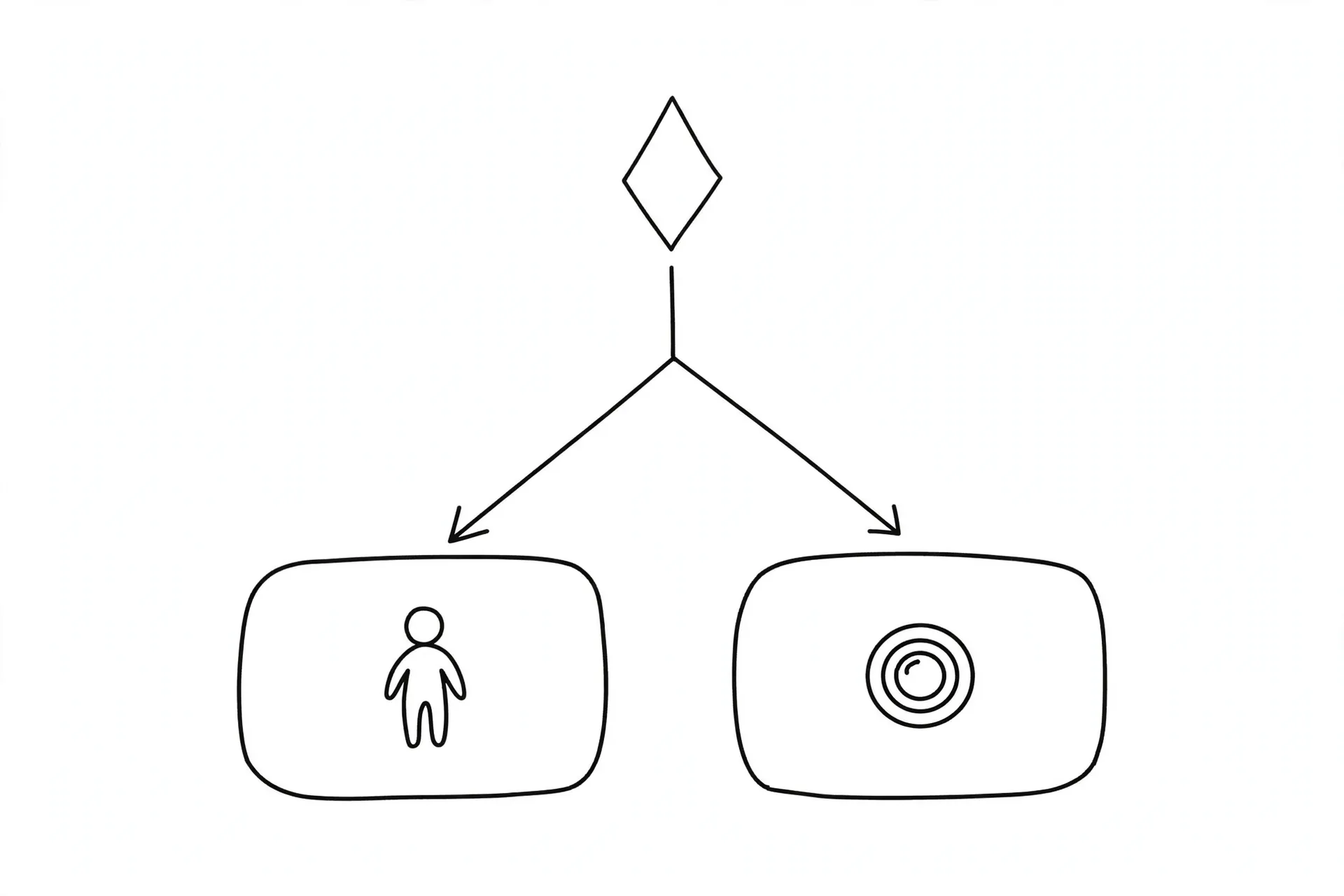
Run through this in order. The first one that fits is your answer.
- You have employees (beyond a spouse). You cannot use a Solo 401(k). Use a SEP IRA, or look at a regular small-business 401(k) if you want Roth and loans.
- You earn under $200,000 net and want the biggest deduction. Solo 401(k). The two-hat math wins by a wide margin.
- You want Roth contributions at a high income. Solo 401(k), with a provider that supports Roth deferrals.
- You missed December 31. Fund a SEP IRA by April 15 for the year you missed, then open a Solo 401(k) for the current year.
- You want the simplest possible life. SEP IRA. Fifteen minutes, one deadline, no filings.
- You earn over ~$280,000. Both plans max out at $70,000. Choose on features: Solo 401(k) for Roth and loans, SEP IRA for simplicity.
If you are structured as an LLC, also read our LLC vs sole proprietorship guide, because an S-corp election changes how compensation is calculated for both plans. And whatever you choose, fund it alongside an emergency fund first. Retirement money you have to raid is not retirement money.
What Are the 5 Mistakes Self-Employed People Make Here?
- Waiting until April to think about it. The SEP IRA forgives this. The Solo 401(k) does not. Put a December 1 reminder in your calendar today.
- Contributing 25% of gross instead of net. The SEP IRA limit is 25% of compensation after adjustments, not 25% of what you invoiced. Overcontributing means fixing it with the IRS, which is no fun.
- Ignoring the Roth option. If your Solo 401(k) offers Roth deferrals and you are in your peak earning years, at least consider splitting contributions. Tax diversification is free.
- Forgetting the $250k Form 5500-EZ trigger. It is a simple form, but the penalty for not filing is steep. Set a net-worth check each January.
- Picking a provider without checking features. Not all Solo 401(k)s allow Roth deferrals, loans, or mega backdoor contributions. The cheapest provider is not the best if it blocks the features you want in three years.

What Should You Do This Week?
- Estimate your 2026 net self-employment income (revenue minus expenses).
- Run both calculations: SEP IRA at ~25% of net, Solo 401(k) at $23,500 plus ~25% of net, capped at $70,000.
- If Solo 401(k) wins and it is before December 31, get an EIN and open the plan this week.
- Set your employee deferral election before year end, even if you fund the employer piece in the spring.
- Automate monthly contributions. The plan you fund automatically beats the perfect plan you fund never.

The bottom line
If you have no employees and net income under roughly $200,000, the Solo 401(k) is the pick. Its $23,500 employee deferral stacks on top of the employer share. That is the whole edge at lower incomes. Past about $280,000 of compensation, both plans cap at $70,000. Then choose on features like Roth and loans.
Apply the article's own math before you choose. Compare about 25% of your net income against $23,500 plus that same 25%, capped at $70,000. On a $100,000 income that is roughly $42,087 versus $18,587, more than two to one.
One deadline can cost you thousands. The $23,500 deferral needs the plan set up by December 31, 2026. Your deferral election must also be in place before year end. Miss it and only the SEP IRA's April 15, 2027 funding window can rescue last year's contributions.
At lower incomes the gap is the whole decision, and the $60,000 case proves it: the SEP IRA caps near $11,000 while the Solo 401(k) still allows the full $23,500 employee deferral plus an employer piece. Add a spouse who earns compensation from the business and the household room effectively doubles, each partner getting the $23,500 deferral plus employer contributions. Set the plan up by December 31, 2026, put the deferral election in place before year end, and run both calculations every year instead of assuming last year's winner still wins.
Choose on features, not only on the contribution limit, because the limit gap closes at high incomes. At around 280,000 dollars of compensation both plans hit the same 70,000 dollar cap, so the Solo 401(k) case then rests on Roth deferrals, the loan option, and generally stronger creditor protection under federal law, while the SEP IRA case rests on simplicity and its forgiving April 15 funding deadline. A spouse who earns compensation from the business doubles the household room, and the day you hire a non-spouse employee you must convert to a regular 401(k) or switch, so pick the plan that fits the business you will have, not only the income you have now.
FAQ
Can I have both a Solo 401(k) and a SEP IRA?
Yes, but the $70,000 total limit applies across both plans combined for 2026, so there is rarely a reason to maintain both. Most people pick one and fund it fully. The exception is using a SEP IRA for a prior year after missing the Solo 401(k) deadline.
What if my spouse works in my business?
A spouse who earns compensation from the business can participate in your Solo 401(k), which effectively doubles the household contribution room: each of you gets the $23,500 employee deferral plus employer contributions, subject to the per-person $70,000 cap.
Do Solo 401(k) contributions reduce self-employment tax?
No. Retirement contributions reduce your income tax, not your self-employment tax. Only an S-corp election, which splits income into salary and distributions, can reduce SE tax, and that changes the contribution math, so run both scenarios.
Which is better if I might hire employees next year?
Start with the Solo 401(k) while you are solo to capture the bigger limits and Roth option. When you hire your first non-spouse employee, you will need to convert to a regular 401(k) or switch to a SEP or SIMPLE IRA. Plan the transition with your provider before the hire, not after.
Where should I open a Solo 401(k) or SEP IRA?
Fidelity, Schwab, Vanguard, and E-Trade all offer both with no setup fees. Compare Roth support, loan provisions, and investment options before choosing. This article is educational, not a recommendation; for your specific situation, talk to a tax professional.
The Verdict
For most self-employed people with no employees, the Solo 401(k) is the stronger plan in 2026: bigger contributions at the same income, Roth options, loans, and better creditor protection. The SEP IRA earns its place on simplicity and its forgiving April deadline, and it is the right call if you have staff or you are starting late.
The best plan is the one that is open and funded. Pick one this week using the decision guide above, set the December reminder, and automate the contributions. Your future self, the one not worrying about money at 65, will thank you. For the next step in the sequence, our Roth conversion ladder guide shows how to turn pre-tax savings into tax-free income, and our index fund starter guide covers what to actually buy inside the account.
Relevant ads will appear here once AdSense is connected.
Want more practical guides like this?
Browse all 80 guides across 10 categories, no fluff, no paywall.
Browse all guides →