
Ultra-Processed Food: What 2 New Studies Just Found
Two October 2026 studies tested what ultra-processed food really does: one fed people identical-label meals in a metabolic chamber, another tracked 9 million adults. Same calories, different body response.
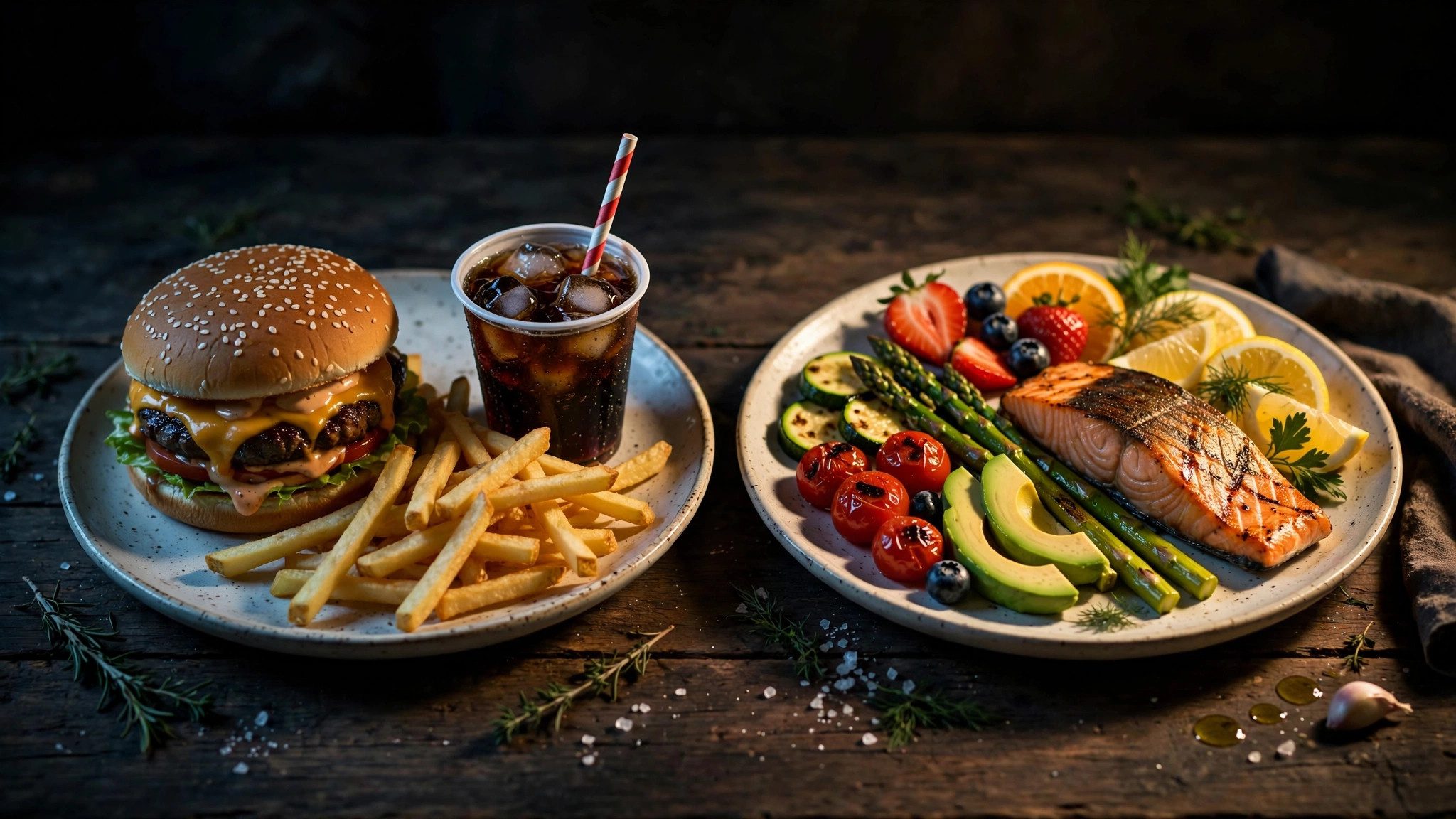
Two lunches can wear the same nutrition label and do different things inside your body. Same calories. Same carbs, fat, and protein, matched to within one percent. One lunch is built from packaged, factory-made foods. The other is built from foods that look like they grew or hatched somewhere. Your blood and your brain treat them differently.
That is not a guess. It is the result of a clinical trial published October 5, 2026 in the journal Nature Metabolism, and it landed in the same month as a separate analysis of nearly 9 million adults tying ultra-processed food to higher risks of heart disease, cancer, and death. For anyone who works at a desk and eats convenience food five days a week, October 2026 was the month the evidence got personal.
Here is what both studies actually found, what they did not prove, and what a busy founder should change about lunch on Monday.
Study 1: the same-label lunch test (October 2026)
The Virginia Tech team, led by researcher Alex DiFeliceantonio at the Fralin Biomedical Research Institute, wanted to test one assumption: if two meals are identical on paper, does the body treat them the same?
Fifty-seven healthy adults, ages 18 to 45, each ate two 300-calorie meals on separate days after fasting overnight. Both meals were matched within 1% on calories, carbohydrates, fat, protein, water, salt, and even weight. The ultra-processed meal was a peanut butter and jelly sandwich, deli turkey, veggie chips, a cookie, cereal, and instant mashed potatoes. The minimally processed meal was sliced banana, dried cranberries, cheese, and egg. Volunteers ate inside a sealed metabolic chamber that tracked their metabolism in real time, with blood drawn seven times over three hours.
The glucose curves looked similar. The insulin response did not. After the ultra-processed meal, insulin stayed substantially higher between about 40 and 120 minutes after eating. The body also burned less carbohydrate for fuel and more fat, while spending more total energy. Thirty-two participants also had brain scans while looking at food pictures: activity in the striatum, a brain region tied to motivation and reward, tracked with how differently each person's body burned carbohydrates after the two meals.

Relevant ads will appear here once AdSense is connected.
The honest caveats, straight from the researchers: this was small (57 people) and short-term (single meals). It does not prove long-term harm, and it does not show the insulin spike caused insulin resistance. Larger, longer trials are planned to test whether additives, food structure, or something else drives the difference. But the direction of the evidence is hard to shrug off: processing itself, beyond the nutrients, changed how the meal moved through people.
Study 2: 9 million adults, one pattern (September 2026)
Two weeks earlier, a different team published a meta-analysis of prospective cohort studies (published in the BMJ's family of journals, DOI 10.1136/fmch-2026-003925) covering nearly 9 million adults. Instead of feeding anyone a test meal, they tracked real eating patterns over years and looked for patterns.
For every extra 100 grams of ultra-processed food per day, the associated risks ran like this: cardiovascular events up 14%, cancer up 4%, all-cause mortality up 3%, metabolic syndrome and diabetes up 2%. The strongest associations showed up in digestive diseases, mental health conditions, cardiovascular problems, and metabolic disorders.
Read that 14% carefully, because this is where headlines go wrong. It is a population-level association from observational data. It does not mean your personal heart attack risk rises by exactly 14% if you eat more packaged food. People who eat more ultra-processed food differ from those who eat less in other ways (income, smoking, activity) that also affect health, and no statistical adjustment removes that completely. The researchers said so themselves. What the study does establish is consistency: across millions of people and many countries, the pattern keeps showing up in the same direction.

The diabetes finding nobody is talking about
The most useful new result came from the European Association for the Study of Diabetes meeting in Milan (September 28 to October 2, 2026). Wenxin Xu of City University of Hong Kong analyzed 56,964 UK adults (average age 69.5) with detailed diet questionnaires and wrist-worn activity trackers.
The finding: people who ate fewer ultra-processed foods and did regular moderate-to-vigorous physical activity were up to 70% less likely to develop type 2 diabetes. And here is the part that matters most: even in people with a strong genetic predisposition to diabetes, the diet-plus-exercise combination halved the risk. Genes are not destiny here. Diet and movement are levers you can actually pull, and the movement half does not require a gym (see our 90-day desk-job walking plan and the 3-day strength plan for founders).
This connects directly to the Virginia Tech trial. If ultra-processed meals demand more insulin for the same calories, and diet-plus-exercise halves diabetes risk even in high-genetic-risk people, then the practical advice is not "count harder." It is "process less."
What this means for your body
Put the three studies together and the story is coherent, not scary.
Ultra-processed food now accounts for more than half of the average American's daily calories. For a desk worker, that usually means the breakfast bar, the deli sandwich, the vending machine snack, and the frozen dinner. Nothing dramatic. Just the default food environment of modern work life.
The Virginia Tech trial suggests this default asks more of your insulin system meal after meal, day after day. The 9-million-person analysis suggests people who live in that default have worse outcomes across nearly every category measured. The diabetes study suggests the fix is not exotic: eat less processed food, move more, and the risk drops dramatically, even if your family history is bad.
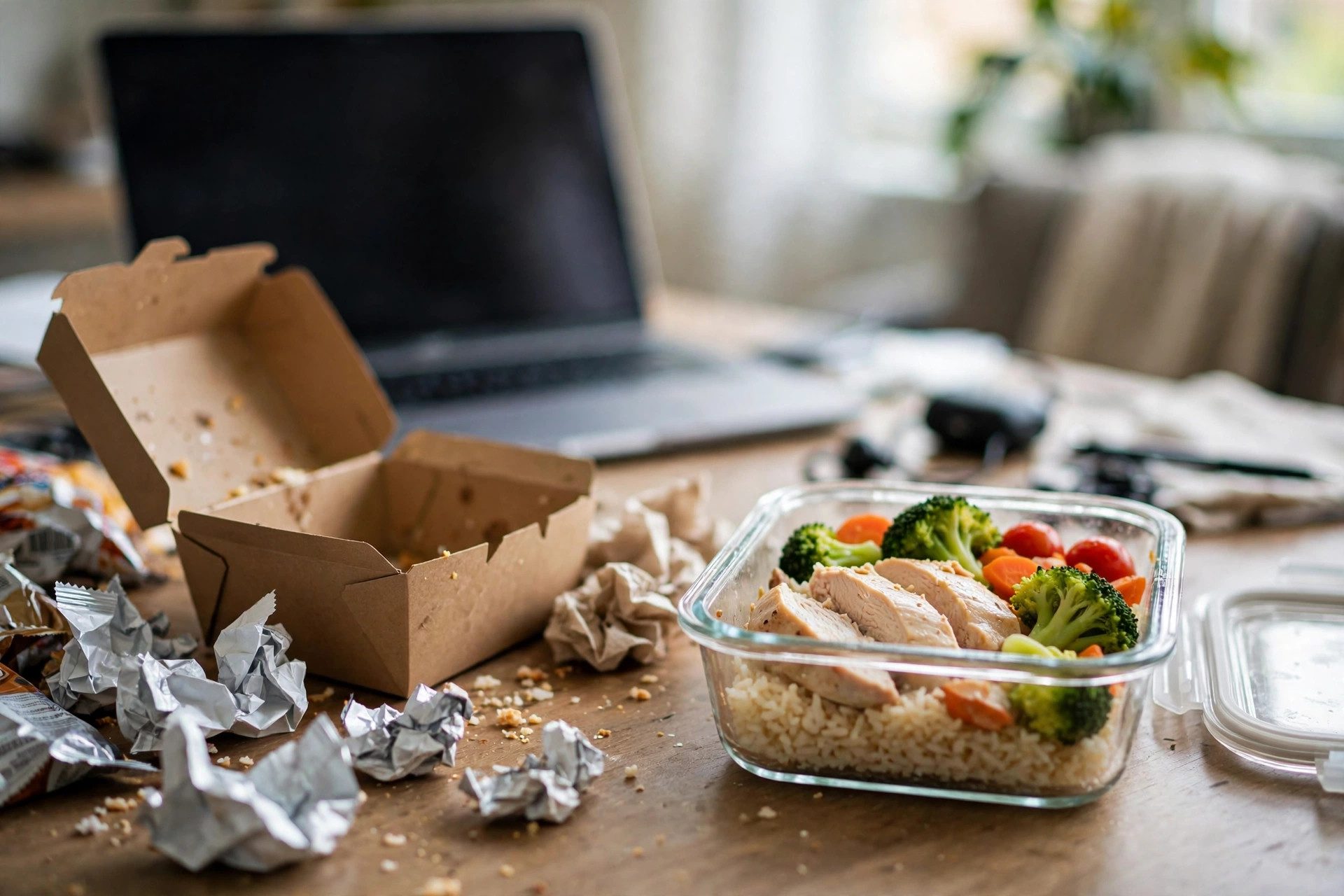
None of this means a cookie will hurt you. It means the background pattern of your diet matters more than any single meal, and that pattern is quietly set by what is easiest to grab between meetings.
Inside the 3-hour window: what the trial actually measured
It helps to picture the Virginia Tech setup, because the detail is what makes the result believable. Each volunteer ate inside a sealed metabolic chamber, a room that measures the exact mix of gases you breathe out, which tells researchers how much carbohydrate versus fat your body is burning minute by minute. Blood was drawn before the meal, right after it, and six more times over three hours. On a different day, the same people lay in an fMRI scanner and bid real money on pictures of foods, which let researchers see how the brain valued each food while tracking reward-circuit activity.
The divergence showed up between roughly 40 and 120 minutes after eating. Blood sugar looked similar after both meals, which is what most people check and what most headlines miss. Insulin did not. After the ultra-processed meal, insulin ran substantially higher and stayed there, as if the body's sugar-control system had to work overtime to produce the same result. Meanwhile the chamber data showed the body burning less carbohydrate and more fat after the ultra-processed meal, a metabolic shift the researchers are still trying to explain.
Then the brain scans. In the 32 participants who completed them, striatum activity while viewing food pictures correlated with how differently each person burned carbohydrates after the two meals. In plain terms: the people whose brains reacted most strongly to food images were also the people whose metabolism shifted most after the ultra-processed meal. Reward circuitry and fuel burning moved together. That is a finding about the whole person, not just the stomach.
Keep the caveats attached: 57 people, one small meal each, healthy young adults. Nobody knows yet whether the insulin difference persists across years of eating this way, or which part of processing (additives, food structure, speed of eating) drives it. The larger trials are coming. But small rigorous beats large sloppy, and this trial was rigorous.
What actually counts as ultra-processed
The NOVA classification system (used in all three studies) groups food by how industrially processed it is. Ultra-processed means formulations made mostly from industrial ingredients: mass-produced bread, packaged snacks, flavored yogurts, ready meals, soft drinks, reconstituted meat products, instant noodles, most breakfast cereals.
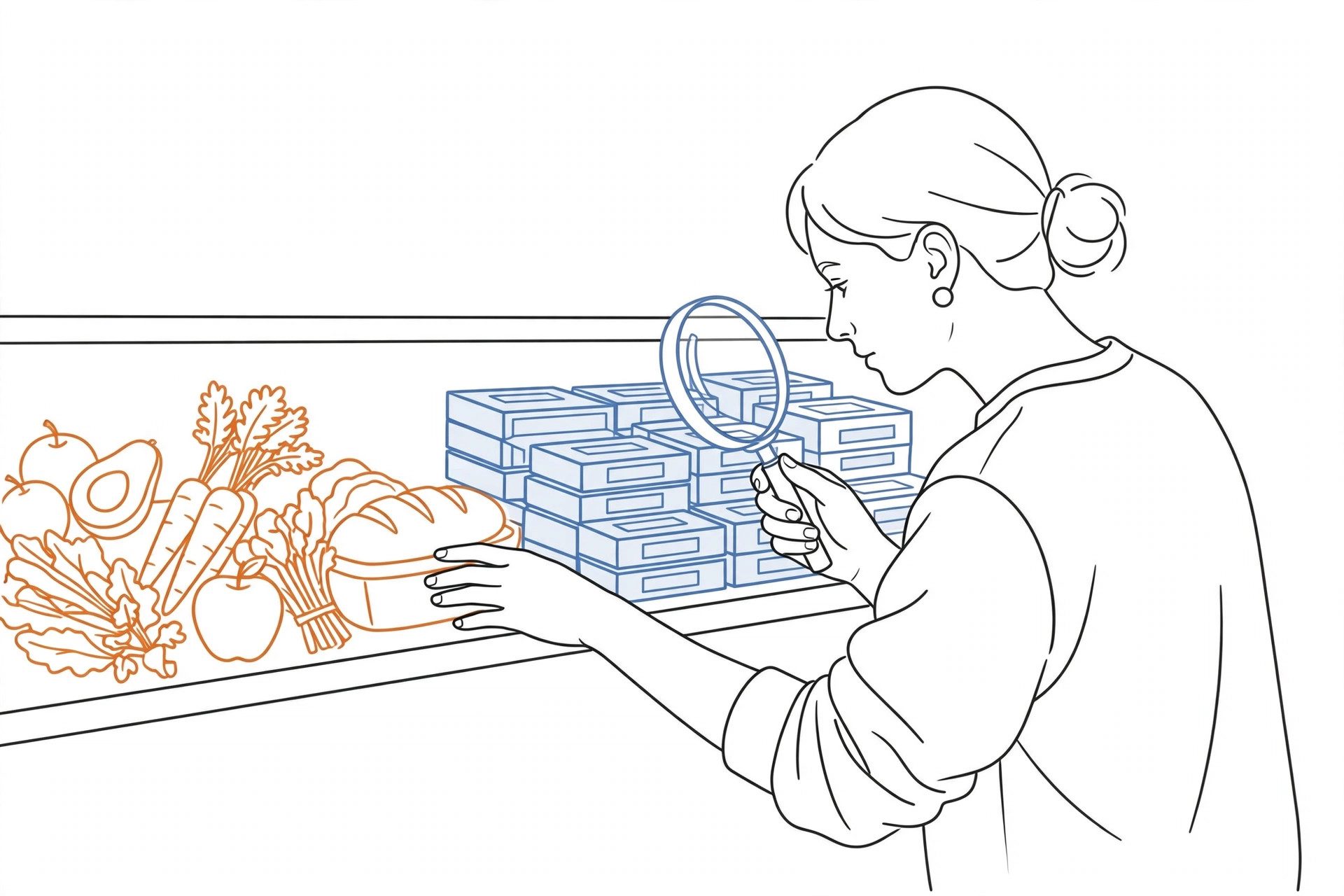
The confusion: not everything packaged is ultra-processed. Plain frozen vegetables, canned beans, cheese, and dried fruit are processed or minimally processed, and the Virginia Tech study put cheese and dried cranberries on the "good" plate. The tell is the ingredient list. If it reads like a chemistry set (emulsifiers, flavorings, colorings, hydrolyzed proteins, ingredients you would never cook with at home), it is ultra-processed. If you could plausibly make it in a home kitchen, it probably is not.
The founder lunch playbook: 5 swaps
No one with a company to run is overhauling their diet on a Tuesday. These five swaps target the meals the studies actually implicate, and each takes less effort than ordering delivery.
1. Breakfast: swap the bar for the bowl. Most breakfast bars and cereals are ultra-processed by definition. Plain oats with banana and peanut butter take three minutes and were, roughly, the "good plate" from the trial. Keep a bag of oats and a jar of peanut butter at the office.
2. Lunch: cook one protein, twice a week. You do not need full meal prep. Roast a tray of chicken thighs or boil a dozen eggs on Sunday and Wednesday. Pair with rice, frozen vegetables, and cheese. Four days of lunches, about 30 minutes of cooking per batch.
3. Snacks: put the distance between you and the vending machine. The brain-scan finding is the practical one: ultra-processed food lights up reward circuits differently. Do not rely on willpower at 4 PM. Keep nuts, fruit, and cheese within arm's reach and the packaged snacks out of the drawer.
4. Drinks: audit the liquid calories. Soft drinks and flavored coffees are among the most ultra-processed items in the average diet. Sparkling water with lemon costs less than a soda habit and removes one daily UPF serving without any willpower after the first week.
5. The 80% rule. Aim for roughly 80% minimally processed meals, not perfection. The studies measure patterns, not purity. A founder who eats clean four days out of five gets most of the benefit the diabetes study measured, and the fifth day keeps the whole thing livable.
FAQ
Is ultra-processed food actually bad for you, or is this just a scare?
The evidence is getting stronger but is not complete. An October 2026 clinical trial showed ultra-processed meals raise insulin more than matched minimally processed meals, and a 9-million-person analysis linked higher intake to more heart disease, cancer, and death. Both have real caveats: the trial was small and short, the analysis was observational. The consistent direction across different study types is what makes researchers take it seriously.
What is the NOVA classification?
NOVA groups foods by processing level: unprocessed/minimally processed, processed culinary ingredients, processed foods, and ultra-processed foods. It is the system used in the major studies on this topic. The ultra-processed category covers industrial formulations with ingredients you would not use in home cooking.
Can you eat ultra-processed food and still be healthy?
Yes, as a fraction of your diet. The research measures patterns, and the diabetes study found the biggest benefits in people who combined lower UPF intake with regular exercise. Nobody in the research is arguing for zero. The argument is against ultra-processed food being most of your calories.
Is bread ultra-processed?
It depends on the bread. Mass-produced sliced bread with emulsifiers, preservatives, and added sugars is ultra-processed under NOVA. Bakery bread made from flour, water, salt, and yeast is not. Same shelf, different category, which is why the ingredient list matters more than the food group.
What is the single easiest change for a busy desk worker?
Fix lunch. It is the meal most likely to be ultra-processed (deli meat, packaged bread, chips, soda) and the easiest to standardize: one batch-cooked protein plus rice and vegetables, twice a week. The studies suggest this one change moves the pattern that matters.