AI Side Hustles Tested: What Actually Paid in 2026
We read every 30-day test of AI side hustles published this month so you do not have to. Two AI side hustles paid real money. Three paid for lunch. Here are the numbers and the playbook.
Quick answer: In October 2026, creators tested popular AI side hustles for 30 days and published real numbers. AI UGC ad videos ($650) and AI-assisted freelance writing ($420) actually paid. AI print-on-demand ($8.40), AI stock images ($4.20), and AI blogging for AdSense ($3.40) basically did not. The pattern: businesses pay for results, algorithms rarely notice you.
Key numbers at a glance
- AI UGC ad videos: $650 in 30 days (best result in a 5-hustle test)
- AI-assisted freelance writing: $420 in 30 days
- AI print-on-demand: $8.40 in 30 days. AI stock images: $4.20. AI blogging: $3.40
- Freelance work tied to applying AI grew 109% year over year in 2025 (Upwork 2026 skills report)
- 329 percent is how much AI video editing freelance work grew year over year in Upwork's 2026 skills report, with AI integration work up 178 percent, beside the 109 percent growth for freelance work tied to applying AI generally.
- $1,125 is the realistic month one math for UGC videos in the guide: five clients times three videos times $75 equals $1,125 for roughly 40 hours of work, against the tester's slower $650, which is the honest version of the same hustle.
- 75 to 200 dollars per video is what brands pay real creators, with experienced creators landing 3,000 to 5,000 dollar monthly retainers, the ladder behind the 650 dollar test result
- Zero sales and four DMs asking for free advice is what a 10 dollar AI resume service posted across Reddit, LinkedIn, and Facebook groups returned, the demand test that kills a hustle before the 30 days do
Table of Contents
- The Honest Numbers: 5 AI Side Hustles, 30 Days
- Why Most AI Side Hustles Pay Almost Nothing
- Hustle 1: AI UGC Ad Videos
- Hustle 2: AI-Assisted Freelance Writing
- Hustle 3: AI Automation for Small Businesses
- The Ones to Skip (or Try Last)
- How to Pick Your AI Side Hustle: The 3-Question Filter
- What Should Your First 30 Days Look Like?
- FAQ
- The Verdict
The Honest Numbers: 5 AI Side Hustles, 30 Days
An AI side hustle is a way to earn extra income by using AI tools to produce work that clients or customers pay for, such as videos, writing, or automations.
YouTube is full of people renting Lamborghinis to tell you AI made them rich. So when a creator actually tracked every hour and every dollar across five AI side hustles for 30 days each and published the spreadsheet, it was worth paying attention to.
Here is what one thorough October 2026 test found:
| Side hustle | 30-day earnings | Hours spent |
|---|---|---|
| AI UGC ad videos | $650 | ~60 |
| AI freelance writing | $420 | ~40 |
| AI print-on-demand | $8.40 | ~30 |
| AI stock images | $4.20 | ~20 |
| AI chatbots for small businesses | $0 | ~25 |
A second tester tried a similar five-hustle lineup and landed in the same place: AI art on Etsy made $12, AI YouTube automation made $0, AI blogging made $3.40 before Google de-indexed the site, one $5 Fiverr resume order came through, and the only thing that worked was writing. A third tester summed it up in one line: "Do not chase 5 hustles. Focus on one. Writing actually pays."
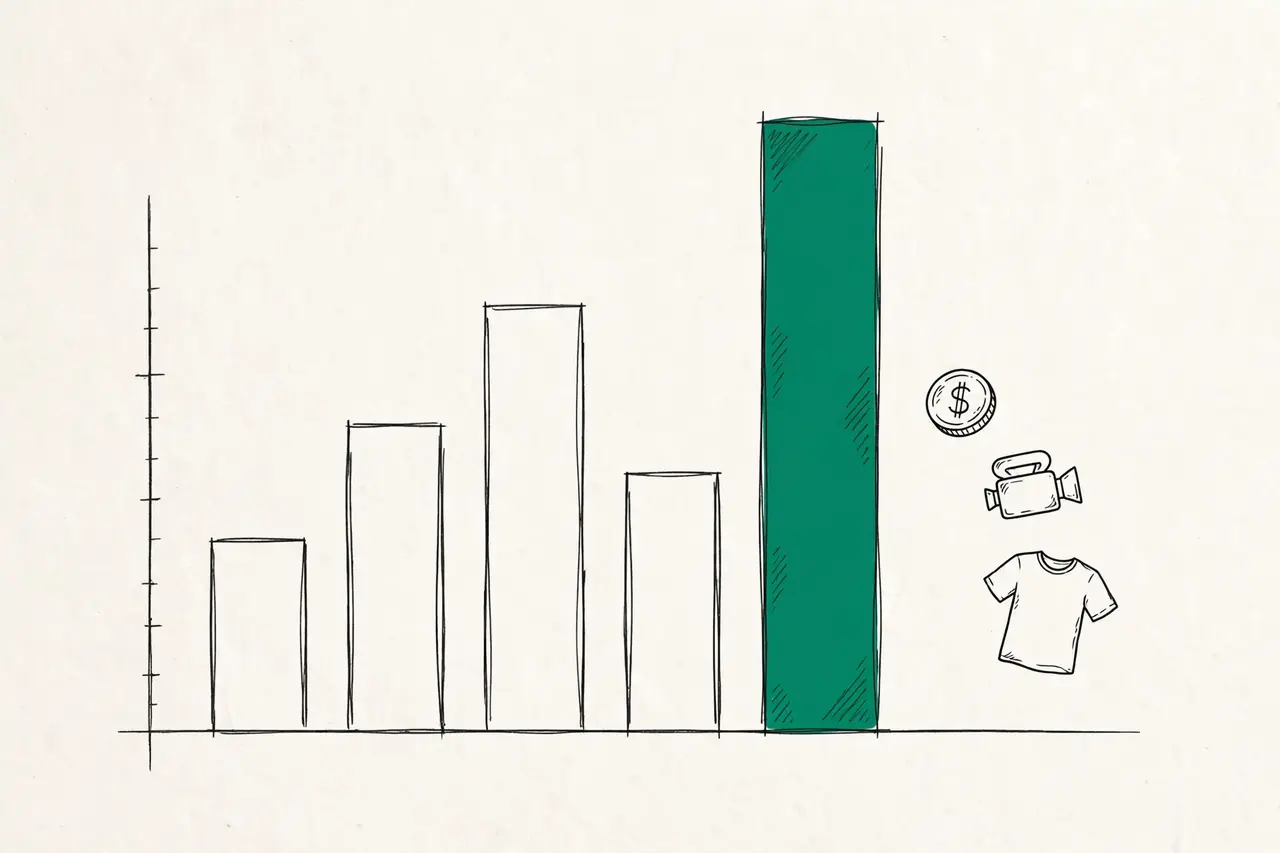
Notice the pattern before we go further. The two hustles that paid both had a paying customer on the other end: a brand buying a video, a client buying words. The three that failed all depended on an algorithm or a marketplace noticing you among millions. That distinction explains almost everything.
Why Most AI Side Hustles Pay Almost Nothing
AI UGC is short-form ad content created with AI avatars and voices. Brands buy it because it looks like a real customer review, without the cost of actors and film crews.
It is not that AI is useless for earning. It is that the easy, obvious hustles have three structural problems.
First, saturation is instant. The moment a hustle can be done with a prompt, ten million people do it with the same prompt. AI art on Etsy, AI stock photos, AI-generated logos: you are competing with everyone who watched the same tutorial, selling to buyers who can generate the same thing themselves for free. Prices collapse to nearly zero.
Second, platforms changed the rules. Google got much better at detecting low-effort AI content, and one tester's 30-article AI blog got de-indexed within two weeks, earning 11 cents a day from AdSense before it vanished. YouTube does not push low-effort AI channels the way it used to. Fifteen AI videos, 23 total views. The platforms adapted faster than the gurus.
Third, trust is the bottleneck. Nobody hires a stranger with no portfolio for resume writing or consulting, AI or not. One tester posted a $10 AI resume service across Reddit, LinkedIn, and Facebook groups and got zero sales, but four DMs asking for free advice. The demand exists; the trust does not. That is a solvable problem, but it takes weeks, not a weekend.
The hustles that work dodge all three problems. They sell to businesses with budgets, they deliver something the buyer cannot easily generate themselves, and they build trust through samples and reviews. Let us look at each one.
Hustle 1: AI UGC Ad Videos
UGC means user-generated content: the casual, phone-filmed ads brands run on TikTok, Instagram, and YouTube. Brands pay real creators $75 to $200 per video, with experienced creators landing $3,000 to $5,000 monthly retainers. AI helps you script faster, edit faster, and handle more clients, but the face on camera is still yours.
Why it works: small brands are desperate for ad creative and cannot afford agencies. A skincare startup would rather pay you $150 for three authentic-feeling videos than pay an agency $5,000. You are selling a result (ad creative that converts), not a tool.
How to start this week
- Film three sample videos for products you already own. One unboxing, one before-and-after, one "three things I love" format.
- Post them as your portfolio on TikTok and Instagram. Brands find creators by searching hashtags, not by reading resumes.
- Pitch 20 small brands a day with a 30-second custom sample. The custom sample is the whole trick; it proves you can do the job.
- Charge $75 per video for your first five clients, then raise to $150. Add $50 for usage rights beyond 30 days.
Realistic month-one math: five clients times three videos times $75 equals $1,125, for roughly 40 hours of work. The 30-day tester's $650 came from slower client acquisition, which is the honest version. Our UGC creator guide breaks down the full path from $75 videos to $5K retainers.

Hustle 2: AI-Assisted Freelance Writing
This is the least glamorous winner and the most reliable. Businesses still buy blog posts, product descriptions, email newsletters, and social captions. AI lets you draft three times faster. Clients pay for accuracy, voice, and strategy, which the AI cannot fake.
The demand data backs this up. Upwork's 2026 skills report found freelance work tied to applying AI on the job grew 109% year over year, with AI video editing up 329% and AI integration work up 178%. That is hiring activity, not hype.
How to start this week
- Pick one niche. SaaS blogs, real estate listings, or email newsletters for local businesses. Generalists starve; specialists get referrals.
- Write three portfolio samples in that niche. Use AI for the draft, then edit hard: match a real brand voice, fact-check every claim, cut the filler.
- List on Upwork and Contra, and pitch local businesses directly. Local businesses are the overlooked goldmine; they have budgets and no idea how to hire writers.
- Price per project, not per hour. A $200 blog post that takes you two hours with AI help is $100 an hour. Hourly pricing punishes your efficiency.
The editing step is the entire business. Raw AI drafts read generic and get flagged by readers and by Google. Your job is the 20% of judgment the model cannot do. If you want the broader landscape first, our earn money online guide covers ten real methods with honest math.

Hustle 3: AI Automation for Small Businesses
This one did not top the 30-day tests, but it has the best long-term economics. Most small business owners know AI could save them hours and have no idea where to start. You audit their routine tasks, then connect their apps so emails, bookings, invoices, and lead follow-ups flow automatically.
The toolkit is no-code: Zapier, Make, or n8n. The skill is process thinking, not programming. Typical first projects: automatic lead follow-up emails, appointment reminders, review requests after a purchase, AI-drafted replies the owner approves.
How to start this week
- Automate one business you know. Your friend's salon, your cousin's plumbing company. Do the first one cheap or free for the case study.
- Document the before and after: "Saves 6 hours a week, catches every missed lead." That sentence sells the next ten clients.
- Charge a setup fee ($500 to $2,000 depending on complexity) plus a monthly retainer ($100 to $300) to keep it running. The retainer is where the real money compounds.
- Five retainer clients at $200 a month is $1,000 a month in recurring revenue before you sell anything new.
The risk is real: clients churn, and some learn to DIY. But businesses that save six hours a week rarely cancel a $200 retainer. This is the closest thing in the AI hustle world to building an actual asset.

The Ones to Skip (or Try Last)
Honest guidance means saying what not to do, too.
AI print-on-demand. $8.40 in 30 days in the test. The market has ten million near-identical designs. Unless you have a real audience or a genuinely original style, skip it.
AI stock images. $4.20 in 30 days. Stock sites are flooded with AI images, payouts per download are fractions of a cent, and buyers increasingly generate their own. Dead end for beginners.
Faceless AI YouTube channels. $0 and 23 views across 15 videos in one test; de-indexed AdSense blogs in another. The platforms won this arms race. The exception is faceless channels with genuine expertise and original scripting, which is really just regular YouTube with AI assistance. Our faceless YouTube guide has the honest math if you are determined.
AI art and logos on marketplaces. $15 net for 8 hours of revision-heavy work in one test. Fifty thousand sellers, identical tools, race to the bottom.
Digital products generally. Etsy templates and Gumroad products can work, but the tests consistently show they need an audience first. No audience, no sales. Build the audience or pick a client-facing hustle instead. If you do have an audience forming, our Etsy digital products guide covers what actually sells.
How to Pick Your AI Side Hustle: The 3-Question Filter
Do not start all three winners. Start one. Run it through this filter:
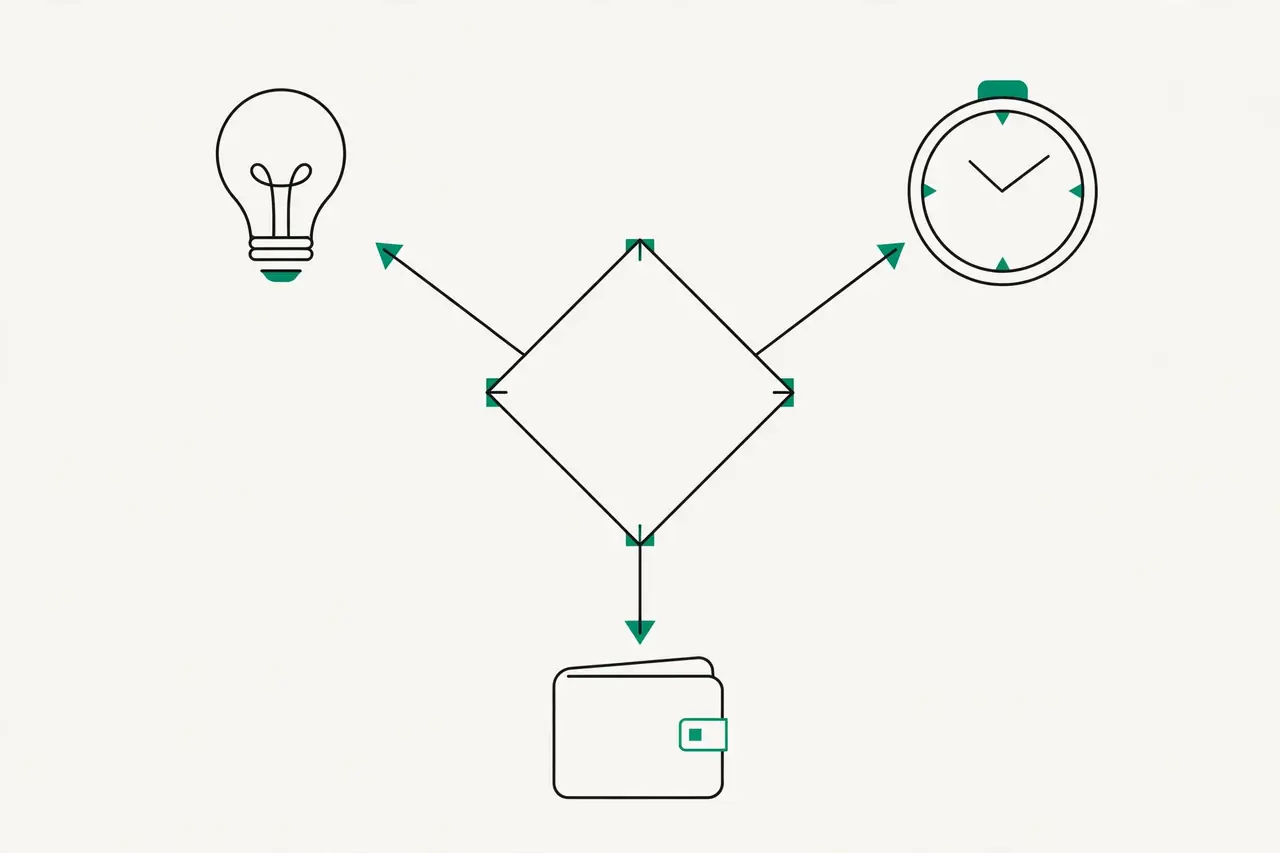
- Do I have a head start? A profession, a hobby audience, a craft, even just being comfortable on camera. The best AI hustle is the one where you bring something the AI does not have.
- Does a specific buyer exist? Name them. "Skincare startups on TikTok" beats "businesses." "Dentists who miss calls" beats "small businesses." If you cannot name the buyer, you do not have a hustle yet.
- Can I test it in 30 days? If the path to the first dollar needs six months of audience building, it is a business, not a side hustle. Treat it accordingly or pick something faster.
UGC wins the filter for camera-comfortable people. Freelance writing wins for people who can already write. Automation wins for people who think in processes and know local business owners. There is no universal best, only best for you.
What Should Your First 30 Days Look Like?
Week 1: Build the proof. Create three portfolio samples. No clients, no pitching, just proof you can do the work. Samples are the entire foundation; everything else stacks on them.
Week 2: Pitch daily. Twenty pitches a day, every day. Custom samples for warm prospects, sharp templated pitches for cold ones. Track everything in a simple sheet: who, when, what you sent, reply or not.
Week 3: Deliver and over-deliver. Your first one or two clients get white-glove treatment. Fast replies, one revision beyond what you promised, a short Loom video walking through the work. Reviews from these clients are worth more than the payment.
Week 4: Raise and systematize. Raise your price for new clients. Turn your process into a checklist. Ask happy clients for referrals and testimonials. Decide whether month two means more clients or better clients.
Track your hours like the testers did. If you are under $15 an hour effective by day 30, something is wrong with the niche or the pricing, not with you. Adjust one variable at a time.

The bottom line
The decision rule from the October 2026 tests is simple: pick a hustle where a specific buyer pays you for a result, not one where you hope an algorithm notices you. AI UGC ad videos paid $650 in 30 days and AI-assisted freelance writing paid $420. Print-on-demand made $8.40, AI stock images made $4.20, and AI blogging made $3.40. The winners all had a paying customer on the other end.
The action is one hustle, not five. Run it through the 3-question filter: do you have a head start, can you name the buyer, and can you reach the first dollar in 30 days? Then build three portfolio samples in week one, pitch 20 prospects a day in week two, over-deliver on your first clients in week three, and raise prices in week four. Track your hours like the testers did.
The 2026 warning: platforms now punish low-effort AI output. One tester's 30-article AI blog was de-indexed within two weeks after earning 11 cents a day, and fifteen faceless AI YouTube videos got 23 total views. If the hustle depends on an algorithm discovering you among millions, skip it.
Apply the hourly filter at day 30, and let it kill a hustle without guilt. If you are under $15 an hour effective by day 30, something is wrong with the niche or the pricing, not with you, and one tester's $15 net for 8 hours of revision heavy work is the warning sign in numbers. Raise the price, change the buyer, or quit the hustle, because a second month at the same hourly rate is not persistence, it is a decision to keep working for less than the work is worth.
The 30-day test is really a buyer test: UGC paid because brands pay 75 to 200 dollars a video, while a 10 dollar resume service got zero sales and four free-advice DMs, so name the buyer and the price before building anything, and let a week of pitching answer the question the spreadsheet cannot.
FAQ
Do I need money to start an AI side hustle?
No. The three winners above all start at zero to fifty dollars: a phone you own, free AI tool tiers, and marketplace accounts. Anyone telling you to buy a $997 course first is selling the course, not the hustle.
Will AI replace the side hustles AI created?
The tool-based hustles, yes, eventually. The judgment-based parts survive: knowing what a brand needs, editing a draft into a voice, understanding a business's broken process. Sell the result and the judgment, not the tool, and you stay ahead of the automation curve.
How many hours a week does this take?
Plan on 10 to 15 hours a week for the first month: samples, pitching, delivery. The testers who treated it like a part-time job got part-time-job results. The ones who dabbled got $8.40.
Should I quit my job to do this?
Absolutely not at the start. Every honest tester kept their income while testing. Consider going full-time only when the hustle reliably covers your expenses for three months straight, and keep an emergency fund either way.
What about taxes on side hustle income?
In the US, side hustle income is self-employment income: set aside 25 to 30 percent for taxes, pay quarterly estimated taxes once you are earning steadily, and track every expense. This is not tax advice; talk to a professional when the numbers get real.
The Verdict
The October 2026 tests settled the debate the gurus would not. Most AI side hustles pay almost nothing, and now we know exactly which ones and why. The winners share one trait: a real human with a budget pays you for a result. UGC videos, freelance writing, automation builds. The losers share the opposite trait: you make things and hope an algorithm or a crowd notices.
Pick the one where you have a head start, find a named buyer this week, and give it a real 30 days with tracked hours. That is the whole playbook. Everything else is a Lamborghini rental.
Want more practical guides like this?
Browse all 80 guides across 10 categories, no fluff, no paywall.
Browse all guides →