
Buying a Rental in a College Town: The 2026 Investor Playbook
College town rental property demand is strong for fall 2026: enrollment is up, preleasing is strong, and purpose-built student housing just had an 8.8 billion dollar transaction year. But the investors who win in college towns are not the ones who buy the prettiest house near campus. They are the ones who run the rent math by the bedroom, budget for the summer void, and read the town's rental rules before they make an offer. Here is how to do all three.
The short answer: a college town rental property works when you buy near a growing flagship university, rent by the bedroom, and underwrite only ten months of rent. National preleasing hit 71.6 percent in April 2026, but rents fell in about half of student markets, so the deal has to work at today's rent, not last year's growth.
Key numbers at a glance
- 4.9 million students enrolled in fall 2025, up 1.8 percent year over year, according to Walker and Dunlop's 2026 Student Housing Outlook
- 71.6 percent preleased nationally in April 2026, up 2 percent year over year, on Yardi Matrix data
- 915 dollars average rent per bed for the 2026-27 academic year, down 0.2 percent year over year
- 8.8 billion dollars in student housing transaction volume, up 28 percent from 2023
- 88.2 percent preleased in Blacksburg, Virginia, the top market, followed by Columbia, Missouri at 84.1 percent and Madison, Wisconsin at 83.5 percent
- 7 to 12 percent gross yields are typical in strong university markets, according to student housing analysts, before management and maintenance costs
- 15 to 20 percent of gross rent is the maintenance reserve experienced student landlords budget, versus 10 percent for a standard rental
- 6 to 8 weeks of reduced income is the summer void to budget every year between academic years
- 73,030 dollars is the ten year profit GoBankingRates calculated for a Philadelphia rental near Temple University, on a median home value of 234,799 dollars
- 1,650 dollars as one unit versus 2,100 dollars by bedroom is the guide's Columbus example: the same house rented for 1,650 dollars a month as one unit to a group of friends, against 2,100 dollars a month when each bedroom rented at 700 dollars.
- 82 dollars a month cash flow plus about 200 dollars principal paydown is the guide's worked example after fixed costs of about 1,553 dollars, a 315 dollar maintenance reserve, and a 150 dollar summer void allowance are taken from 2,100 dollars of gross rent.
Priya, a 36 year old software engineer in Columbus, Ohio, bought her first rental the way a lot of first-timers do: she fell for a house. It was a four bedroom brick place, a twelve minute walk from campus, with a porch she could already picture on a listing photo. The seller's agent talked about "guaranteed student demand." The numbers, run properly, told a quieter story. Rented as one unit to a group of friends, it fetched 1,650 dollars a month. Rented by the bedroom, it fetched 2,300. The difference between those two numbers was the difference between a deal that worked and a deal that bled 300 dollars a month. She bought it anyway, but only after repricing the offer around the by-the-bedroom math, and only after checking the town's occupancy rule, which capped unrelated tenants at three per house. Her four bedroom house legally holds three students, not four. That one rule changed the rent by 575 dollars a month, and she only found it because she called the city planning office before closing.
This guide is the version of that homework, done in advance. It covers the 2026 demand picture, the rent math with real numbers, how to pick a town, the local rules that trip up newcomers, and the management system that keeps student rentals from eating your weekends. If you are buying your very first rental of any kind, read our first rental property guide first, then come back here for the college town specifics.
Why do college towns still rent well in 2026?
A college town rental property is a home rented mainly to students near a university campus, usually leased by the bedroom on annual leases with a parent guarantor on each room.
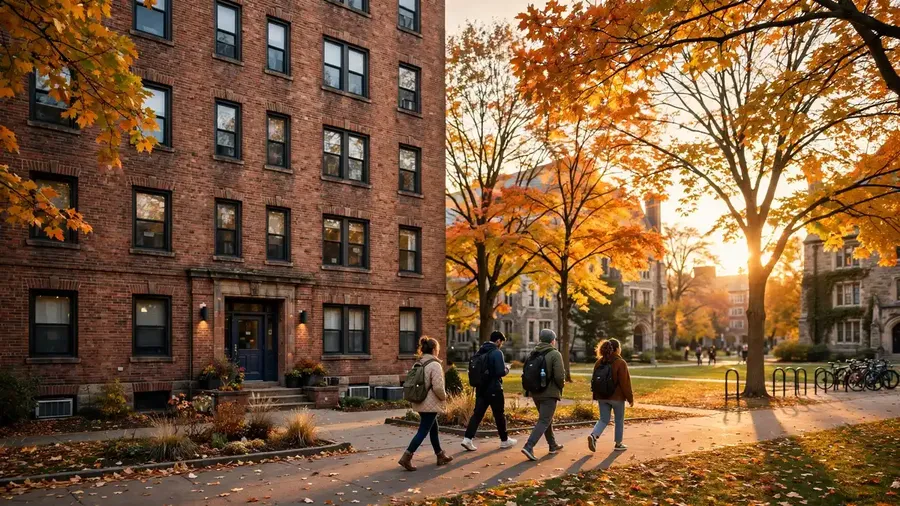
College town rental property demand in 2026 is driven by enrollment growth, annual lease resets, and constrained new supply near flagship campuses.
Student housing spent the last few years as the quiet outperformer in residential real estate, and the 2026 data explains why. Walker and Dunlop's 2026 Student Housing Outlook, published in July 2026, describes a sector moving back to fundamentals after the rent surge of 2022 to early 2024. Enrollment is the engine. Fall 2025 enrollment reached 4.9 million students, up 1.8 percent from 2024. Preleasing for the 2026-27 academic year hit 71.6 percent nationally in April 2026, up 2 percent year over year. Capital noticed: student housing transaction volume reached 8.8 billion dollars, up 28 percent from 2023, even in a higher rate environment.
The structure of the sector is what makes it defensive. Students sign once a year, so rents reset annually instead of drifting on month to month inertia. A landlord can reprice the whole building every August. Compare that with a regular long-term rental, where a good tenant at a below market rent can sit for three years while your costs climb. The annual reset cuts both ways, and we will get to the downside in the risks section, but for income planning it is a genuine advantage.
RentCafe's ranking of the best college towns for 2026 tells the same story from the landlord's side. Bozeman, Montana leads the list for the third consecutive year, followed by a mix of Western and Midwestern towns anchored by their universities. The pattern in the top towns is consistent: a flagship or fast growing university, a walkable core, and housing supply that has not kept up with enrollment. Berkadia's 2026 reporting adds that Texas and the Midwest saw the strongest rental gains, while the broader US rental market softened. College towns are not immune to that softening, but the best ones are insulated by a simple fact: students have to live near campus, and campuses do not move.
What does the real rent math look like?
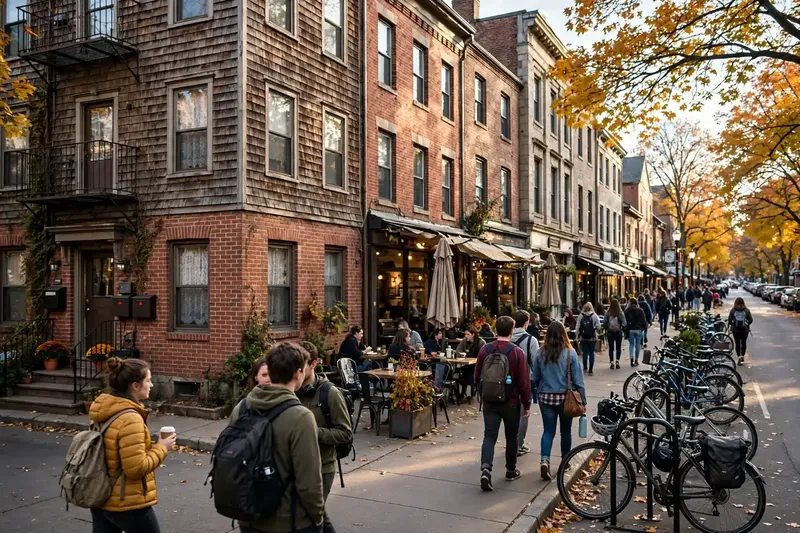
Run every college town rental property deal three ways: by the bedroom, by the unit, and with the summer void included. If it only works one of those three ways, it does not work.
Start with the by-the-bedroom number, because that is how student rentals actually lease. Take a 215,000 dollar three bedroom house near a large state university. Put 20 percent down, 43,000 dollars, and borrow 172,000 dollars at 7.25 percent over 30 years. Principal and interest run about 1,173 dollars a month. Add property tax and insurance of roughly 380 dollars, and your fixed housing cost is about 1,553 dollars a month.
Rent each bedroom at 700 dollars, and gross rent is 2,100 dollars a month. Now subtract the costs most first-timers forget. Student rentals wear faster than family rentals, so hold a maintenance reserve of 15 percent of gross rent, about 315 dollars a month, for durable replacements, paint, and turnover repairs. Then the summer void: most student leases run nine to ten months, and the gap between late June and early September costs six to eight weeks of income unless you find summer sublets or interns. If summer sublets cover half the gap, budget about 150 dollars a month for the void across the year. The result: 2,100 minus 1,553 minus 315 minus 150 leaves about 82 dollars a month in cash flow, plus roughly 200 dollars a month in principal paydown. That is an honest first year for a fairly priced deal: thin cash, real equity build, and upside if rents grow.
Now run the same house as a single unit at 1,600 dollars a month, which is what a group of friends will offer to pay together. The same costs apply, and the deal is suddenly negative by more than 400 dollars a month. This is why the lease structure is not a detail. It is the deal. Individual leases, one per bedroom, with a parent guarantor on each, are the standard in student rentals for a reason: when one roommate leaves in December, the other two rooms keep paying.

The long horizon version of the same math looks better, and GoBankingRates' October 2026 report shows why. Their analysis of five college towns found Philadelphia, near Temple University, on top: a median home value of 234,799 dollars, a three year cost to own of 21,162 dollars against a three year room and board cost of 50,904 dollars, and a ten year profit of 73,030 dollars. Those ten year numbers include appreciation and paydown, not just monthly cash flow, and that is the right way to judge a college town deal. Judge it over a degree cycle, four to six years, not over a single semester.
One more rule before you offer: never underwrite rent growth you have not seen. Average rent per bed fell 0.2 percent nationally for 2026-27, and about half of student markets saw rents decline, with average losses around 4.6 percent. If the deal needs 5 percent annual rent growth to survive, walk away. If it survives flat rents, you have a margin of safety, and any growth is a bonus.
Key facts: the worked example in this guide
| Figure | Value |
|---|---|
| Example house | 215,000 dollar three bedroom near a large state university |
| Down payment | 20 percent, 43,000 dollars; loan 172,000 dollars at 7.25 percent over 30 years |
| Fixed monthly cost | About 1,553 dollars (1,173 dollars principal and interest plus about 380 dollars tax and insurance) |
| Gross rent, by the bedroom | 2,100 dollars a month (three rooms at 700 dollars each) |
| Gross rent, as one unit | 1,600 dollars a month, which turns the same deal negative by over 400 dollars a month |
| Maintenance reserve | 15 percent of gross rent, about 315 dollars a month |
| Summer void provision | About 150 dollars a month across the year for the six to eight week gap |
| Year one result | About 82 dollars a month cash flow plus about 200 dollars a month principal paydown |
How do you pick the right college town?
Pick the university first, the town second, and the house third. Most beginners do it backwards, and that is how they end up with a pretty house in a town whose enrollment is shrinking.
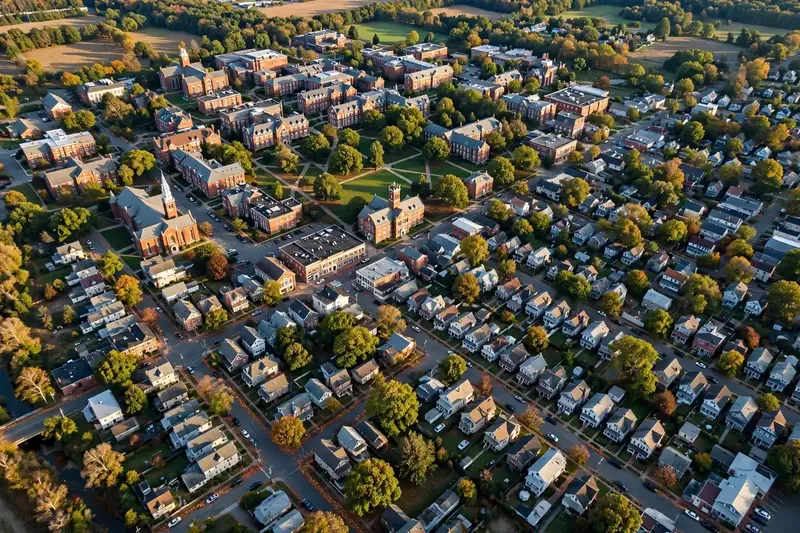
Check four things about the university. One, enrollment trend over five years, not one year: you want flat to growing, and flagship state schools with 20,000 plus students are the safest bet. Two, the share of students living off campus: a school that houses most freshmen on campus but pushes sophomores and juniors off campus is ideal, because it creates a deep, renewing tenant pool. Three, the new supply pipeline: if three purpose-built student towers are opening within a mile of campus next fall, your older house will compete on amenities it cannot match. Four, the town's relationship with the university: some college towns welcome student rentals, others fight them with occupancy caps and rental permit quotas.
Then check the town the way a tenant would. Walk the half mile around campus and count what students actually need: grocery, pharmacy, bus stop, late night food, and a safe walk home after dark. A house two miles from campus with no bus line rents at a discount for a reason, and the discount rarely compensates for the vacancy. Yardi's preleasing leaders show what strong demand looks like: Blacksburg at 88.2 percent, Columbia at 84.1 percent, Madison at 83.5 percent, all flagship towns where students want to live near campus. You do not need the number one market. You need a market where preleasing is strong enough that your house fills by July, not by October.
Price discipline matters more in college towns than in most markets, because your buyer pool at resale is other investors, and other investors run the same math you do. Pay a price that works at today's rent per bedroom, with a 15 percent maintenance reserve and the summer void included. If the seller's price only works with a rent you have not verified from actual listings, it is not your deal yet. And if you are choosing between owning outright and owning through a fund, our REITs versus rental property guide lays out the hands-off alternative with real return comparisons.
What landlord rules catch new investors?
College towns regulate student rentals more than regular rentals, and the rules vary street by street. Call the city planning office and the university's off-campus housing office before you make an offer, and ask these five questions in writing.
First, occupancy limits: many towns cap unrelated occupants at three or four per house, regardless of bedroom count. Priya's four bedroom house legally holding three students is a normal outcome, not an edge case. Second, rental permits and inspections: some towns require a rental license, a safety inspection, and a local agent if you live out of state. Third, zoning: a house in a single family zone may not legally operate as a by-the-bedroom rental at all, and neighbors do complain. Fourth, short-term rental rules: if your plan B is summer Airbnb income during the void, check whether the town allows it, because many college towns restrict short stays in residential zones. Fifth, university rules: some schools publish approved landlord lists or require specific lease terms, and being off those lists costs you inquiries.
Lease paperwork deserves the same care. Use individual leases per bedroom, each with a parent or guardian guarantor, a clear joint liability clause for shared spaces, and a turnover checklist signed with photos at move in and move out. Student tenants are often first-time renters, and a clear lease protects them as much as it protects you. It also protects your deposit deductions, because a photo checklist ends most deposit arguments before they start.

How do you manage student tenants without losing weekends?
Student rentals are management heavy, and pretending otherwise is how landlords burn out in year two. Budget for it, systemize it, or hire it out, but do not improvise it.
The three systems that matter are turnover, maintenance, and communication. Turnover: a fixed checklist, a cleaner booked for the same week every August, and durable everything, which means luxury vinyl plank instead of carpet, solid surface counters instead of laminate, and a lockbox or smart lock so you never drive across town for a key. Maintenance: a mid-tenancy inspection each semester, a written repair request channel, and a local handyman on retainer for the small jobs that otherwise eat a Saturday. Communication: one group channel per house, a written move-in guide with trash day, parking rules, and emergency contacts, and a rule that non-emergency requests get answered within one business day.
If you live more than an hour away, hire a manager. Student specialist managers charge 8 to 12 percent of rent, and they earn it in August, when three houses turn over in the same week and a plumber, a cleaner, and a locksmith all need scheduling. Self-managing from another state is possible, but only with a local team already in place before the first tenant moves in. And if the management load is the part that worries you most, consider the lighter-touch alternative in our rental arbitrage guide, which covers earning from rentals without owning the property at all.

What are the risks nobody posts about?
The glossy version of college town investing shows full houses and rising rents. The real version has four risks, and each one has a hedge.
Enrollment risk comes first. A university that loses 10 percent of its students over three years leaves a hole no marketing fixes. Hedge it by buying near flagships with diversified programs, not single-program colleges, and by checking five year enrollment before you buy. Supply risk is second: new purpose-built towers with gyms, pools, and fiber internet can pull tenants out of older houses, and the effect shows up fast. Tempe, Arizona is the cautionary tale for 2026: heavy construction near Arizona State University, preleasing over 65 percent, yet rent growth down 11.5 percent year over year as new supply landed. Hedge it by checking building permits within two miles of campus, not just current listings.
Rent softening is third, and it is already here in half the country. Yardi's data shows roughly half of student markets with declining rents, averaging a 4.6 percent drop. Hedge it by underwriting flat rents, as this guide insists, and by keeping a cash reserve of three months of expenses for every student property. Regulatory risk is fourth: a town can tighten occupancy rules or rental permits after you buy, and existing owners usually get grandfathered in slowly, if at all. Hedge it by favoring towns with stable, long-standing rental rules over towns actively debating new restrictions.
One risk that is not a market risk: scams. The Federal Trade Commission notes that young adults aged 18 to 29 are three times more likely to fall for scams than older adults, and two in five renters in that age group report encountering a fake student housing listing, often on social media or classified sites. If you advertise a property, use verified listing platforms, never ask for deposits before a viewing, and put your real name and phone number on the listing. Scammers impersonating landlords hurt real landlords too, because wary students stop trusting listings altogether.
What is the buying checklist, step by step?
Work through this list in order, and do not skip steps because a deal feels urgent. Good college town deals come back every August. Bad ones close fast.
One, verify the university: five year enrollment trend, off-campus living share, and any announced campus closures or program cuts. Two, verify the town: occupancy cap, rental permit rules, inspection requirements, and short-term rental rules, all confirmed with the city in writing. Three, verify the rent: five comparable by-the-bedroom listings rented in the last 90 days, not asking prices from last year. Four, run the math three ways: by the bedroom, by the unit, and with the summer void and a 15 percent maintenance reserve included. Five, inspect for student wear: floors, doors, locks, water heaters, and HVAC age, because turnover exposes every deferred repair. Six, line up management before closing: cleaner, handyman, and either a manager or a written self-management plan. Seven, lease correctly: individual bedroom leases, parent guarantors, photo checklists, and a move-in guide. Eight, fund the reserve: three months of expenses in a separate account on day one, before the first rent check arrives.
Priya's deal closed on that checklist, not on the porch. Her house rents by the bedroom to three students at 700 dollars each, grossing 2,100 dollars a month, with a summer intern covering July and August at a reduced rate. Year one cash flow was thin, almost exactly the 82 dollars a month this guide's example predicted, and she was fine with that, because she bought for the four year degree cycle, not for a single semester. Four years of rent growth, principal paydown, and a town where enrollment keeps rising are what turn a thin first year into a good investment. That is the college town playbook: boring homework, honest math, and patience measured in semesters.

The bottom line
Buy the bedroom math, not the house. The Columbus example only works because rent by the bedroom lifts gross rent from 1,650 dollars to 2,100 dollars a month, and the deal still has to survive on ten months of rent, a summer void, and a maintenance reserve of 15 percent of gross rent. Call the city planning office before closing, because one zoning rule changed the rent by 575 dollars a month in the guide, and a house that looks perfect on a listing photo can bleed 300 dollars a month if the bedroom math does not hold.
Frequently asked questions
Is buying a rental in a college town a good investment in 2026?
It can be, in the right town and at the right price. Fall 2025 enrollment grew 1.8 percent to 4.9 million students, national preleasing hit 71.6 percent in April 2026, and student housing deals totaled 8.8 billion dollars. But rents softened in about half of markets, so the town, the price, and the lease structure matter more than the sector trend.
How much can you earn from a college town rental?
A typical first deal is thinner than social media suggests. A 215,000 dollar three bedroom renting by the bedroom at 700 dollars per room grosses 2,100 dollars a month, and after mortgage, taxes, insurance, a 15 percent maintenance reserve, and a summer void provision, year one cash flow is often close to break even. The return comes from principal paydown, rent growth, and appreciation over several years.
Should you rent by the bedroom or by the unit in a college town?
By the bedroom usually grosses more, because each student pays for a room rather than splitting a house rent. The same three bedroom house might fetch 1,600 dollars as a single unit and 2,100 dollars by the bedroom. The trade is more turnover, more wear, and leases that need a guarantor clause, because one roommate leaving should not collapse the rent.
What is the biggest mistake first-time college landlords make?
Underwriting a full twelve months of rent. Most student leases run nine to ten months, and the summer void lasts six to eight weeks unless you line up summer sublets or interns. Budget the void from day one, or your first year will surprise you in August.
Is student housing better than a regular long-term rental?
It pays more per bedroom and refills every year from a fresh tenant pool, but it costs more to manage and maintain. A regular long-term rental is quieter and simpler. If you want student housing exposure without tenants, compare it with a REIT first, and read our REITs versus rental property guide before you decide.
Want more practical guides like this?
Browse all 100 guides across 10 categories, no fluff, no paywall.
Browse all guides →Explore Real Estate guides