Minimum Effective Wellness for Founders: Do Less, Live Longer
The biggest wellness trend of fall 2026 is not a supplement or a gadget. It is doing less. Here is the minimum effective wellness routine for founders that actually moves the needle on healthspan, built for people who work for themselves.
The short answer: minimum effective wellness means doing the smallest set of habits that actually improves your health: consistent sleep, morning daylight with a short walk, ten minutes of strength work most days, fiber-rich food, and real rest. No two-hour morning routine, no cabinet of supplements, no wearable required. Consistency beats complexity, every time.
Key numbers at a glance
- 20 minutes is the routine length that survives for years, against a two-hour routine that lasts about three weeks
- 30 to 60 minutes before bed with screens off, as part of the sleep wind-down
- 3 to 8 percent of muscle mass lost per decade after age 40 without resistance work
- 5g of creatine monohydrate daily, the best-studied supplement in this category
- 90 days for the starter plan, adding one habit every two weeks in order
- $500 for the wearable you do not need yet: buy it only when the five habits are automatic
- 10 to 30 minutes outside within an hour of waking is the morning daylight and short walk habit.
- $400 a month is the peptide protocol this formula replaces, not adds to.
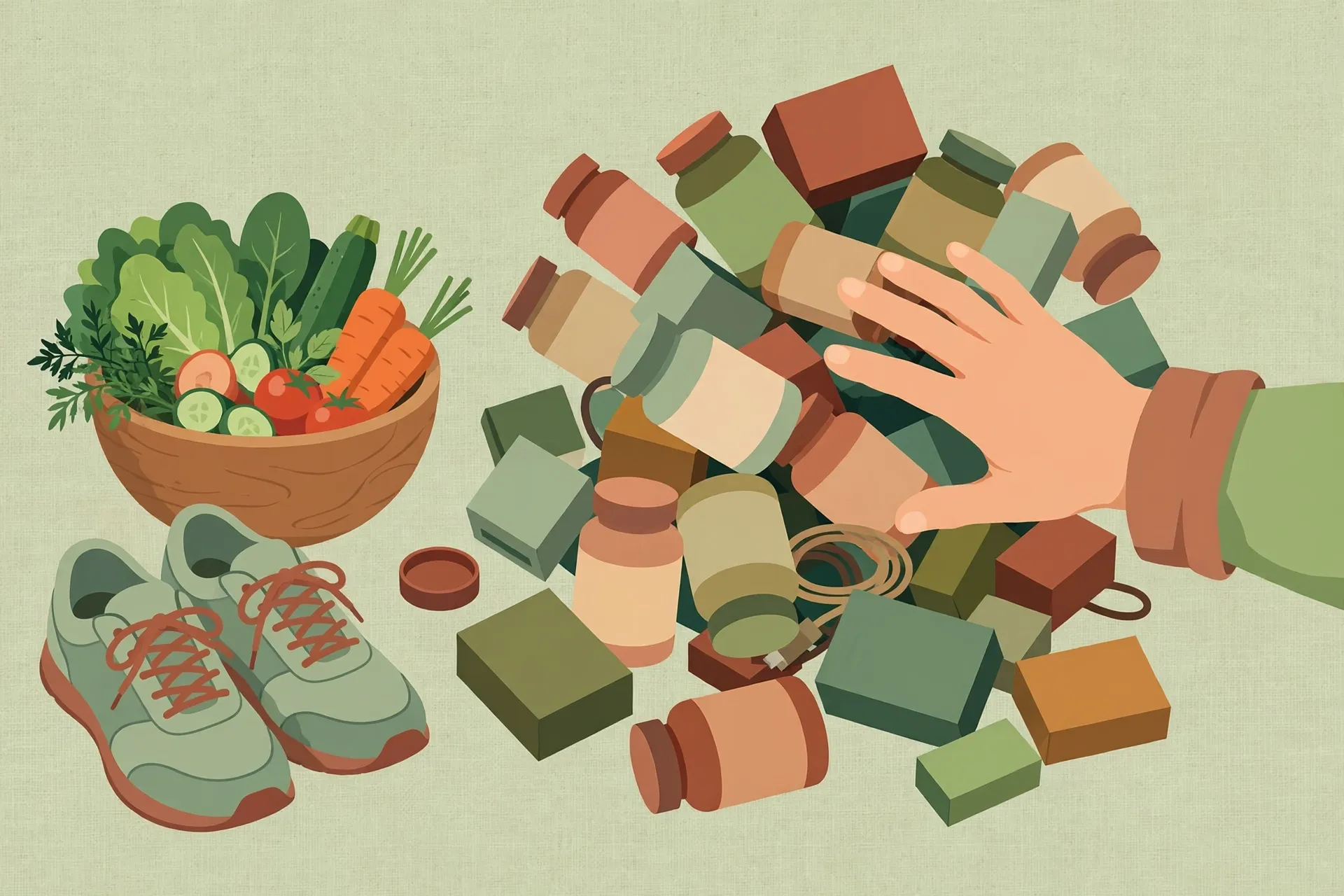
- 14-supplement stack is what the guide tells founders to skip: most adults get more from creatine monohydrate at 5g daily, plus vitamin D if bloodwork shows a deficiency, than from a cabinet of exotic powders.
- Over 50 or a family history of serious illness is when the guide says to talk to a physician about screening options like multi-cancer blood tests, instead of adding another supplement to the stack.
Last reviewed: October 2026.
This fall, the biggest trend in wellness is not a new supplement. It is not a cold plunge, a red light panel, or a $400-a-month peptide protocol. It is doing less.
Health writers are calling it minimum effective wellness: the smallest set of habits that produces real benefits. A short walk. Morning daylight. Consistent sleep. Straightforward food built on vegetables, fruits, legumes, and whole grains. That is the whole formula, and the 2026 research behind it is stronger than the marketing behind everything it replaces.
If you run a business, this matters more than it does for most people. Founders trade sleep for launches, meals for meetings, and movement for inbox zero, then try to buy their way back to health with gadgets. I have watched that movie. The ending is always the same: the person with the boring consistent habits outlasts the person with the expensive protocol.
Here is the routine, the evidence, and the honest list of what to skip.
Why did "doing less" win in 2026?
Minimum effective wellness is the smallest set of habits that produces real health benefits, chosen by evidence per unit of effort rather than by trend.
The biohacking era had a good run. For a decade, the message was that health was an optimization problem: track everything, supplement everything, and buy the next device. It produced a lot of content and a lot of exhausted people.
The backlash arrived with data. A growing school of longevity thinking, including the Global Wellness Summit's 2026 trends report, argues that expensive protocols miss what actually extends healthy years: natural movement, whole foods, stress management, and social connection. Researchers have long noted that social isolation carries health risks comparable to smoking, which makes relationships as much a health habit as any workout.
The other problem was adherence. A routine that takes two hours and fourteen supplements survives about three weeks in a real life. A routine that takes twenty minutes survives for years. The best health plan is the one you will still be doing in 2029.
Minimum effective wellness is not anti-science. It is what you get when you ask which interventions have the most evidence per unit of effort. The answer is embarrassingly simple, which is exactly why nobody could sell it to you until now.
Habit 1: Sleep like it is your job
Nothing on this list matters if sleep is broken. Short sleep raises the risk of heart disease, diabetes, obesity, and depression, and it tanks the exact things a founder needs: judgment, patience, and the ability to think clearly under pressure.
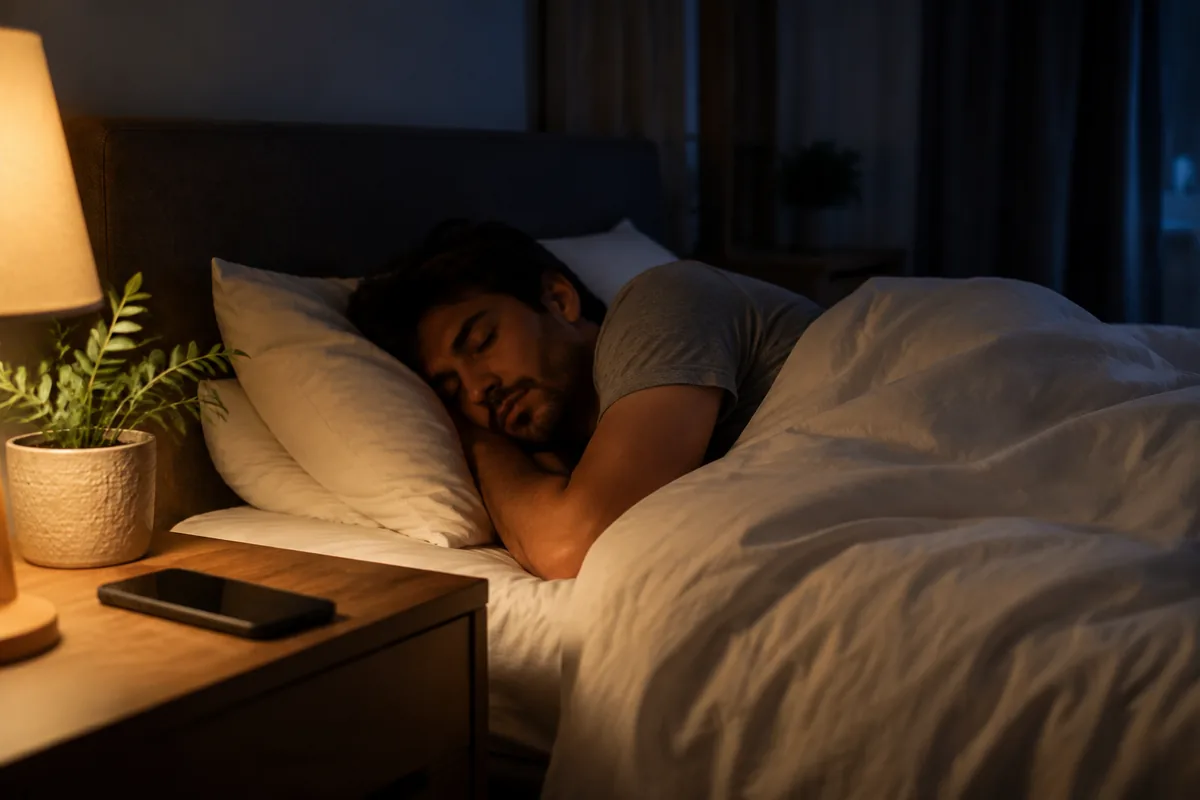
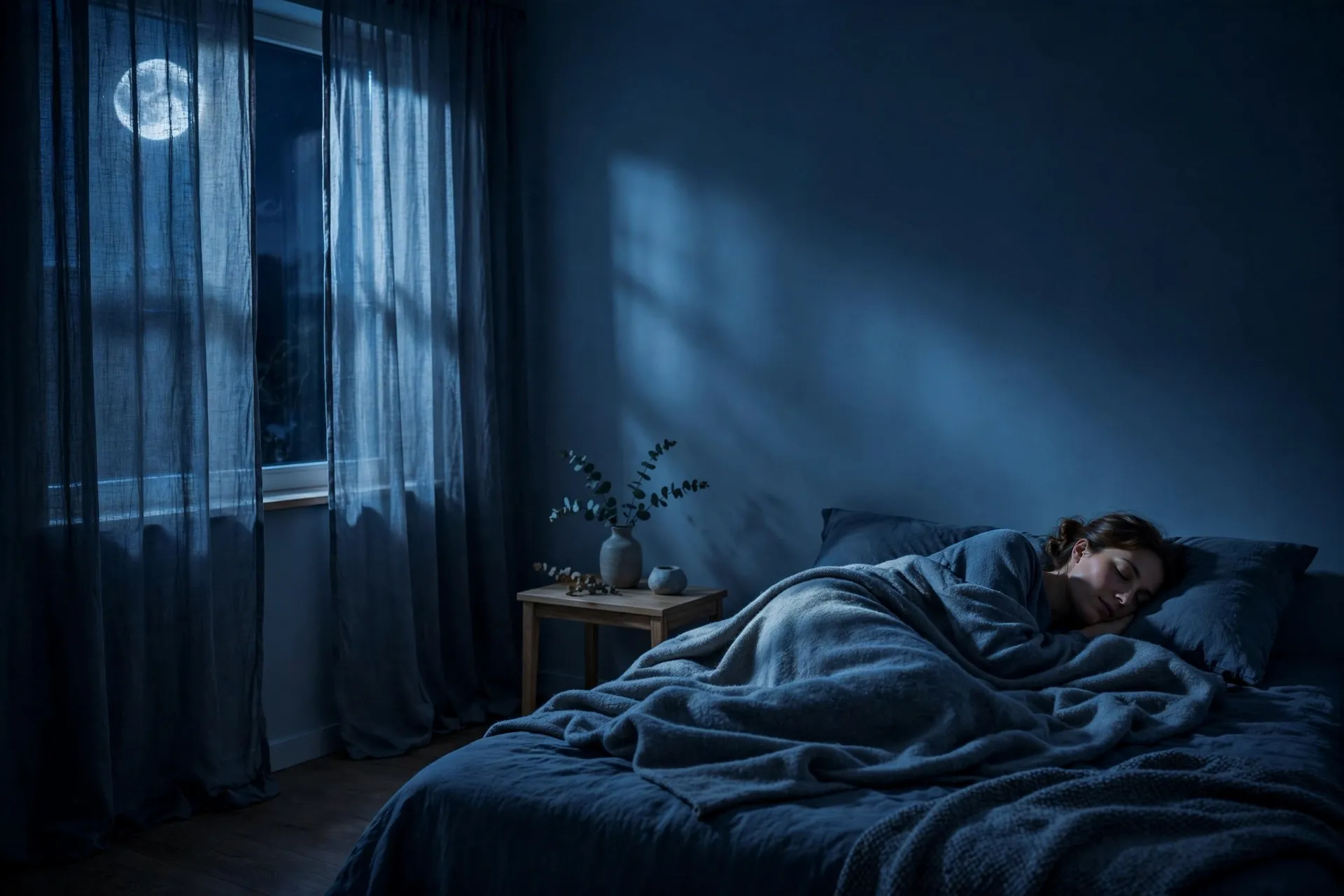
The minimum effective version has three parts. First, a consistent wake time, seven days a week, because the body clock anchors to when you get up, not when you go to bed. Second, a wind-down: screens off 30 to 60 minutes before bed, replaced by anything boring. Third, a cool, dark, quiet room, which is the cheapest performance upgrade in this entire article.
Sleep trackers are optional. If you already own one, use it to notice patterns. If you do not, do not buy one to start this routine. How you feel at 10 AM tells you most of what a ring would.
Founders get one special warning: the "I will sleep when this launches" plan. Every founder I know who ran on five hours for a quarter paid it back with interest, usually in the form of bad decisions that cost more than the sleep would have. Protect the wake time like a client meeting.
Habit 2: Morning daylight and a short walk
Get outside within an hour of waking, for ten to thirty minutes. No sunglasses if you can manage it. Morning light sets your circadian clock, which improves sleep that night, energy that day, and mood across the week. It is the highest-leverage free habit in existence.
Pair it with a walk and you stack two habits in one time slot. Walking is the most underrated exercise there is: easy on joints, good for the heart, clears the head. Many founders do their best thinking on a morning walk, and there is a reason the walking meeting keeps getting reinvented.
Fall is the natural moment to start, and also the hardest: shorter days make daylight tougher to catch. That is the point. The people who protect the morning walk in November are the ones still doing it in March.

Habit 3: Ten Minutes of Strength: the Minimum Effective Dose Workout
Muscle is your most neglected longevity asset. Strength, power, balance, and walking ability do more for long-term independence than almost any other physical quality. After 40, adults lose 3 to 8 percent of muscle mass per decade without resistance work, and the decline accelerates.
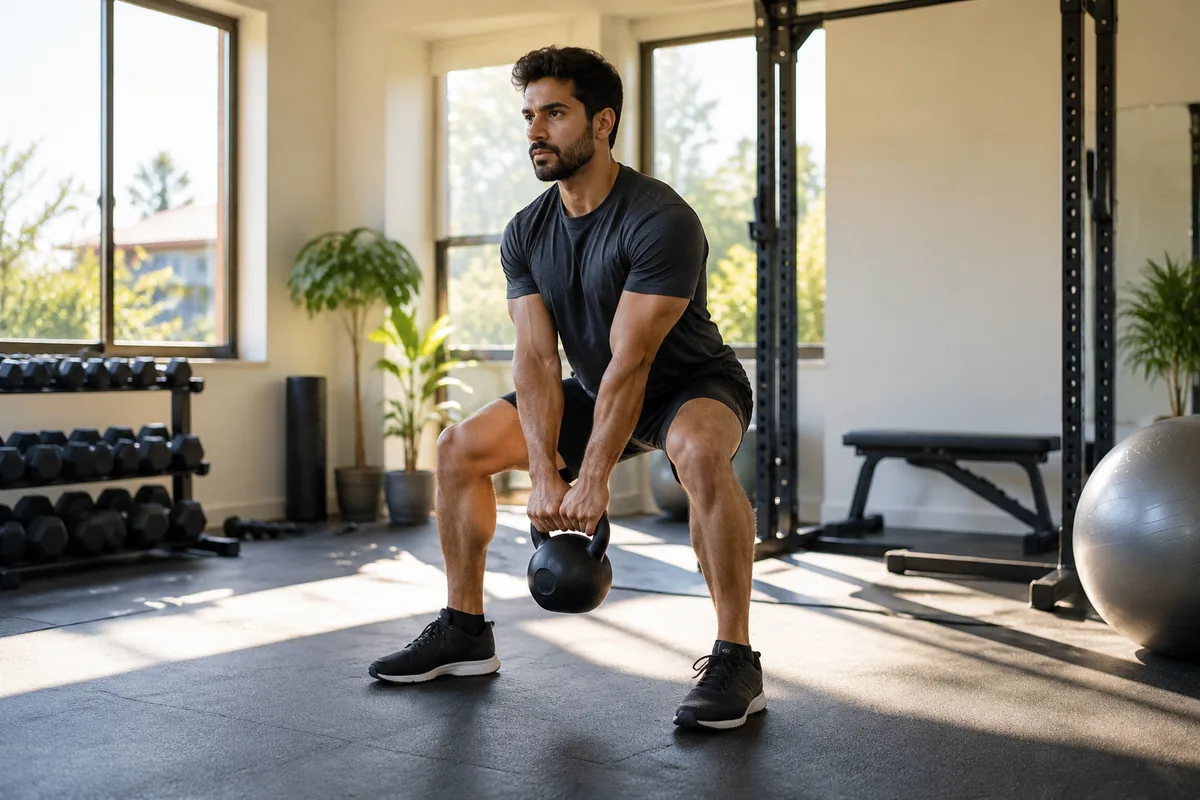
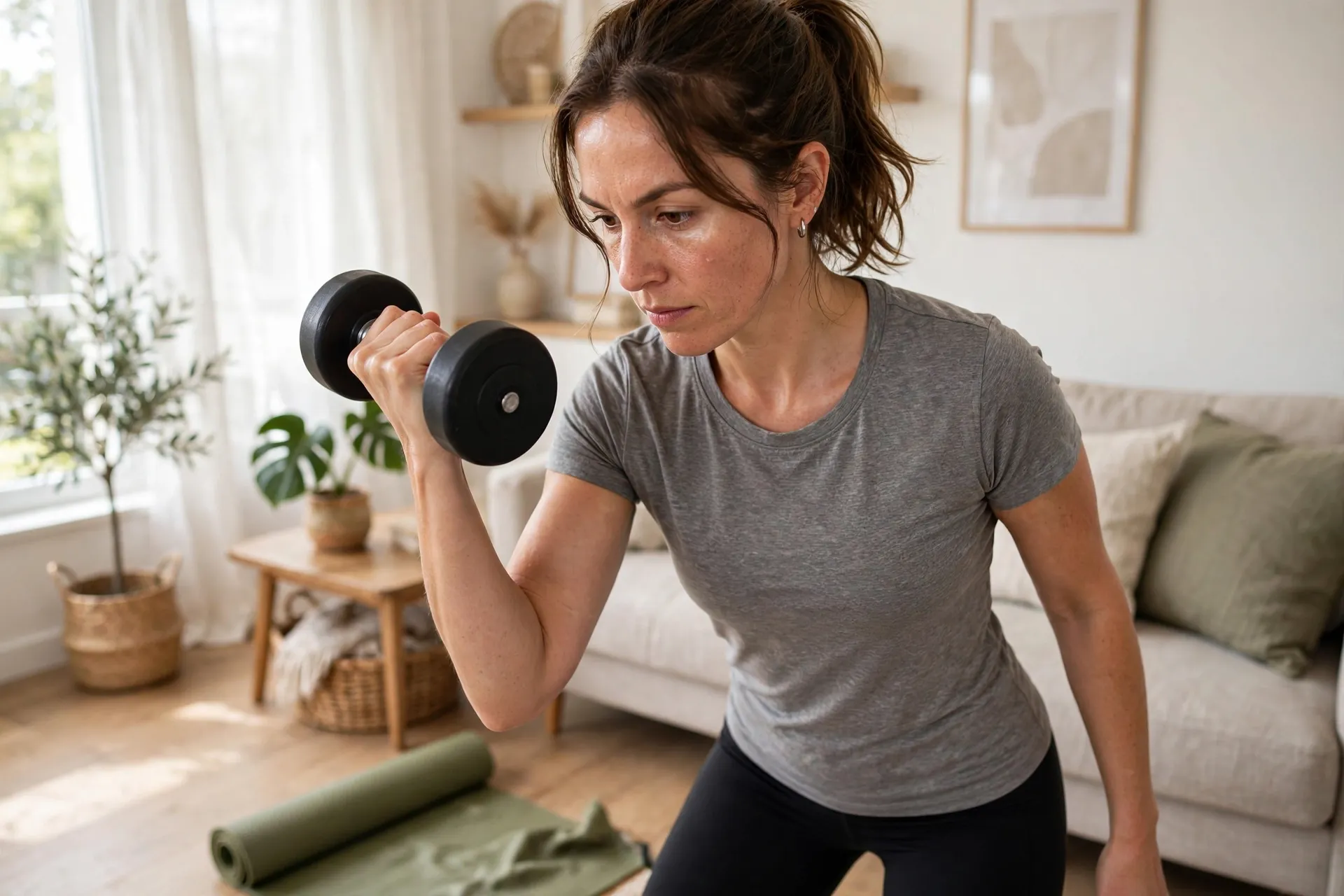
The minimum effective dose is almost offensively small: ten minutes, most days, rotating muscle groups. Push-ups, squats, a dumbbell row, a plank. Fitness entrepreneur Carl Daikeler put it plainly this fall: ten minutes a day can establish, build, and maintain muscle. Federal guidelines back the shape of it: muscle-strengthening activities at least two days a week alongside regular aerobic exercise.
You do not need a gym. A pair of adjustable dumbbells and a floor is a complete setup. The workout that happens in your living room beats the perfect program you never drive to.
Habit 4: Eat fiber first
Fiber-first eating is building each meal around vegetables, fruits, legumes, or whole grains before adding anything else.
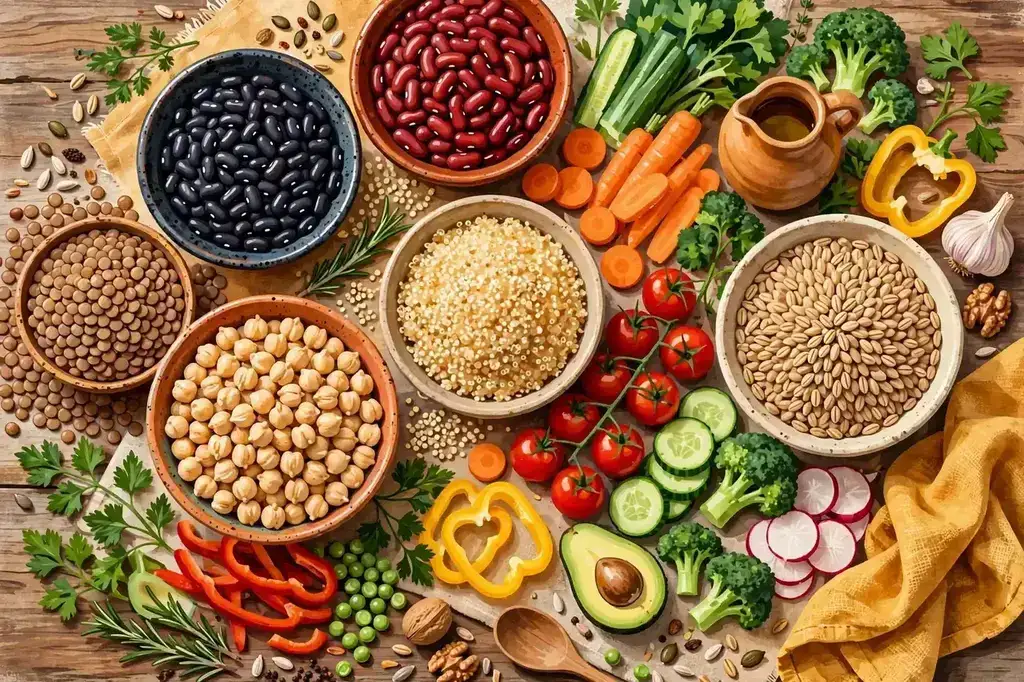
Forget the restrictive diet. The 2026 nutrition trend that survived contact with evidence is addition, not subtraction: add fiber-rich foods, and the rest of the diet tends to fix itself. Beans, lentils, vegetables, fruits, whole grains.
Beans and lentils have quietly become longevity-diet staples, and for good reason. They feed gut bacteria that produce compounds linked to lower inflammation and better metabolic health. They are also absurdly cheap, which matters when you are feeding a family on a founder's variable income. A bag of lentils costs less than one fancy coffee and makes six meals.
The practical rule: build each meal around the fiber first, then add protein, then whatever else. You will eat less junk without forbidding anything, because fiber is filling in a way that willpower is not.
Fermented foods earn a mention too: yogurt, kefir, kimchi, sauerkraut. The gut-health evidence keeps growing, and a serving a day is a small habit with a plausible upside.
Habit 5: Rest is a habit, not a reward
Founders treat rest like a bonus for finishing everything. Everything never finishes. So rest never happens, and the machine runs hot until something breaks.
The minimum effective version: one real day off per week, or as close as you can get. Evenings with a hard stop. And the habit the research keeps shouting about: real social connection. Dinner with friends, a phone call with your parents, the walk with someone you like. Isolation carries risks on the scale of smoking; connection is preventive medicine that tastes like dinner.
Stress management does not require an app. It requires an off switch. Ten minutes of breathing, a walk without podcasts, writing the worry down and closing the notebook. Pick one. The mechanism matters less than the regularity.
This is also where the women's longevity research from 2026 lands an important point: the wellness industry turned health into another performance metric, especially for women, and the pressure itself became a health problem. Rest without optimization is the correction. You are allowed to take a walk that is just a walk.

The founder tweaks: travel and desk work
The five habits above work for everyone. Founders get two extra problems: travel and the desk.
Travel destroys routines on purpose. The fix is a travel minimum: same wake time in the new timezone from day one, a walk outside on arrival no matter how tired you are, and one packed workout band for the hotel room. Three rules, and jet lag loses most of its teeth.
The desk is the slower killer. Sitting all day is its own risk factor, separate from exercise. The minimum effective fix: stand up every hour, walk for two minutes, and do it again. A cheap timer or a phone reminder is enough. People who add this one habit often report their afternoon slump shrinking, because the slump was stagnation, not tiredness.
What to skip (for now)
Minimum effective wellness has an honest skip list. Not because these things are scams, but because they are layer two: interesting after the fundamentals are automatic, wasteful before.
Peptides, senolytics, and hyperbaric oxygen: the evidence for routine use is still thin, the costs are not, and the clinics selling them have a conflict of interest the size of a building. Revisit in a few years.
Epigenetic age clocks, full-body scans, and quarterly hundred-biomarker panels: useful only if the result changes your behavior. If a test will not change what you do on Tuesday, it is entertainment, not healthcare.
The fourteen-supplement stack: most adults get more from creatine monohydrate (5g daily, cheap, well-studied) and vitamin D if they are deficient than from a cabinet of exotic powders. Everything else should have to earn its place with a specific reason.
The $500 wearable you do not need yet: buy it when the five habits are automatic and you want to fine-tune. Buying it first is buying motivation, and motivation is not for sale.
What does your first 90 days look like?
| Weeks | Habit to add | The assignment |
|---|---|---|
| 1-2 | Sleep | Fix the wake time, screens off before bed |
| 3-4 | Daylight walk | Outside within an hour of waking, ten minutes minimum |
| 5-6 | Strength | Ten minutes most days: push, squat, row, plank |
| 7-8 | Fiber | One bean or lentil dish a day, meals fiber-first |
| 9-12 | Rest | One real day off weekly, evenings with a hard stop |
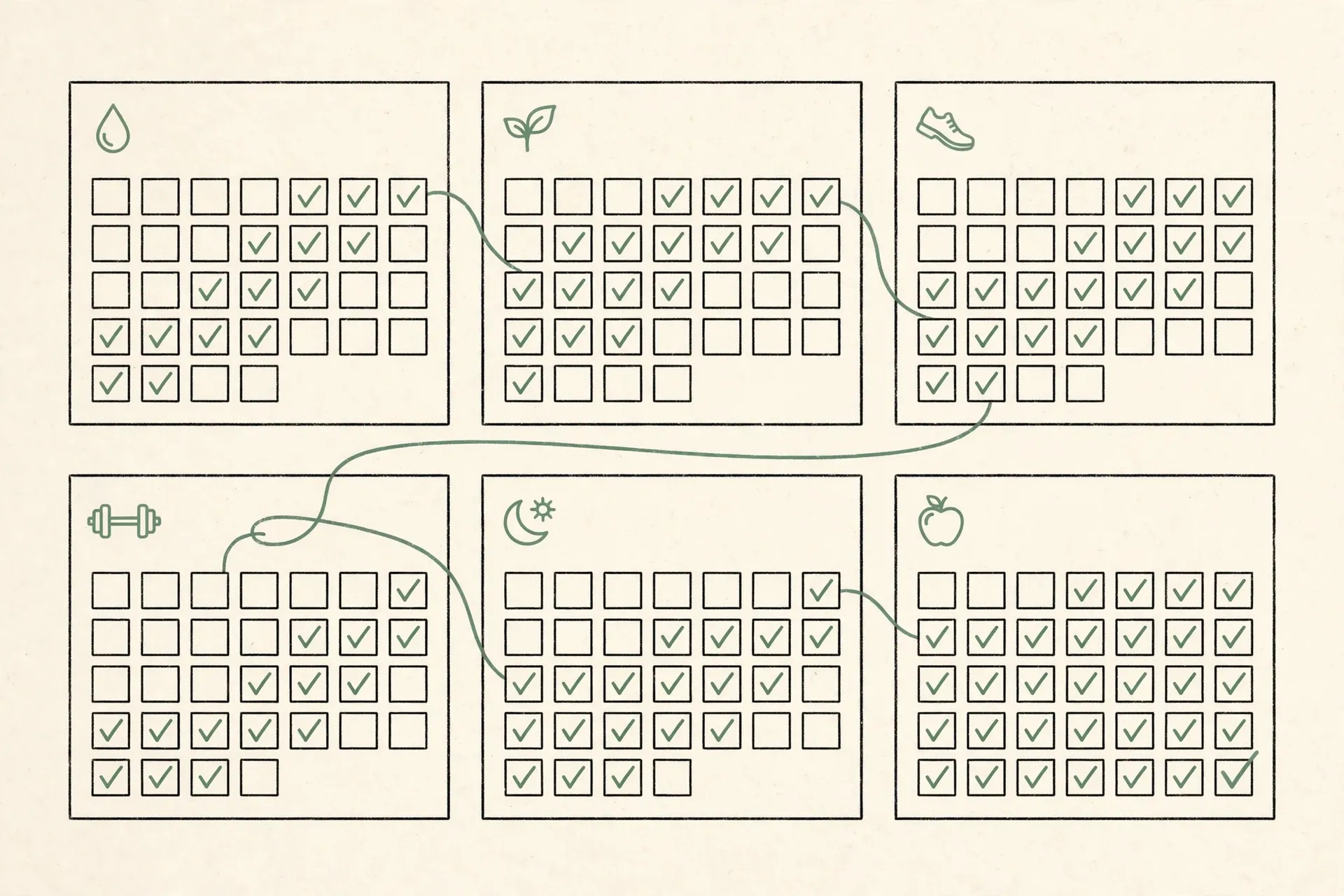
Do not start all five habits on Monday. Start one per two weeks, in this order.
Weeks 1-2: sleep. Fix the wake time. Screens off before bed. That is the whole assignment.
Weeks 3-4: daylight walk. Outside within an hour of waking, ten minutes minimum. Stack it onto the morning you already have.
Weeks 5-6: strength. Ten minutes, most days, rotating push, squat, row, plank. Living room, dumbbells optional.
Weeks 7-8: fiber. One bean or lentil dish a day. Build meals fiber-first.
Weeks 9-12: rest. One real day off weekly, evenings with a hard stop, and one social plan per week that does not involve a screen.
At day 90, take stock. Energy, mood, sleep quality, how your clothes fit, how you feel at 3 PM. That is your data. Then, and only then, consider whether any layer-two tool deserves your money.
The bottom line
The bottom line: put a ceiling on effort, then keep the floor. Sleep on a consistent wake time, morning daylight with a short walk, ten minutes of strength most days, fiber-first food, and real rest. That set has the strongest evidence per unit of effort, and a smaller routine you keep beats a perfect routine you quit by February.
Run it in the article's order: sleep first, then daylight walk, strength, fiber, and rest, one habit every two weeks. At day 90, take stock of energy, mood, sleep quality, and how you feel at 3 PM. That is your data, and only then should any layer-two tool earn a place.
One boundary the article states plainly: annual checkups, blood pressure, blood sugar, cholesterol, and age-appropriate screenings are the actual foundation. This is a habits framework, not medical advice, and anything that feels wrong goes to a doctor now, not to another supplement.
Morning light is the anchor habit that makes the rest easier. Ten to thirty minutes outside within an hour of waking sets the sleep clock that the evening wind-down then protects, and it costs nothing, unlike the $400-a-month peptide protocol this formula replaces. If the walk does not happen, do not buy a tool to track the failure; fix the morning first.
Judge the routine by 10 AM and 3 PM, not by a ring. The guide's test is deliberately low tech: how you feel at 10 AM tells you most of what a wearable would, and energy, mood, sleep quality, and how you feel at 3 PM are the day-90 scorecard. Buy the $500 wearable only when the five habits are automatic and you want to fine-tune, because a device that measures a routine you quit by February measures nothing.
Frequently asked questions
Is minimum effective wellness just laziness rebranded?
No. It is triage. The habits on this list have the strongest evidence per unit of effort in the longevity literature: sleep, daylight, movement, strength, fiber, and social connection. Doing the highest-evidence things consistently is the opposite of lazy; it is what the research actually recommends.
Do I need any supplements at all?
Probably fewer than you think. Creatine monohydrate (5g daily) is the best-studied supplement in this category, and vitamin D makes sense if bloodwork shows a deficiency. Beyond that, each supplement should have a specific reason tied to your own labs or diet, not a podcast ad.
What if I travel constantly for work?
Use the travel minimum: same wake time in the new timezone from day one, an outdoor walk on arrival, and a packed resistance band. Protect sleep first, because everything else degrades fastest when sleep goes. The routine bends; it does not break.
How is this different from regular health advice?
The advice is mostly classic. What is new is the framing: a deliberate ceiling on effort. The 2026 shift is the recognition that complexity was the failure mode, and that a smaller routine you keep beats a perfect routine you quit by February.
When should I see a doctor instead of reading wellness articles?
Now, if anything feels wrong. This article is a habits framework, not medical advice. Annual checkups, blood pressure, blood sugar, cholesterol, and age-appropriate screenings are the actual foundation. If you are over 50 or have a family history of serious illness, talk to your physician about screening options like multi-cancer blood tests.
Health and money protect each other. If you work for yourself, read our self-employed health insurance guide for 2027 open enrollment so the coverage matches the habits. Pair the wellness routine with term life insurance that fits a founder's budget, and keep the financial side calm with the right emergency fund size for 2026. Healthy body, covered risks, quiet money: that is the whole game. For the full October checkup that pairs with this routine, read our founder fall health check guide.
Want more practical guides like this?
Browse all 80 guides across 10 categories, no fluff, no paywall.
Browse all guides →