TikTok Shop for Small Business 2026: Sell Where Your Customers Already Scroll
TikTok Shop charges a 6% referral fee on most categories and no setup fee. The Black Friday campaign runs Nov 11 to 30, and this guide works through the fees, the 90-day price rule, and setup, with a worked $30 order.
TikTok Shop charges a 6% referral fee on most categories, 5% for pre-owned and select jewelry, and no setup fee. Smart Promotion adds 3.5% of total shop GMV, or 4.5% during campaigns. The Black Friday campaign runs November 11 to 30, and the 90-day price rule caps your campaign price at the lowest price paid in the past 90 days.
Key numbers at a glance
- Referral fee: 6% for most US categories, 5% for pre-owned and select jewelry
- New sellers: 3% rate for 30 days if they make a first sale within 60 days of onboarding
- Setup fee: $0, and no separate 2.9% plus $0.30 processing fee on current orders
- Smart Promotion: 3.5% of total shop GMV normally, 4.5% during major campaigns
- Black Friday campaign: November 11 to 30, 2026 Pacific Time, Black Friday November 27, Cyber Monday November 30
- BFCM 2025: more than $500 million in US sales across the four days
- 90-day price rule: campaign price cannot exceed the lowest price paid in the past 90 days, back to about August 13
- Fulfilled by TikTok: from $4.28 per unit for a one-unit order of 4 ounces or less
- New-shop probation: 100 orders a day for individual sellers, 200 for corporate, 100 product uploads a day
- INFORM Consumers Act: verification at 200 sales and $5,000 gross revenue in any continuous 12 months
- Creator affiliates: 1,000 or more followers and 18 or older, commissions from 1% to 80%
- Returns: charged per unit since June 1, 2026, replacing the old flat $3.00 per order
- $450 is the Smart Promotion fee at 4.5 percent on $10,000 of GMV during the November 11 to 30 campaign, deducted automatically from your payout.
- Profit per order falls from $5.87 to $1.64 on a $24 order once a 20 percent creator commission joins the fees, with $11.36 in total deductions leaving a $12.64 net.
Last reviewed: November 2026.

TikTok Shop is the storefront inside the TikTok app. A customer watches your 30-second video, taps the product link, and checks out without leaving TikTok. For a small shop that sells physical products, that short path from video to purchase is the whole pitch: you meet buyers where they already scroll, instead of paying to drag them to your website first.
This TikTok Shop small business 2026 guide covers what it costs, how the fees stack up on a real order, what Smart Promotion does to your margin, and how to handle the Black Friday campaign that starts today, November 11. Everything here uses the fee and campaign facts TikTok publishes for US sellers, and the worked examples use an assumed product cost that is stated next to the math, so you can redo the numbers with your own costs.
How does TikTok Shop work?
TikTok Shop turns short videos, live streams, and a Shop tab into a checkout, all inside the TikTok app. A short video can carry a product link. A viewer taps it, sees the price, and buys without leaving the app. A live stream works the same way, with products pinned on screen while you demonstrate them and answer questions in real time. The Shop tab is the searchable catalog, where people browse by category or brand and find your storefront.

All three formats feed the same checkout and the same seller dashboard. When an order comes in, it appears in Seller Center with the customer details, the items, and the ship-by date. You pack it yourself or hand it to Fulfilled by TikTok. The feed decides who sees your videos based on engagement, not on follower count, so a new shop with zero followers can still reach buyers on day one if the video holds attention.
That is the opportunity and the trap in one sentence. Reach is cheap on TikTok, but every sale carries four costs that stack up fast: the referral fee, Smart Promotion, the creator commission, and fulfillment. The next section works through them on a real order, because a shop that only counts views will price itself out of business.
What does TikTok Shop cost in 2026?
A typical order costs you the 6% referral fee, Smart Promotion at 3.5% of total shop GMV, any creator commission you set, and fulfillment, with no setup fee. The referral fee is 6% for most US categories. Pre-owned products and select jewelry pay 5%. New sellers get a 3% rate for 30 days if they make a first sale within 60 days of onboarding. There is no setup fee to open a shop, and there is no separate 2.9% plus $0.30 payment processing fee on current orders. The referral fee and the Smart Promotion fee cover payment processing.
TikTok Shop fee stack on a $30 order
| Fee | What you pay | On a $30 order |
|---|---|---|
| Referral fee | 6% of order value, 5% for pre-owned and select jewelry, 3% for new sellers for 30 days | $1.80 |
| Smart Promotion | 3.5% of total shop GMV, 4.5% during campaigns, shown here as a simplified per-order illustration | $1.05 |
| Creator commission | You set it, from 1% to 80% of the order | $6.00 at 20% |
| Fulfilled by TikTok | From $4.28 per unit for a one-unit order of 4 ounces or less | $4.28 |
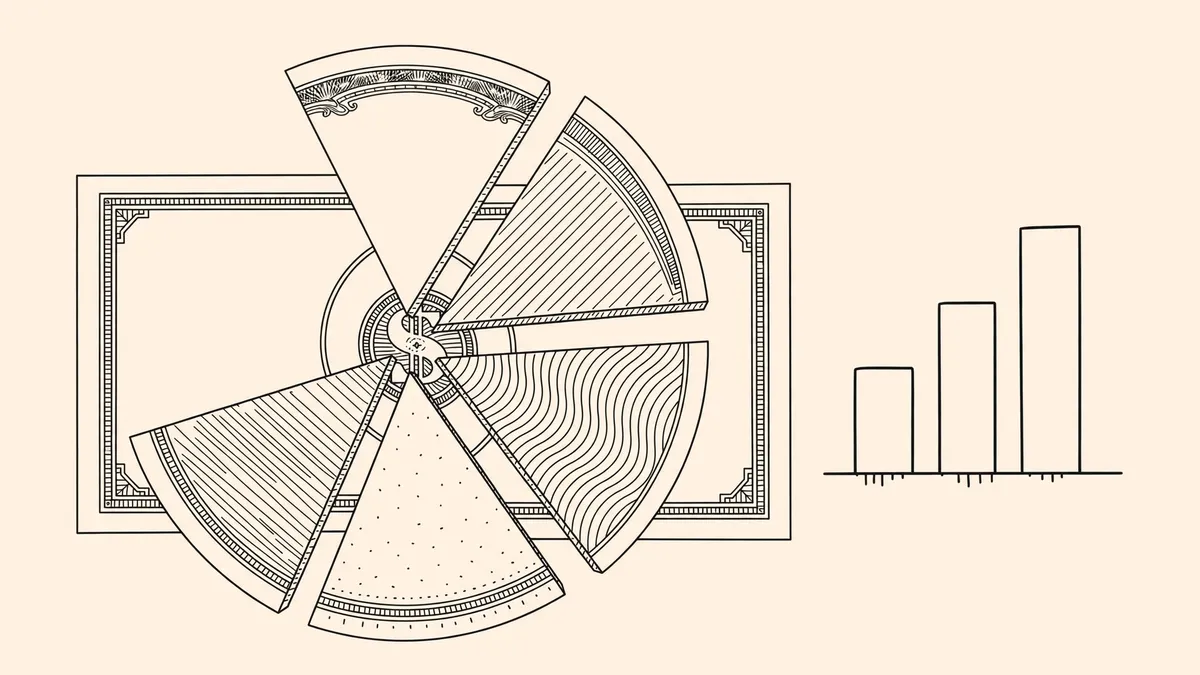
Here is the worked example with an assumed $11 product cost. On a $30 order, the referral fee takes $1.80, the creator commission at 20% takes $6.00, and FBT takes $4.28. Smart Promotion adds about $1.05 on a per-order basis as a simplified illustration, because the real charge is 3.5% of your total shop GMV, not a per-order fee. Before the product cost, that leaves $16.87. With the assumed $11 product cost, profit is $5.87 per order.
Now apply a 20% seller-funded Black Friday discount. The customer pays $24. The referral fee at 6% becomes $1.44. Smart Promotion as a simplified illustration becomes $0.84. The creator commission at 20% becomes $4.80. FBT stays at $4.28. Total deductions equal $11.36, and the net drops to $12.64. With the same assumed $11 product cost, profit per order falls from $5.87 to $1.64. That is why you model the discount before the campaign, not during it: a discount that looks generous to the customer can leave you with almost nothing after the fees.
A second example shows how the same math behaves on a bigger basket. Take a $50 order with a 25% creator commission and an assumed $20 product cost. The referral fee is $3.00. Smart Promotion as a simplified illustration is $1.75. The creator commission is $12.50. FBT is $4.28. Total order-level costs are $21.53, leaving $28.47. After the assumed $20 product cost, profit is $8.47 per order. The lesson is the same at any price: the creator commission is the biggest line in the stack, so set it with the same care you set the price.
What is Smart Promotion and how much does it cost?
Smart Promotion is TikTok's campaign promotion fee: 3.5% of your total shop GMV normally, and 4.5% during major campaigns. It replaced the old co-funded promotion model on March 3, 2026. Enrollment is required to participate in major platform campaigns since April 2026. You opt in from the seller dashboard, and once you are enrolled, the fee applies to all GMV during the campaign period, not just the discounted items. You cannot opt out of the fee for individual products once you are enrolled in the campaign.

The GMV basis is the part sellers miss. If you generate $10,000 in GMV during the November 11 to 30 campaign, the Smart Promotion fee at 4.5% equals $450, and it is deducted automatically from your payout. That $450 buys you into the campaign traffic, the campaign badges, and the campaign placement. Whether it pays for itself depends on your margin after the fee, which is why the worked examples above matter: a shop selling at a thin margin can see the campaign fee eat the whole profit on discounted orders.
Treat Smart Promotion as a campaign budget line, not a surprise. Before you enroll, run your top five SKUs through the $30 example math at the campaign discount you plan to offer. If the profit after the 4.5% fee and the creator commission is still healthy, enroll. If it is not, fix the price or the commission first. Check Seller Center for the enrollment cutoff, and enroll before the campaign starts, because enrollment after the cutoff means sitting out the biggest sales weeks of the year.
How do you win the Black Friday campaign from November 11 to 30?
You win the Black Friday campaign by fixing your prices before the campaign starts, because the 90-day price rule locks your campaign price at or below the lowest price customers paid in the past 90 days. The 2026 campaign runs November 11 to 30, Pacific Time. Black Friday is November 27 and Cyber Monday is November 30. TikTok reported more than $500 million in US sales across the four days of BFCM 2025, so the traffic is real. It starts today, which is why this guide is written for action this week, not for someday.
Campaign and flash-deal prices cannot be above the lowest price customers paid in the past 30 days, and for the 2026 US Black Friday campaign the window is the past 90 days. The lookback reaches to approximately August 13. If you ran a flash sale at $20 on August 15, you cannot list that product at $25 for the Black Friday campaign. You must price at or below $20. If you discounted heavily in August or September, you locked in a low price floor for November, and no amount of creative work fixes that now.
What to do this week. First, audit your pricing history for the past 90 days and write down the lowest transaction price for every SKU you plan to promote. Second, set your campaign price at or below that floor, then run the fee math from the section above at that price. Third, build your creative now: short videos that show the product in use beat static images, and a simple unboxing clip or a before-and-after is enough to start. Fourth, schedule live streams for the first week of the campaign, when traffic ramps up. Fifth, set your creator commissions before the campaign so creators have time to make content. A 20% to 30% commission range attracts established creators without destroying your margin. For the wider Black Friday plan, including list building and the December follow-up, see our Black Friday marketing playbook for small business.
Enroll in Smart Promotion before the campaign starts, and check Seller Center for the enrollment cutoff. The campaign runs 20 days, so pace your budget: the first week is for testing which videos convert, the Black Friday weekend is for your best offers, and Cyber Monday is for the last push on the SKUs that moved.
How do you set up your TikTok Shop step by step?
You register at seller.tiktok.com, verify your business, upload products within the probation limits, and enroll in Smart Promotion before the campaign. The whole setup is admin work, not code, and a focused shop owner can get through it in a few days. The order below avoids the rework that trips up most new sellers.

Step 1: register and choose your seller type
Create a TikTok Shop seller account at seller.tiktok.com. Choose individual or corporate registration. Corporate sellers get higher probation limits, 200 orders a day against 100 for individual sellers, so register as a business if you have one.
Step 2: complete business verification
Verify with your EIN, business license, and bank account details. The INFORM Consumers Act triggers once you reach 200 TikTok Shop sales and $5,000 in gross revenue in any continuous 12 months. At that point TikTok must verify your bank account, tax ID, and contact details, so prepare these documents early to avoid payout holds.
Step 3: upload your catalog within the limits
New shops are capped at 100 product uploads a day, and the cap applies to individual and corporate sellers alike. Use high-resolution images on white backgrounds for the main image, add lifestyle images and videos as secondary assets, and write titles with the primary keyword near the front. Include the key attributes in the first bullet point, because shoppers decide from the title and the first lines.
Step 4: set up shipping and fulfillment
Set up shipping templates for self-ship items, or apply for FBT if your volume justifies it. Confirm your ship-by times before you take orders, because late shipment rates above 4% risk account restrictions. A shop that cannot ship on time in the campaign week will lose more than the sale.
Step 5: enroll in Smart Promotion and set commissions
Enroll before the campaign starts and check Seller Center for the enrollment cutoff. Set creator commissions, then confirm inventory levels for every SKU you plan to promote. A campaign listing that goes out of stock on day two wastes the traffic you paid to earn.
How do you find creators and set commissions?
You find creators in the TikTok Shop Creator Marketplace, filter by engagement rate, and set a commission between 1% and 80%. Creator affiliates must have 1,000 or more followers and be 18 or older. Find them in the Creator Marketplace or by searching hashtags in your niche. Filter by engagement rate, not follower count. A creator with 10,000 followers and 8% engagement often outperforms one with 100,000 followers and 1% engagement, because the smaller audience actually watches and buys.

Most small businesses offer 15% to 30%. Higher commissions attract more creators but reduce your margin on every referred sale, and the worked examples above show how fast a high commission eats a $30 order. Test with a small group at 20%, measure the cost per acquisition, then adjust. Give creators product samples and a short brief with your brand voice, the key selling points, and the compliance notes, such as FTC disclosure language for gifted products and paid posts.
Start the outreach now, not in the campaign week. Creators need time to receive the product, film, and post. Contact five to ten creators in your niche this week, and give the best performers a higher commission on your hero SKU for the Black Friday weekend. One creator who converts beats ten who post and disappear.
Should you use Fulfilled by TikTok or ship orders yourself?
Use FBT when volume makes packing and shipping your bottleneck, and self-ship while volume is low and you want control of packaging. Fulfilled by TikTok starts at $4.28 per unit for a one-unit order of 4 ounces or less, and rates increase with weight and dimensions. FBT handles storage, picking, packing, shipping, and customer service for delivery issues. You ship inventory to TikTok fulfillment centers and TikTok does the rest.

Self-ship means you handle everything. You keep control of packaging and inserts, including the thank-you card or sample that turns a first buyer into a repeat buyer, but you must meet TikTok shipping time requirements. Late shipment rates above 4% risk account restrictions. For low-volume sellers, self-ship is often cheaper. For sellers doing more than 50 orders a day, FBT usually saves time and reduces shipping errors. You can use both methods for different SKUs: FBT for your best sellers, self-ship for the slow movers and the fragile items you want to pack yourself.
How do returns and refunds work on TikTok Shop?
Since June 1, 2026, returns are charged per unit, so every returned unit costs you a separate return fee. The per-unit charge replaced the old flat $3.00 per order. If a customer returns two units from a single order, you pay the per-unit return fee twice. The exact per-unit fee varies by category and fulfillment method. For FBT orders, TikTok deducts the return fee from your payout when the return is processed. For self-ship orders, you receive the return and the fee is deducted at that time.
Factor return rates into your margin before the campaign. Apparel and accessories often see 15% to 25% return rates, while hard goods typically run 5% to 10%. Build a return buffer of at least 10% into your pricing for high-return categories, and write a clear return policy before the Black Friday rush. Our holiday return policy guide for small shops walks through the wording and the deadlines.
A high return rate during the campaign is not just a cost, it is a signal. Check which SKUs come back and why. Sizing problems mean your size chart or your video needs work. Quality complaints mean the listing oversells the product. Fix the listing and the returns fall, which is cheaper than paying the fee on every order.
What are the 5 mistakes that kill your margin?
The five margin killers are ignoring the 90-day price rule, overpaying creators, skipping Smart Promotion enrollment, underestimating returns, and hitting probation limits. All five are avoidable, and all five cost real money when they are not.
Mistake 1: ignoring the 90-day price rule
If you discount heavily in August or September, you lock in a low price floor for Black Friday. Plan your promotional calendar so the lowest price in the 90-day window is a price you can sustain in November.
Mistake 2: setting creator commissions too high without tracking attribution
A 40% commission on a $30 order is $12. If your product cost is $15 and fees total $6, you lose $3 on every creator-driven sale. Track each creator with unique links or codes, and cut the commission on any creator whose sales cost more than they bring in.
Mistake 3: skipping Smart Promotion enrollment and missing the campaign entirely
The traffic lift during major campaigns is significant. The 4.5% fee is the cost of accessing that traffic, so model it into your campaign budget instead of treating it as a surprise. Check Seller Center for the enrollment cutoff and enroll in time.
Mistake 4: underestimating return costs
The per-unit return fee adds up fast during high-volume periods. A 20% return rate on 500 orders means 100 returns, and each one carries its own per-unit fee. Multiply your category rate by your expected return count before the campaign, and hold that amount back from your spend.
Mistake 5: violating probation limits and getting your account restricted
Hitting the daily order cap or upload cap triggers manual review. Monitor your daily volume and request limit increases proactively through seller support. A new shop that goes viral in week one can hit the 100-order daily cap fast, so have a plan for the day the cap bites.
What does a 30-day TikTok Shop launch look like?
A 30-day launch moves in four weekly blocks: account and verification, catalog and content, creators and campaign pricing, then live streams and a checkout test. The dates below assume you start today, with the campaign already running, so move fast on week one and let the campaign weeks do the selling.
Days 1 to 3: register and verify
Register your seller account. Complete business verification. Connect your bank account. Turn on two-factor authentication.
Days 4 to 7: build the catalog
Upload your first 20 products and stay within the 100 daily upload limit. Optimize titles, descriptions, and images. Set up shipping templates for self-ship items.
Days 8 to 14: make content
Create your first 10 short videos and post one per day. Test different hooks and formats. Find which products get organic traction. Apply for FBT if your volume justifies it.
Days 15 to 21: line up creators and campaign pricing
Enroll in Smart Promotion. Set your Black Friday campaign pricing from your 90-day price audit. Contact five to ten creators in your niche and send products and briefs.
Days 22 to 30: rehearse the campaign
Schedule live streams for the first campaign week. Finalize creative assets. Run a small test promotion to verify the checkout flow. Confirm inventory levels for campaign SKUs. Set up automated order export to your accounting software. And email your list when the campaign opens, because your own list converts better than any cold traffic. Our email marketing playbook for small business has the Black Friday sequence.
The bottom line
TikTok Shop for small business in 2026 is a real sales channel with honest math: a 6% referral fee, Smart Promotion at 3.5% of GMV or 4.5% during campaigns, creator commissions you control, and FBT from $4.28 a unit. On a $30 order with an assumed $11 product cost, the worked example leaves $5.87 before a discount and $1.64 after a 20% Black Friday discount, which is the number that should decide your campaign price.
The campaign starts today, November 11, and runs to November 30. Audit your 90-day prices now, enroll in Smart Promotion before the cutoff in Seller Center, set creator commissions this week, and test your checkout before the Black Friday weekend. Do those four things and the traffic TikTok reported for BFCM 2025, more than $500 million in US sales across four days, is traffic you can actually convert.
Start small if you are new: ten products, ten videos, five creators, one live stream a week. Measure the profit per order, not the views, and put the next dollar into whatever made money. That is the whole strategy.
Black Friday starts today, November 11, and the 90-day price rule already set your ceiling. The price you charged back around August 13 is the highest campaign price you can offer, so the win now is in the ten products, ten videos, and five creators you already lined up, not in a last-minute markup.
Frequently asked questions
What is the referral fee for TikTok Shop in 2026?
The referral fee is 6 percent for most US categories and 5 percent for pre-owned and select jewelry categories. New sellers get a 3 percent rate for 30 days if they make a first sale within 60 days of onboarding.
When does the 2026 Black Friday campaign start?
The campaign runs November 11 to 30, 2026 Pacific Time. Black Friday is November 27 and Cyber Monday is November 30.
What is the 90-day price rule?
Your campaign price cannot be higher than the lowest price any customer paid for that product in the past 90 days. For the 2026 campaign the lookback window reaches to approximately August 13.
How much does Fulfilled by TikTok cost?
FBT starts at $4.28 per unit for a one-unit order of 4 ounces or less. Rates increase based on weight and dimensions.
Do I need to pay a separate payment processing fee?
No. There is no separate 2.9 percent plus $0.30 processing fee on current orders. The referral fee and Smart Promotion fee cover payment processing.
Want more practical guides like this?
Browse all 116 guides across 10 categories, no fluff, no paywall.
Browse all guides →Explore Marketing guides