Commercial Real Estate for Small Investors: 5 Entry Points That Work in 2026
You do not need millions to start commercial real estate investing. You need a small building with real rent, a loan you can carry through a slow year, and the patience to run the numbers yourself. Here are five entry points that fit a small investor in 2026, with the math on one deal worked out in full.
The short answer: commercial real estate for small investors in 2026 starts small, not big. A 5 to 20 unit apartment building, a single-tenant shop on a net lease, or a small self-storage site will teach you the business without risking your life savings. If you have under $50,000, start with REITs or a syndication instead of a building.
Key numbers at a glance
- $539 billion in commercial real estate debt matures in 2026, which is pushing some owners to sell at prices small buyers can reach
- 20 to 30 percent down is what most banks ask for on a commercial loan, far above the 3 to 5 percent common on a house
- 7.0 percent cap rate on the worked example below: an $850,000 strip center producing $59,500 of net operating income a year
- 1.21x debt service coverage on that same example, thin but workable, and a warning against buying at any price
- $10,000 to $25,000 is the typical starting range for non-traded REITs, and $25,000 for many Delaware Statutory Trusts
- Near 11.8 percent office loan delinquency in commercial mortgage-backed securities in one 2026 guide, a record for that market
- About 10,180 dollars a year is the cash left after the loan in the worked strip-center example, a 4.0 percent cash-on-cash return on 255,000 dollars down, before reserves for a roof or a vacant shop
Why does 2026 give small buyers a window?
For three years, most small investors watched commercial property from the sidelines. Rates jumped, prices stayed sticky, and every headline seemed to declare a different sector dead. Office was finished. Retail was finished. Industrial was too dear. Multifamily was overbuilt. If you believed all four at once, there was nothing left to buy.
The real story is less dramatic and more useful. Higher rates did not kill commercial property. They repriced it. Owners who borrowed cheap in 2021 and 2022 now face loans that mature in 2026, and refinancing at today's rates often means putting in fresh cash or selling. One industry estimate puts $539 billion of commercial debt maturing in 2026. Not every one of those loans ends in a sale. But enough owners will choose to sell that patient buyers with cash and patience get a look at deals they could not touch in 2021.
Office is where the pain is plainest. Office loans packaged into commercial mortgage-backed securities showed delinquency near 11.8 percent in one 2026 guide, a record for that market. That does not mean you should buy a half-empty office tower. It means distress exists, and distress is where discounts live, usually in smaller buildings a local buyer can reposition, not in downtown towers that need a $40 million rescue.
At the same time, the sectors small buyers can actually enter look steady. Industrial vacancy held below 6 percent in that same 2026 outlook, and CBRE's 2026 investor survey ranked multifamily first for investor preference, with industrial second and retail third. Translation: the boring buildings, apartments people live in, warehouses goods move through, and grocery-anchored shops people visit weekly, still have tenants and rent. The flashy bets are the ones that need care.
Here is the mindset shift that matters. A house is priced by what a family will pay to live there. In commercial real estate, a building is priced by the income it produces. If the rent does not cover the loan, the taxes, the insurance, and a reserve for repairs, the building is not a bargain at any price. Keep that sentence in your pocket for every deal you look at this year.
What math matters, on one building?
Commercial real estate deals drown beginners in jargon. You only need three numbers to start, and you can work all three on a phone calculator.
Net operating income (NOI) is the rent you actually collect minus operating costs like taxes, insurance, maintenance, and management, before the mortgage.
Net operating income, or NOI, is the rent you actually collect minus operating costs like taxes, insurance, maintenance, and management, but before the mortgage. Cap rate is NOI divided by price. It tells you what return the building earns before debt. Debt service coverage, or DSCR, is NOI divided by yearly loan payments. Lenders usually want 1.20x or better, meaning the building earns at least 20 percent more than the loan costs.
Take a real example. A small strip center lists at $850,000. Three shops pay $8,500 a month combined, which is $102,000 a year gross. Vacancy and unpaid rent run about 7 percent, so $7,140 comes off. Operating costs, taxes, insurance, repairs, and a part-time manager, run $35,360. NOI is $59,500. Divide by $850,000 and you get a 7.0 percent cap rate.
Now the loan. You put 30 percent down, which is $255,000, and borrow $595,000 at 6.75 percent over 25 years. The payment lands near $4,110 a month, or about $49,320 a year. DSCR is $59,500 divided by $49,320, which is 1.21x. Cash left after the loan is about $10,180 a year, a 4.0 percent cash-on-cash return on your $255,000, before you set money aside for a new roof or a vacant shop.
Read that last line twice. A 7 percent cap rate does not mean you earn 7 percent in your pocket. Debt costs money, and buildings cost money. If the seller's numbers show no vacancy, no management cost, and no repairs, they are selling you a story, not a building. Rebuild the numbers with a 5 to 10 percent vacancy allowance, a management fee even if you plan to self-manage at first, and a yearly reserve of $0.50 to $1.00 per square foot for big repairs. If the deal still works, it is worth a second look.
Which five entry points fit a small investor?
Not every entry point suits every buyer. Rank these by how much cash you have, how much time you can give, and how much risk you can sleep with. The right first deal is the one you can hold through a bad year.
1. Small multifamily: the bridge from houses
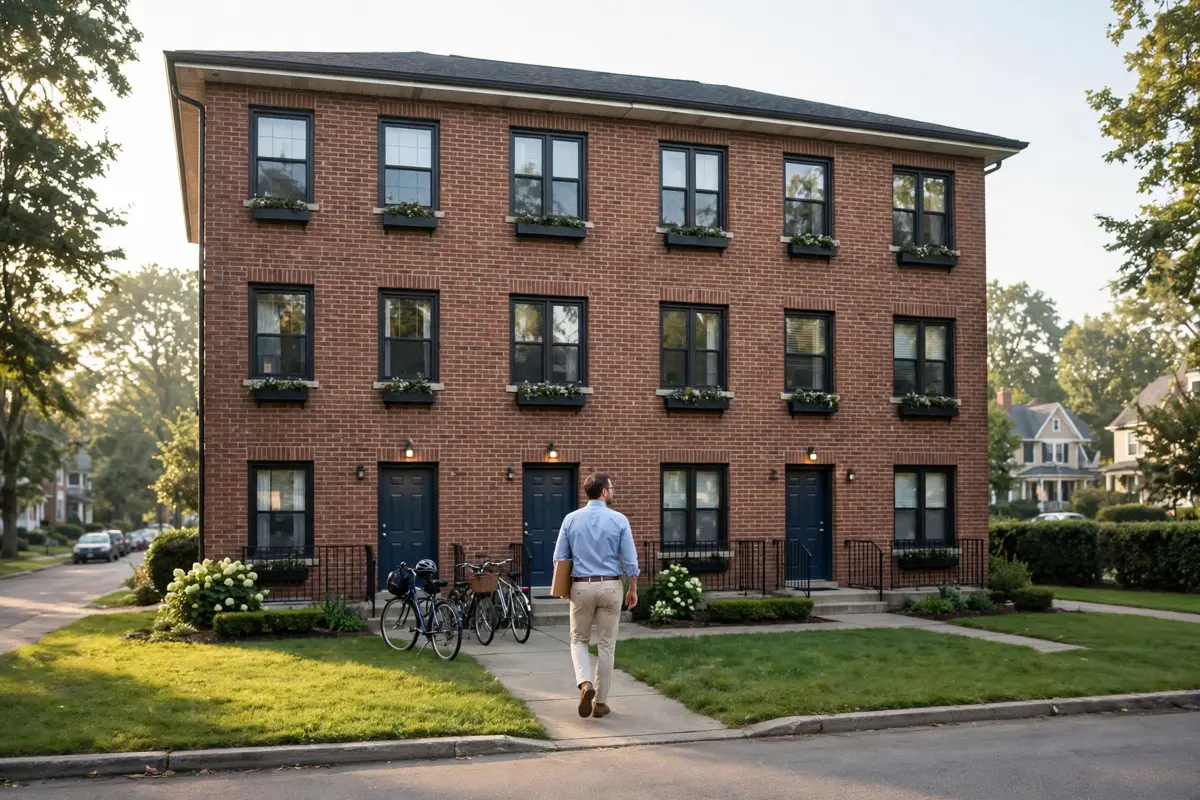
A building with 5 to 20 units feels familiar if you already own a rental house, but it is priced as commercial property once it passes four units. That is a plus, not a trap. You get commercial loan terms, professional appraisals based on income, and tax treatment that rewards real operators. Rents come from many households, so one vacancy does not zero your income the way one empty shop does.
Look for buildings where rents sit slightly below newer stock nearby. A $150 to $300 monthly gap per unit is room to renovate one unit at a time and lift income without pricing out the whole building. Watch the age of the roof, the plumbing stack, and the electrical panels. A cheap building with a 40-year-old roof is not cheap. If you already own a single rental, our guide to buying your first rental property covers the tenant and screening habits that carry straight over.
2. Single-tenant net lease: one tenant, few headaches
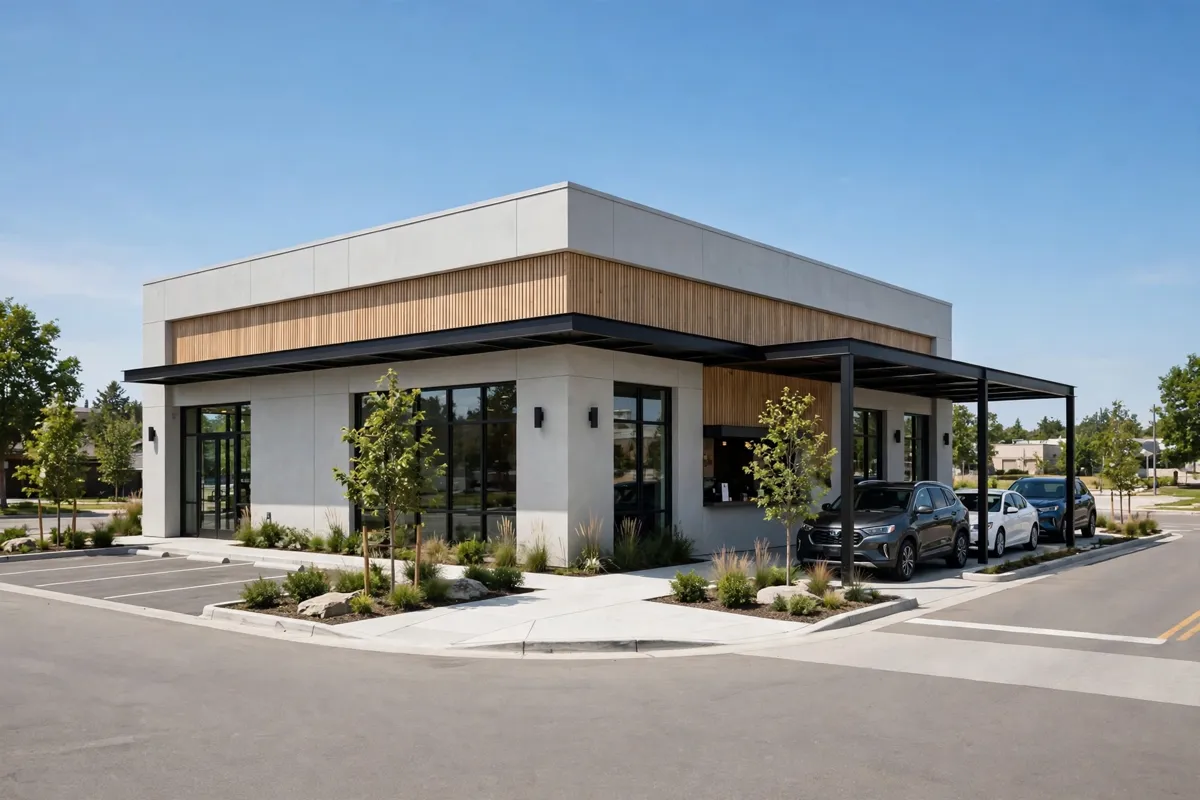
In a net lease, the tenant pays rent plus most taxes, insurance, and maintenance. A standalone coffee shop, pharmacy, or quick-service restaurant on a long lease can run with a quarterly visit and a yearly roof check. Yields often land near 5 to 7 percent, lower than a fixer multifamily, but the workload is far smaller.
The whole bet rests on one tenant, so judge the tenant, not just the building. A national chain with 10 years left on the lease is a different risk from a local shop with 18 months left and no renewal option. Ask for the lease, the tenant's payment history, and who pays for the roof and the parking lot. If the lease ends soon and the tenant can walk, price the building as if you will spend six months finding the next one.
3. Self-storage and small flex industrial: boring, and that is the point
Self-storage earns its fans honestly. Tenants rent small units, move in and out often, and rarely call at 2 a.m. about a leak. Margins run high because staffing is light: gates, cameras, and a part-time manager. Small flex industrial, think 1,000 to 3,000 square foot bays for trades, workshops, and last-mile storage, plays the same tune. Small businesses need these spaces and cannot easily work from home.
The catch is competition and location. A storage site next to three other storage sites competes on price alone, and price wars eat margins fast. Drive the area. Count competing units within three miles. Check whether new housing is coming, because rooftops fill storage units. For flex bays, check ceiling height, door width, and truck access. A bay a delivery van cannot enter is a bay that stays empty.

4. REITs, syndications, and DSTs: own property without owning a building
If your cash is under $50,000, this is the honest starting point. Public REITs trade like stocks and pay dividends, and you can start with a few hundred dollars. Non-traded REITs usually start near $10,000 to $25,000. Syndications pool investor money into one building or portfolio, often with a $50,000 minimum, and a professional operator runs it. Delaware Statutory Trusts, often near $25,000 minimum, let 1031 exchange sellers defer tax by moving into fractional property ownership.
The trade is control. You do not pick tenants, set rents, or decide when to sell. Read the fees before the pitch deck: acquisition fees, yearly asset management fees, and the split of profits above a hurdle return. A deal that pays the sponsor richly even when investors earn little is a deal to skip. Our REITs versus rental property comparison walks through the tax and control differences in full, and it is worth reading before you wire money anywhere.

5. Owner-user: buy the building your business already rents
This is the most overlooked entry point for founders. If your business pays $4,000 a month in rent, buying your own shop, office, or small warehouse turns a cost into an asset. SBA 504 loans can cover owner-occupied property with as little as 10 percent down in some cases, far below the 20 to 30 percent a bank asks an investor. Your business becomes your anchor tenant, which lenders like.
The risk is concentration. If your business struggles, both your income and your building suffer at once. Keep the two honest: charge your business a fair market rent on paper, keep separate books, and ask whether another tenant could rent the space if you moved out. If the answer is no, you bought a custom cage, not a building. For owners weighing this against other ways to fund growth, our small business loan guide covers how lenders judge the business behind the building.
What do lenders actually check when you finance a first deal?
Commercial real estate lenders underwrite the building first and you second, which surprises house buyers. They want to see the building's income cover the loan with room to spare, usually a DSCR of 1.20x to 1.25x. They also want your down payment, your credit, your liquidity after closing, and your track record. First-time buyers get approved all the time, but they get approved on smaller, simpler buildings with strong numbers, not on stretch deals.
In commercial real estate, three loan paths cover most first deals. A conventional commercial real estate loan from a local bank or credit union usually means 20 to 30 percent down, a 5 to 10 year fixed period, and a 20 to 25 year amortization, with a balloon payment at the end of the fixed period. Plan for that balloon from day one. An SBA 504 loan suits owner-occupied property and can cut the down payment to 10 percent. A DSCR loan, common for small multifamily and rentals, judges the property's income more than your personal income, which helps self-employed buyers whose tax returns understate what they earn.
Before you talk to a lender, gather twelve months of rent rolls, leases, tax bills, insurance quotes, and a simple spreadsheet with your NOI math. Ask each lender three questions: what DSCR do you require, what happens at the end of the fixed period, and what prepayment penalty applies if I sell or refinance early. The answers, not the advertised rate, decide whether the loan fits your plan. If you also rent out homes, the tactics in our rental arbitrage guide are a useful contrast: arbitrage rents income without ownership, while a commercial purchase buys income and keeps the asset.
What is on the due diligence checklist before you sign?
Good due diligence is boring on purpose. It is a list, worked through in order, before excitement spends your money. Start with the leases: every lease, every amendment, every side letter, and the payment history for twelve months. A tenant who pays late every month is not a tenant paying full rent. Then the building: roof age, HVAC age, plumbing, electrical, parking lot condition, and any environmental report for older industrial sites. A Phase I environmental study costs a few thousand dollars and can save you from inheriting a cleanup bill.
Then the market. Pull rents for five comparable buildings, not just the broker's hand-picked three. Walk the street at 8 a.m. and 6 p.m. Count foot traffic, parked cars, and closed shops nearby. Check zoning, planned road work, and whether the city has new supply coming: a 200-unit apartment building opening next spring changes your multifamily math, and a new storage site down the road changes yours too. Finally, verify the seller's numbers against bank statements and tax returns where you can. Sellers round up. Bank statements do not.
Red flags that should pause any deal: a rent roll that does not match deposits, a major tenant whose lease ends within a year with no renewal, a roof past its rated life with no reserve, flood zone status the listing forgot to mention, and a seller who rushes your inspection window. Any one of these can be priced and fixed. Two or more together usually mean you should walk away and keep your powder dry for the next deal.
What five mistakes do first-time commercial real estate buyers make?
First, buying on cap rate alone. A 9 percent cap rate in a shrinking town with a single employer is worse than a 6 percent cap rate beside a growing hospital district. Income quality beats income size. Second, skipping reserves. Roofs, parking lots, and HVAC systems fail on their own schedule, and a building with no reserve fund turns a $30,000 roof into a crisis.
Third, trusting pro forma rent. Pro forma means the seller's guess about future rent, often after renovations you have not priced. Underwrite today's rent, then treat any lift as a bonus. Fourth, signing a loan with a balloon you cannot handle. A five-year fixed period sounds fine until year five arrives in a high-rate market and the refinance demands $100,000 of fresh cash. Fifth, managing everything yourself to save a fee. A good manager costs 6 to 10 percent of rent and often earns it back through lower vacancy and better tenant retention. Try self-managing one building, and hire help before the second.
| Worked example | Number | Note |
|---|---|---|
| Strip center list price | $850,000 | Three shops, $8,500 a month combined |
| Gross rent | $102,000 a year | Before vacancy and costs |
| Vacancy and unpaid rent | About 7 percent ($7,140) | Budgeted, not ignored |
| Net operating income | $59,500 a year | After operating costs, before the loan |
| Loan | $595,000 at 6.75 percent, 25 years | 30 percent down ($255,000), about $4,110 a month |
| Debt service coverage (DSCR) | 1.21x | Lenders usually want 1.20x or better |
| Cash after the loan | About $10,180 a year | 4.0 percent cash-on-cash, before reserves |
| Cap rate range, small multifamily and net lease | 5.5 to 7.5 percent in 2026 | Judge on DSCR and cash after reserves, not cap rate alone |
What is your 90-day plan, in one page?
Days 1 to 30: pick one entry point from the five above and one market you can drive to in under an hour. Read ten listings a week and rebuild the NOI math for three of them by hand. Talk to two local lenders and one commercial broker, and tell them exactly what you want, including your cash range. Vague buyers get vague deals.
Days 31 to 60: tour five buildings, not fifty. Touring endlessly feels like progress and teaches little. For each tour, write down the cap rate on real numbers, the three biggest repair items, and the one reason you would walk away. Make one offer below asking with inspection and financing contingencies, even if it gets rejected. The first offer teaches you more than the twentieth listing alert.
Days 61 to 90: work the due diligence list on any accepted offer, line by line, with a local attorney reviewing the purchase contract and leases. If the numbers survive inspection, close and set up reserves on day one: three months of loan payments plus a repair fund. If they do not survive, walk away without shame. The best first deal is often the second one you almost bought, because the first one taught you what to check. If you want a second income stream while you search, our direct bookings playbook shows how owners keep more of each stay without paying marketplace fees.

Commercial real estate rewards people who buy income, not headlines. Start with a building you can understand, numbers you rebuilt yourself, and a loan you can carry through a slow year. The 2026 reset will not wait forever, but it will punish haste just as surely as it rewards patience. Pick your entry point, run the math, and let the deal earn your money before you give it any.
Further reading: how to get started in commercial real estate in 2026, best commercial real estate sectors to invest in 2026, and strategic entry points in the 2026 recovery.
The bottom line
Buy on the reserve, not on the cap rate alone. A 7 percent cap rate does not mean 7 percent in your pocket, because a building with no reserve turns a $30,000 roof into a crisis, and a five year fixed period can demand $100,000 of fresh cash at refinance. Underwrite vacancy at 5 to 10 percent, add a management fee even if you self manage at first, and set aside $0.50 to $1.00 per square foot a year for big repairs. The deal that survives those three lines is the deal worth your $255,000 down payment.
Do not stretch for the building: under 50,000 dollars, a REIT or a syndication beats a building you cannot reserve for, and an SBA 504 loan at 10 percent down only helps when the property is owner-occupied, so match the entry point to the cash you actually have.
Frequently asked questions
How much money do I need to start in commercial real estate?
For a direct purchase, plan on 20 to 30 percent down plus closing costs and reserves, which usually means $150,000 or more in cash for a small building. With an SBA 504 loan for a building your own business occupies, 10 percent down is possible. With REITs or a syndication, you can start near $10,000 to $50,000, depending on the vehicle.
What is a good cap rate for a first commercial deal?
There is no single good number, because cap rates vary by sector and town. In 2026, small multifamily and net lease deals often trade near 5.5 to 7.5 percent. Judge the deal on DSCR and cash after reserves, not on cap rate alone, and compare it with similar buildings in the same town.
Is office property too risky for a small investor in 2026?
Large downtown office carries real risk, with record delinquency in some securitized office loans. Small medical, professional, or owner-user office in a strong local market is a different deal. If you buy office, buy it for a tenant and a lease you understand, at a price that survives a vacancy.
Should I buy commercial property or invest in REITs first?
Buy REITs first if your cash is under $50,000, if you cannot visit the market, or if you want income without landlord work. Buy a building first if you have the down payment, you can manage tenants or hire a manager, and you want control over rents, financing, and timing of a sale.
What kills most first commercial deals?
Trusting the seller's rent forecast, skipping reserves for roof and HVAC work, and signing a loan with a balloon payment nobody planned for. Rebuild the NOI from bank statements, fund reserves from day one, and ask the lender what happens when the fixed period ends.
Want more practical guides like this?
Browse all 98 guides across 10 categories, no fluff, no paywall.
Browse all guides →Explore Real Estate guides