How to Turn Holiday Shoppers Into Repeat Customers in 2026
The 2026 holiday season is on track to pass 1 trillion dollars in US sales for the first time, and shoppers are going out of their way to buy from small businesses. That is the good news. The bad news is that most of those new holiday shoppers will never become repeat customers, because most small shops never give them a reason to. This playbook fixes that, with the contact capture, the thank-you, the January offer, and the numbers to track, all in time to run it this season.
The short answer: a holiday shopper becomes a repeat customer when three things happen. You capture their email or phone number at checkout, thank them within 48 hours with something useful, and invite them back in January with a reason tied to what they bought. Shops that do all three keep December buyers. The rest start every January from zero.
Key numbers at a glance
- 1.013 trillion dollars is the National Retail Federation forecast for November and December 2026 US holiday sales, up 4.2 percent, the first trillion-dollar season
- 20.2 percent of consumers plan to increase spending at small businesses this holiday season, nearly double the 11.0 percent in 2024, per Constant Contact
- 75.2 percent of consumers say they are likely to try a small business they have never bought from before this season
- 81.1 percent of US small businesses feel confident they will hit their 2026 holiday revenue goals
- 52.6 percent of shoppers say sales and discounts are their main incentive to shop small
- 44.1 percent of shoppers want convenience options like flexible pickup, easy returns, and free shipping, but only 21.9 percent of small businesses prioritize them
- 68.2 percent of small businesses plan to use AI tools this holiday season, mostly for marketing content and product imagery
- Over 70 percent of businesses fail to collect contact details from new holiday customers, losing the chance to invite them back
- 12.9 billion dollars is Adobe's expected Black Friday online sales figure, with 15.1 billion on Cyber Monday and 21.3 billion paid through buy now, pay later across the season
- 61 percent captured and about 75 second visits is Maya's second year result: from 412 December buyers she captured 61 percent of contacts, and about 30 percent of those captured buyers returned, giving roughly 75 second visits from the December cohort alone, without a single extra ad dollar.
- 25 to 35 percent of holiday buyers returning within 90 days is the reasonable target the guide sets for a consumable shop selling candles, coffee, or skincare, measured as December buyers who buy again within 90 days divided by December buyers, then improved by 5 points from your own baseline.
Maya runs a candle shop in Austin, Texas, with a small storefront and a website that does about a third of her sales. Last December was her best month ever: 412 new buyers, most of them buying gifts. In January she waited for them to come back. About 40 did. The rest vanished, and she spent February buying ads to replace them, at a higher cost than the December sales had earned her. This year she changed one thing first, before any ad spend: every December order, in store and online, ends with a question that takes five seconds to answer, and every answer goes into a list she actually uses in January. The December rush did not get bigger. The January return rate did, from under 10 percent to just over 30 percent, because the second visit was planned, not hoped for.
Maya's story is the whole argument for this guide in one shop. The holidays hand small businesses something ads cannot buy cheaply: a stranger walking in, wallet open, ready to try you. Most shops treat that stranger as a December transaction. The shops that grow treat them as a January customer who has not been invited back yet. If you are still planning the December push itself, read our Black Friday marketing guide and our Small Business Saturday checklist first, then come back here for the part that pays off after the decorations come down.

Why do holiday shoppers never come back?
A repeat customer is a buyer who comes back for a second purchase without being won again through paid ads, because the shop captured their contact details and gave them a reason to return.
Holiday shoppers leave for three plain reasons: nobody asked for their contact details, nobody thanked them in a memorable way, and nothing gave them a reason to return in January.
Start with the contact gap, because it is the biggest and the most fixable. Constant Contact's 2026 holiday report found that more than 70 percent of businesses fail to collect contact details from new customers during the holidays. Think about what that means in practice. A stranger buys a 38 dollar candle as a gift, loves it, and by January cannot remember your shop's name, your website, or even which market stall they bought it from. They are not disloyal. They are forgetful, and you gave them nothing to remember you by. A business card in the bag helps a little. An email address in your list helps a lot, because you can reach them when it counts.
The second reason is the forgettable thank-you. Most shops send an order confirmation and stop there, or they send a coupon that looks like every other coupon in the inbox. Neither one tells the buyer anything about the maker, the product, or what to buy next. A gift buyer especially needs a nudge: they bought for someone else, so they never used the product themselves, and they have no personal reason to return unless you give them one, like a scent they would like for their own home, or a January restock of the item that sold out.
The third reason is timing. Shops blast promotions through December and then go quiet in January, exactly when shoppers are deciding which new shops earned a second visit. January is when the gift recipient becomes a buyer in their own right, when the candle burns down, when the sweater gets worn and complimented. If your first message after December arrives in March, the moment is gone. Retention is a January job, planned in November.

How do you capture a holiday buyer's contact details?
Ask at the moment of highest goodwill, which is right after they pay, not before. In store, the script is one sentence: "Can I send you a note when your scent is back in stock?" Online, the checkout box is one checkbox, checked by default where the law allows, with plain wording about what they will get: restock notes and one January offer, not a weekly blast. The offer matters less than the clarity. People hand over an email when they know what it buys them.
Make it worth five seconds of their time. A paper loyalty card stamped at the counter works for walk-in shops, and it has a hidden benefit: the card itself is a reminder sitting in their wallet. A QR code on the receipt that opens a one-field signup works for markets and pop-ups, where a tablet signup feels slow. A small gift with the second purchase, not the first, works online: "Your next order ships with a free sample" is a reason to join the list that does not discount the first sale. Whatever the method, the rule is the same: one field, one promise, no account creation, no ten-question survey at the busiest week of the year.
Track the capture rate like a sales number, because it is one. If 400 people buy in December and you capture 120 emails, your capture rate is 30 percent, and your January audience is 120 people, not 400. Maya's first year she captured almost nobody, so her January audience was effectively zero, and her 40 returning buyers were mostly people who found her again by luck. Her second year she captured 61 percent, by asking every buyer and by putting the signup on the receipt, the bag, and the checkout page. You cannot invite back people you cannot reach, so fix capture before you fix anything else.

What should the thank-you do?
A good thank-you does three jobs in under a minute of reading: it proves a human packed the order, it tells the buyer something useful about what they bought, and it plants the next visit. "Thanks for your order" does none of those. "Thanks, Maya poured this candle on Tuesday, it burns cleanest if you trim the wick to a quarter inch, and the winter scent it pairs with is back January 9" does all three, and it gives the buyer a date to remember.
Send it fast, within 48 hours, while the purchase is still fresh. For online orders, the thank-you email can carry a short note from the maker, a care tip, and one link, not five. For in-store buyers, a handwritten line on the receipt or a small card in the bag beats a printed flyer, because handwriting is visibly human in a way print is not. The cost is minutes, not money, and it is the cheapest trust builder a small shop owns. One caution: do not put a discount in the thank-you. A discount in the first message trains the buyer to wait for discounts, and it spends margin before you know whether they even liked the product. Save the offer for January, when it has a job to do.
If the buyer bought a gift, the thank-you has a second audience: the recipient. A card in the box that says "This was picked for you by someone who knows you well, here is what makes it special" turns the recipient into a future buyer without any ad spend. Gift buyers are your cheapest acquisition channel, because they have already paid to introduce you to someone new. Treat the unboxing as marketing, not packaging.
Why does convenience beat another discount?
Because shoppers told us so, and shops are ignoring them. In the Constant Contact survey, 44.1 percent of shoppers said they were drawn to convenience options like flexible pickup, easy returns, and free shipping. Only 21.9 percent of small businesses said they prioritized those options. That gap is an opening: while rivals fight over who can discount deepest, a shop that makes buying easy wins the buyer who values their time more than 10 percent off.
Convenience in a small shop is concrete, not abstract. It is pickup ready in two hours with a text when it is done. It is returns without a form, a question, or a restocking fee on holiday gifts. It is free shipping over a threshold the buyer can actually reach, not a threshold set above the average order. It is a website that remembers the address from December, so the January order takes one minute instead of ten. Each of these costs less than a blanket discount, and each one removes a reason to buy from Amazon instead.
The economist quoted in Inc.'s November 2026 coverage put it bluntly: it is hard to discount below what you paid for the goods, and small shops cannot win a price war with online giants. Service is the ground small shops can actually hold: timely delivery, easy returns, a human who answers. If your January offer is 10 percent off, fine, but pair it with the convenience that makes using it painless, or the coupon will sit unused next to ten others in the inbox.
What loyalty setup fits a small shop?
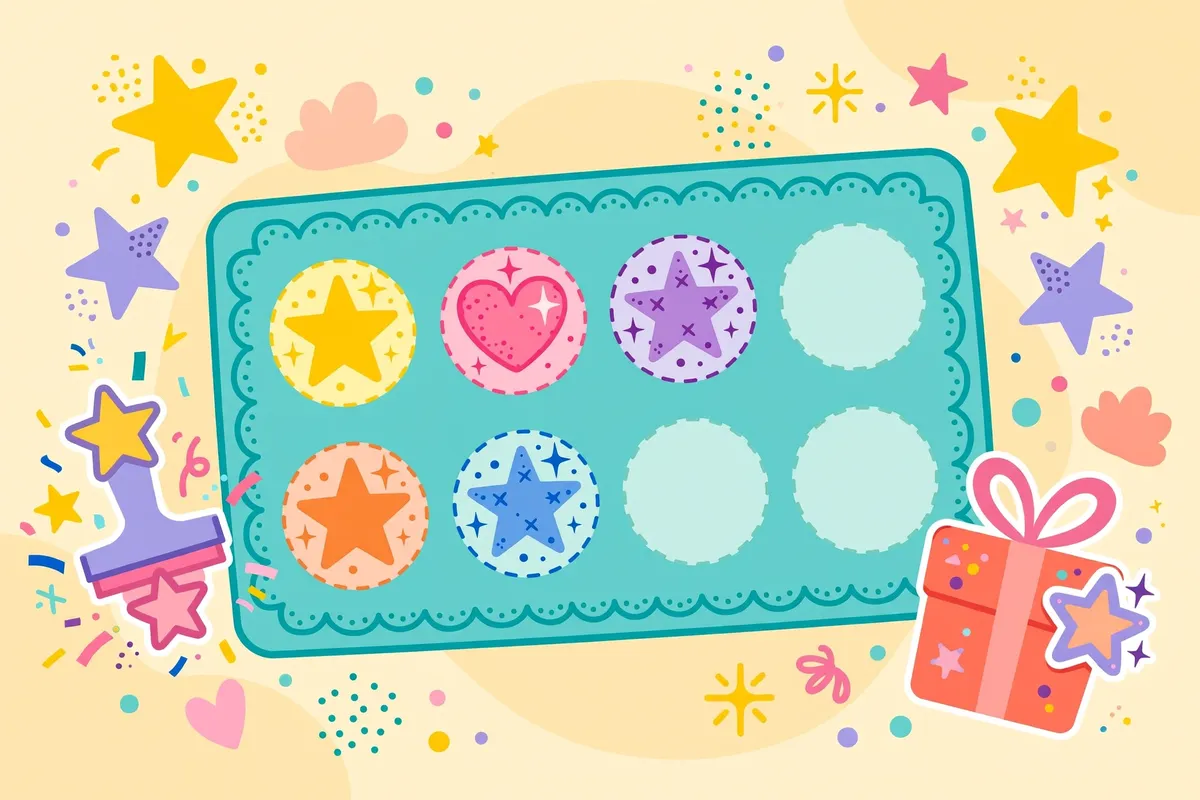
Keep it so simple a tired cashier can explain it in one sentence. "Buy five, the sixth is on us" works for coffee, candles, soap, and anything people buy repeatedly. A points app with tiers, expiry rules, and an account login does not, at least not for a shop with one location and a small team. The best loyalty program is the one customers understand without a manual and staff run without a training session.
Start holiday buyers on the program automatically, with their first purchase already counted. A card that arrives stamped once, or an email that says "Your December order already earned your first stamp, four more and the next one is free," turns a past purchase into progress toward a future one. That framing matters: people finish things they have started, and a card with one stamp feels started, while a card with zero stamps feels like a chore. Do not make rewards expire in January, when you are trying to bring people back. A reward that dies before the buyer can use it breeds resentment, not return visits.
For higher-priced goods, where a sixth free item makes no sense, loyalty looks different: early access to a restock, a free service with the product, or a members-only evening in January. A furniture shop can offer a free care visit. A skincare shop can offer a 15 minute consultation. The reward should cost you time or attention, not margin, and it should be something a big retailer cannot copy with a coupon code.
Key facts: turning December buyers into January customers
| Figure | Value |
|---|---|
| 2026 holiday forecast | 1.013 trillion dollars in November and December US sales, up 4.2 percent, per the National Retail Federation |
| The contact gap | Over 70 percent of businesses fail to collect contact details from new holiday customers |
| Small business intent | 20.2 percent of consumers plan to increase spending at small businesses this season, nearly double the 11.0 percent in 2024 |
| Convenience gap | 44.1 percent of shoppers want convenience options, but only 21.9 percent of small businesses prioritize them |
| The three steps | Capture contact details at checkout, thank within 48 hours with something useful, invite back in January with a reason tied to what they bought |
| January sequence | A 3-email January sequence, followed by a January offer tied to the December purchase |
| Worked example | Maya's candle shop: 412 new December buyers, about 40 returned at first, then just over 30 percent returned once the second visit was planned |
What is the 3-email January sequence?
Three emails, spaced out, each with one job. Email one, in the first week of January: the genuine thank-you plus a useful tip for what they bought, no offer. This email exists to be opened and liked, not to sell. Email two, around mid-January: a story, not a promotion. A short note about what is new, what sold out and is back, or what other buyers like them bought next. One link, to the product, not to the homepage. Email three, late January: the return offer, with a clear end date, tied to the product they bought. "Your winter scent is back, and December buyers get free shipping until January 31" beats "20 percent off everything" because it is personal, dated, and easy to act on.
Write these in November, before December swallows your time. That is the operational secret of the whole playbook: January emails written in January are rushed, generic, and late. January emails written in November are calm, specific, and on time. If you use AI tools to draft them, and 68.2 percent of small businesses plan to use AI for marketing content this season, keep the human part for customer service and the final read-through, because buyers can tell when a thank-you was never touched by a person. Our email marketing guide covers subject lines, timing, and list care in more detail.
Watch the numbers on the sequence, not just the sales. Open rates tell you whether the subject line worked. Click rates tell you whether the offer matched the buyer. Unsubscribes tell you whether you emailed too often or too generically. If email two gets half the opens of email one, the story missed. Fix the story, not the send time. And if someone never opens any of the three, try a different channel once, a text about a restock or an in-store event, then let them go. Three genuine contacts with no response is an answer.

What January offer actually brings people back?
The offer that works is specific, dated, and tied to the first purchase. "Free shipping on your scent until January 31" works. "A free sample of the new spring scent with any January order" works. "Buy one, get one free on everything, this week only, no really, this week only" does not, because it reads like every other January clearance email and it teaches buyers to wait for the next one.
Bundle the offer with something the buyer cannot get from a discount site: early access, a limited restock, a small event. A candle shop can run a January pouring evening for December buyers, 20 seats, first come. A bakery can offer a tasting box of January specials. A boutique can offer a styling hour. These offers cost little, they create a reason to visit in person, and in-person visits are where repeat habits form, because the buyer meets the maker again and the shop stops being a website.
Set the offer's end date before you send it, and honor it. A deadline that quietly extends teaches buyers that deadlines are fake, and the next one will be ignored. A deadline that ends, followed by a short note to those who used it ("Glad you came back, here is what is new for February"), turns a one-time offer into an ongoing conversation. That conversation, not the coupon, is the retention engine.
How do you measure repeat business?
Measure three numbers, monthly, from December through March. One, capture rate: emails or phone numbers collected divided by total buyers. Two, second-visit rate: December buyers who buy again within 90 days, divided by December buyers. Three, repeat revenue share: revenue from returning buyers divided by total revenue. Those three numbers tell you where the funnel leaks: capture rate leaks at checkout, second-visit rate leaks in January, and repeat revenue share tells you whether the returning buyers are actually worth more than the one-time ones.
Set a baseline before you judge yourself. A consumable shop, candles, coffee, skincare, can reasonably aim for 25 to 35 percent of holiday buyers returning within 90 days. A shop selling furniture, mattresses, or high-priced gifts will see far less, because people do not buy twice a quarter, and that is fine. The goal is not a universal number. It is your number, up 5 points from last year, driven by a capture rate you actually track. Maya's second year: 412 December buyers the year before, 61 percent captured, 30 percent of captured buyers returning, roughly 75 second visits from the December cohort alone, without a single extra ad dollar. The ads she did not have to buy in February paid for the whole system.
One more measurement habit: ask returning buyers how they found you again. A one-question checkout note, "What brought you back?", with three options, email, a friend, or just passing by, tells you which part of the playbook earned its keep. If nobody picks email, your sequence needs work, not more sends. If everyone picks a friend, your gift packaging is doing the retention job, and you should invest there.
What is the holiday retention checklist?
Run this list in order, and start before December if you can. One, put the signup in three places: the counter, the bag, and the checkout page, with one field and one promise. Two, write the three January emails in November, and schedule the first for the first week of January. Three, decide the January offer now, with a real end date, tied to your best-selling holiday product. Four, stamp every December buyer's loyalty card once, or send the first-stamp email, so the second visit already feels started.
Five, set the convenience basics before the rush: pickup times, return rules for gifts, and a shipping threshold buyers can reach. Six, train staff on the one-sentence ask, and track the capture rate daily during December, not in January when it is too late to fix. Seven, plan one January event or restock that gives buyers a reason to visit in person. Eight, measure the three numbers through March, and write down what worked before next November, when you will have forgotten the details.
The holidays will bring you strangers. That part is largely out of your hands, driven by a trillion-dollar season and a genuine wish to shop small. What happens next is in your hands, and it is decided by five seconds at checkout, a thank-you sent in 48 hours, and an invitation in January that feels personal. Do those three things, and December stops being your best month and your most expensive one. It becomes the month that fills February, March, and the rest of the year.
The bottom line
Judge December by the capture rate, not by the till total. A shop that sells to 400 people in December but captures 120 emails has a January audience of 120, not 400, and Maya's first year proved it: almost nobody captured meant a January audience near zero and only about 40 returning buyers found by luck. Capture the contact in five seconds at checkout, thank them within 48 hours with something useful, and invite them back in January with a reason tied to what they bought, not a generic 20 percent off coupon that sits unused next to ten others.
Frequently asked questions
How do you turn a holiday shopper into a repeat customer?
Capture their contact details at checkout, thank them within 48 hours with something useful rather than another discount, and give them a reason to return in January, such as a loyalty reward, a new product, or a service tied to what they bought. One good second visit matters more than ten promotional emails.
Should small businesses discount to keep holiday customers?
Not as the main tool. Over half of holiday shoppers want deals, but competing with Amazon on price is a losing game for a small shop. Convenience, easy returns, personal service, and a product they cannot get elsewhere keep customers longer than a 10 percent coupon, and they protect your margin.
When should you follow up with a holiday buyer?
Thank them within 48 hours, check in around two weeks later with a tip for using what they bought, and make the return offer in early to mid January, when the holiday rush has cleared and shoppers are deciding which new shops earned a second visit.
What is a good repeat purchase rate for a small business?
It varies by what you sell. A shop selling candles or coffee can reasonably aim for 25 to 35 percent of holiday buyers returning within 90 days. A furniture or mattress shop will see a far lower rate, because people do not buy twice a quarter. Measure your own baseline first, then improve it by 5 points.
What if a holiday shopper never opens your emails?
Try a different channel, not a louder email. A short text about a restock, a handwritten note in the next order, or an in-store event invitation reaches people who ignore promotions. If they still do not respond after three genuine contacts, let them go; chasing cold buyers costs more than it earns.
Want more practical guides like this?
Browse all 102 guides across 10 categories, no fluff, no paywall.
Browse all guides →Explore Business guides