GPTVoicer Review 2026: AI Content Writer and Text-to-Speech in One
Article generation, voice cloning, multi-language, and the lifetime deal that beats monthly subscriptions for high-volume creators.
Read Review →
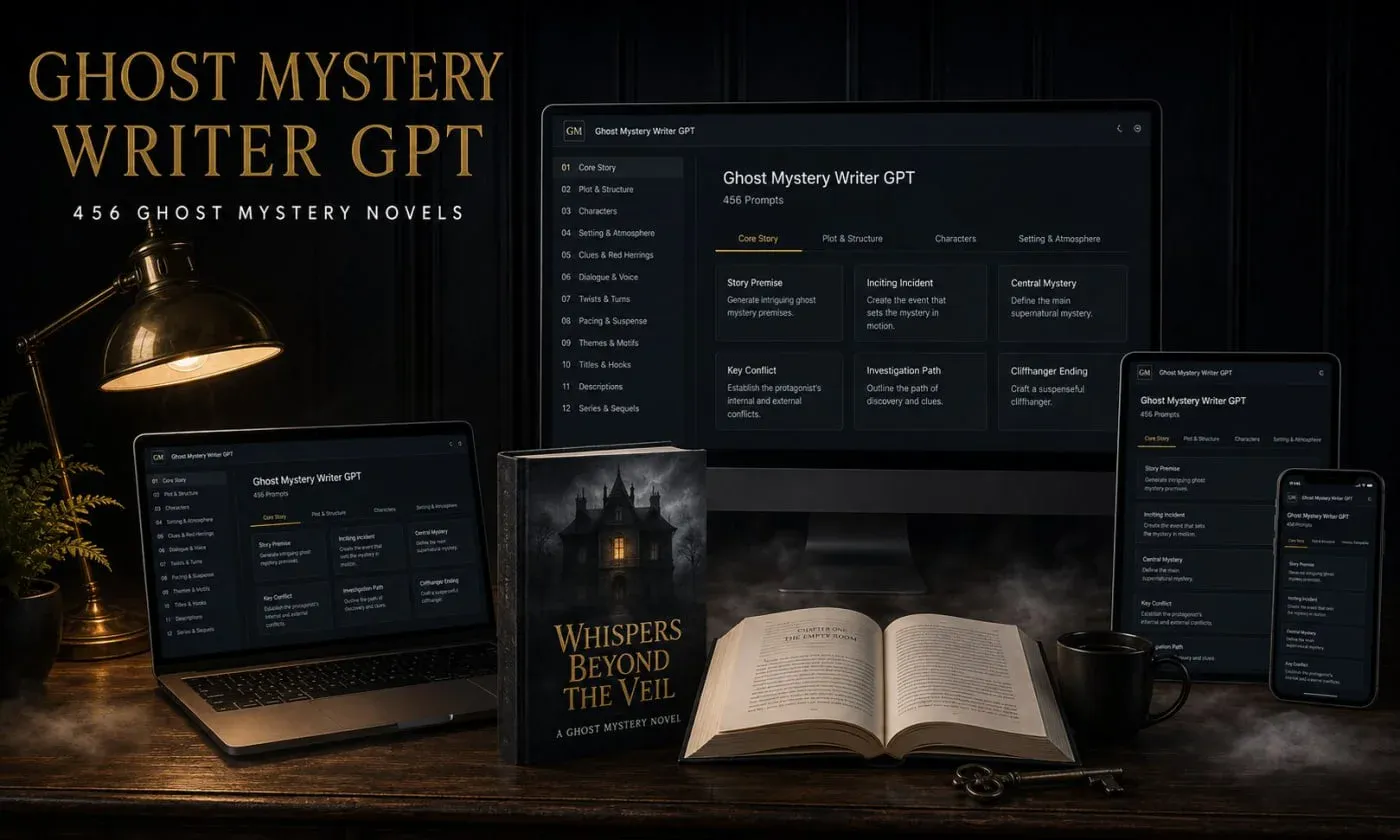
Paste one prompt into ChatGPT. Get back a complete 40-chapter book - with its own story bible, its own haunting rules, a fairly-clued mystery, and the Amazon listing to sell it. The free ChatGPT plan is enough.
Instant download · Nothing to install · No account, no subscription
You already know the tool can write. That was never the problem. The problem starts around chapter nine: the ghost could walk through walls in chapter two and suddenly can't in chapter fourteen. The housekeeper is Margaret at the start and Maureen by the end. The detective solves it because the ghost simply tells her - which means the reader was never playing. And by chapter twenty, the chat has forgotten the house it spent four thousand words describing.
None of that is a writing failure. It's a brief failure. A model given one loose sentence invents whatever it needs, chapter by chapter, and nothing holds it to what it invented an hour ago. So you start again with a better prompt. Then a better one. That's where the weeks go.
Ghost Mystery Writer GPT fixes the brief, not the model. Every prompt arrives with the book already decided - a named lead with a real job, a named place, a decade, a specific haunting - and then hands ChatGPT a five-phase build order it has to follow. Nothing is written until the rules are locked.
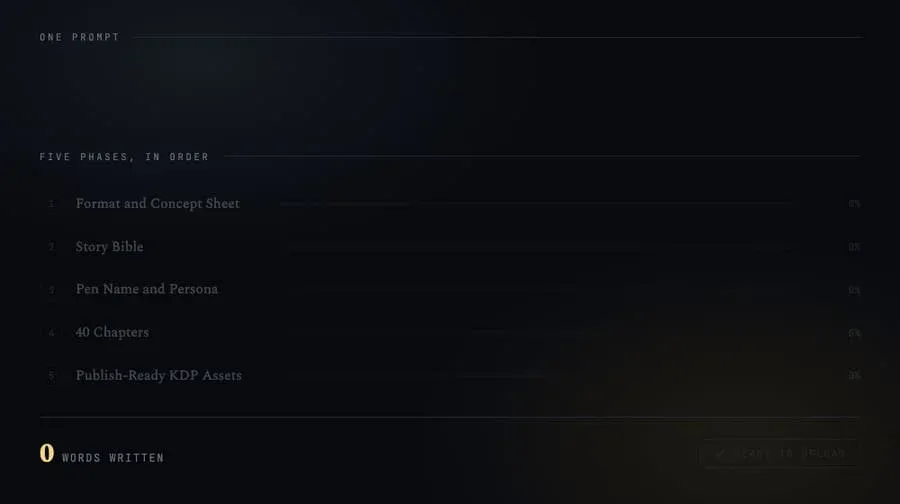
These aren't one-line prompt starters. Each of the 456 prompts builds the novel in five locked phases, in order:
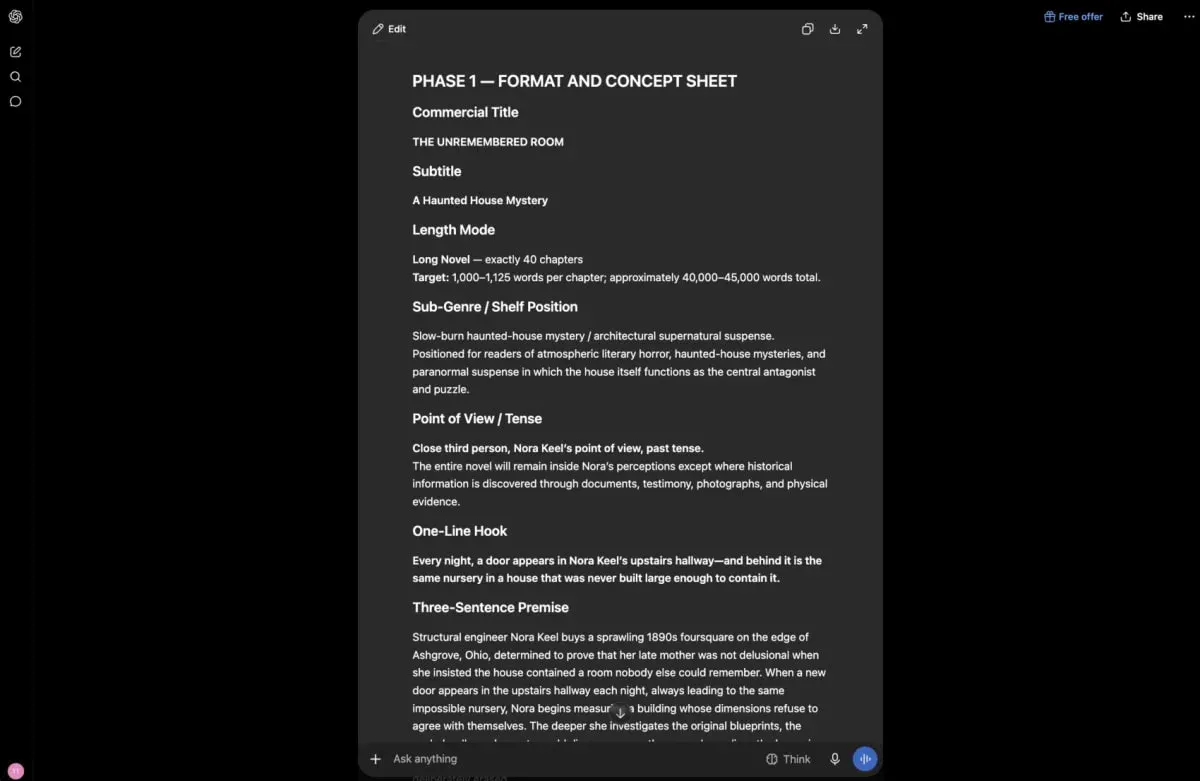
The book's identity: lead, place, decade, haunting, tone - decided before a word is drafted.
The entity: what it is, what it wants, what it can and can't do, what triggers and weakens it - written as six numbered laws it can never break later. Plus a cast register of 8–12 named characters (age, speech habit, secret), the Buried Truth, and a clue schedule mapping at least nine planted clues and three fair red herrings to exact chapters.
Three genre-appropriate pen names, one chosen and justified - plus the bio, dedication, and epigraph that make the book look like it came from a real author.
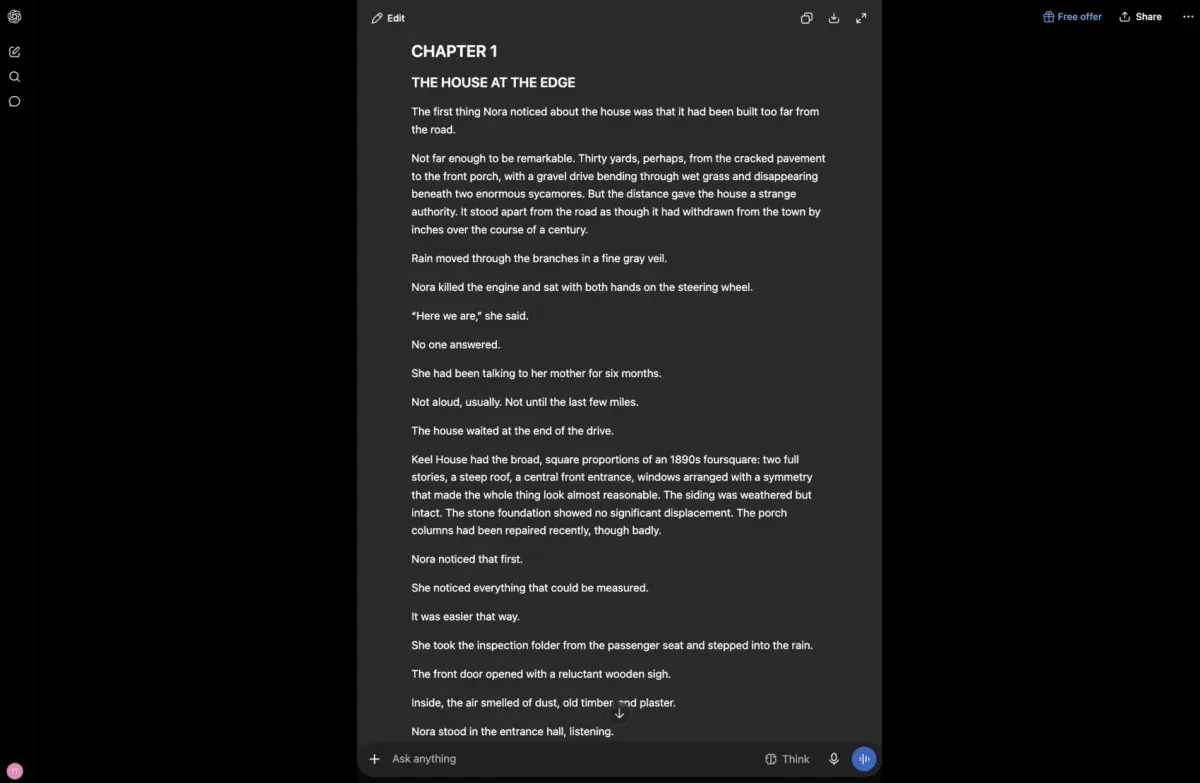
1,000–1,125 words each, written against the bible - not against the last thing the chat happened to say. Type SHORT instead and you get a 20-chapter novella from the same concept.
Blurb, seven backend keywords, two category recommendations, an A+ content outline, a cover art brief, trim size, page count estimate, and font recommendation. The listing - not just the manuscript.
The whole product is one HTML file. You double-click it, it opens in your browser, and it works offline. Nothing to install, no login, no account to create.
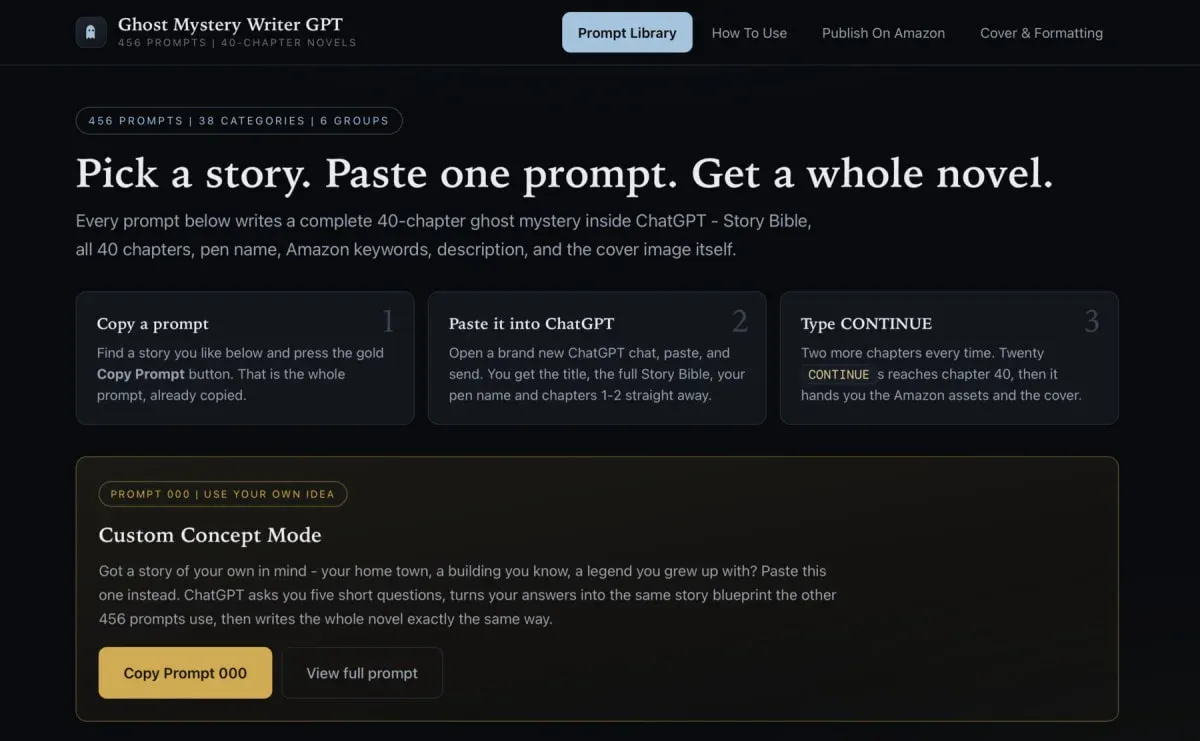
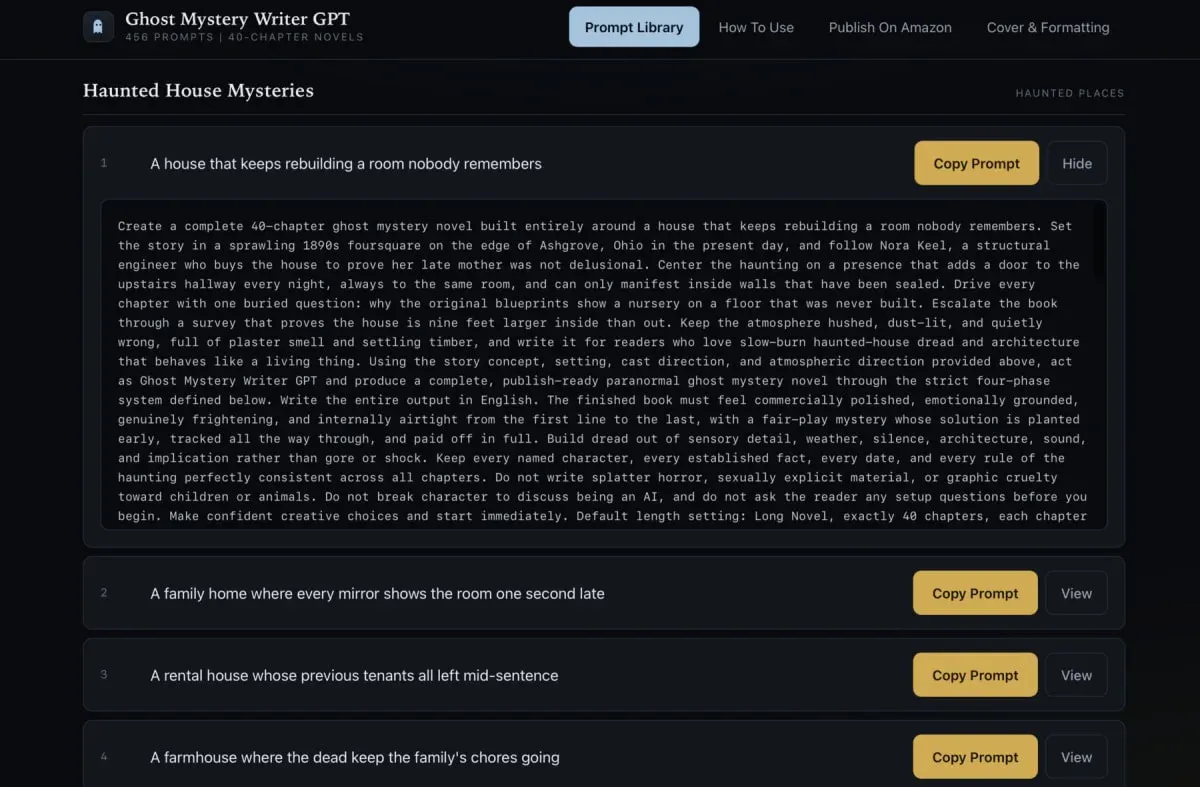
Paste it into a new chat. Phase 1 and the Story Bible come back first - then the chapters, written against the bible it just committed to.
How To Use, Publish On Amazon, and Cover & Formatting - trim sizes, pricing bands, the seven keyword slots, the categories worth picking, and a pre-publish checklist that ticks itself off as you go.
All 456 prompts as a filterable sheet for Excel or Google Sheets - sort and plan a whole catalogue your way. The tool and the spreadsheet hold identical text. Prompt 000 is the Custom Concept Mode: have your own idea? It asks five short questions and builds the same full commission around your answer.
Haunted Places / Haunted House Mysteries
"...a sprawling 1890s foursquare on the edge of Ashgrove, Ohio... follow Nora Keel, a structural engineer who buys the house to prove..."
Investigators / Cold Case Detectives
"...a rust-belt city in western Pennsylvania... follow Detective Ruth Kolwicz, three months from a pension she does not want..."
Modern, Urban / Haunted Apartments
"...a prewar building on the Upper West Side... Housing Attorney Rosa Kaplan-Obi, litigating a succession claim..."
A structural engineer. A detective three months from a pension. A housing attorney litigating a succession claim. That level of specificity is the difference between a book and a draft.
Search Amazon for "ghost mystery" and you get over 50,000 results. Sounds discouraging - until you sort by best sellers and read the small line under each title saying which book in the series it is: Book 11 of 12. Book 12 of 15. Book 21 of 21. The one standalone in that group has nine reviews.
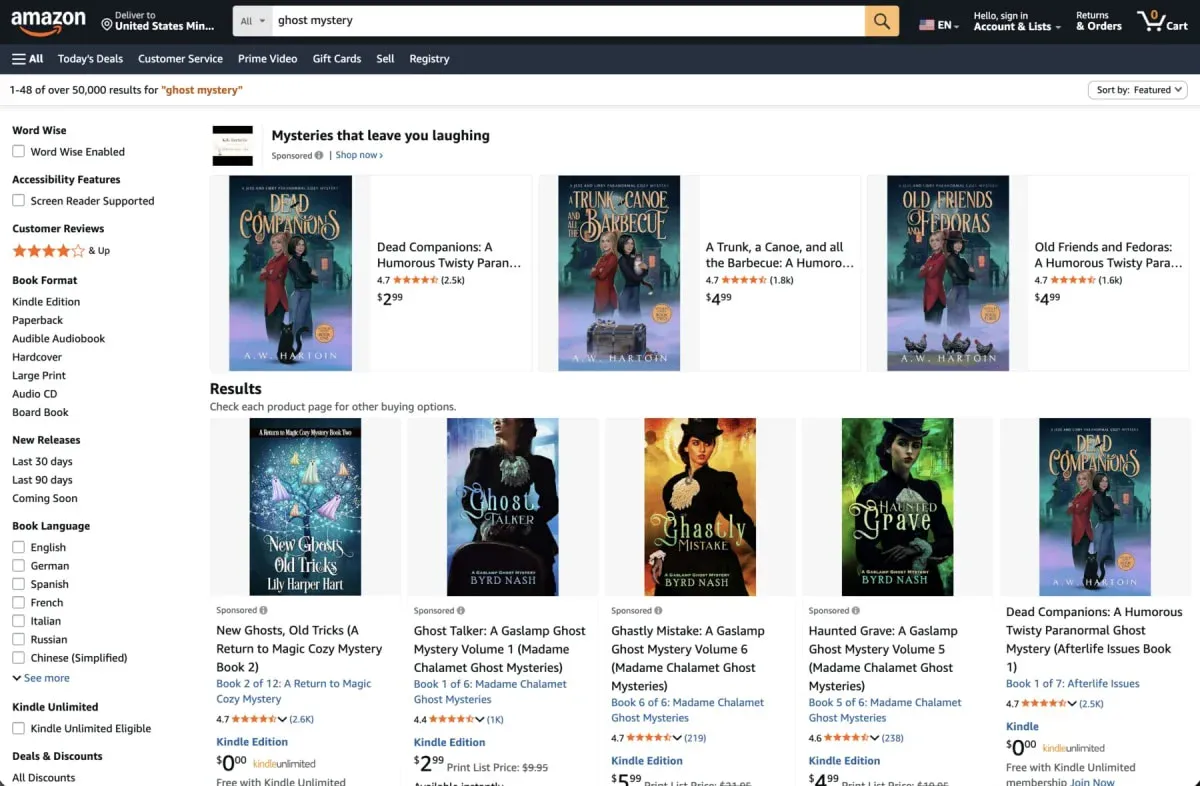
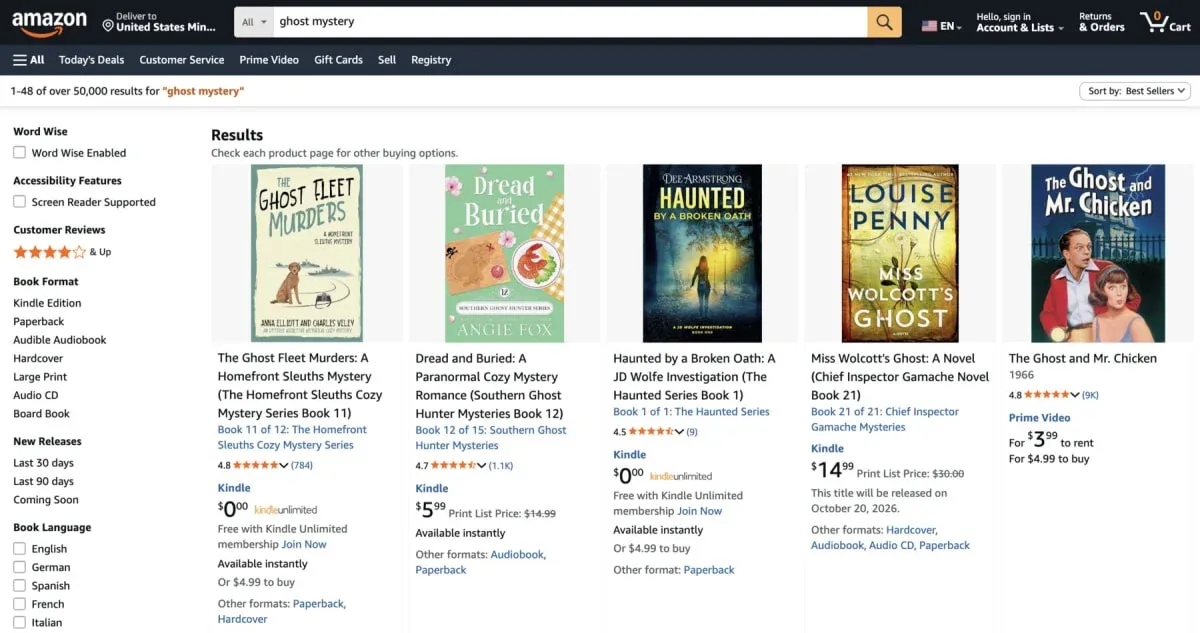
Ghost mystery readers don't buy a book. They find an author they trust and read the shelf. That's very good news if you have a catalogue and very bad news if you have one book - and it's the entire reason this product ships 456 different novels rather than one clever prompt you're meant to reuse. Screenshots from Amazon.com; rankings and prices move daily. Nothing here predicts what any individual book will earn.
A spreadsheet of 10,000 one-line prompts, generated in an afternoon, most the same sentence with a noun swapped. You open it once. Here's the honest comparison:
| Typical prompt pack | Ghost Mystery Writer GPT | |
|---|---|---|
| What one prompt gives you | A sentence to react to | A finished 40-chapter book plus its KDP listing |
| Consistency across a long book | Nothing holds it | Six numbered haunting laws it cannot break |
| Is the mystery solvable? | Not addressed | Nine planted clues + three fair red herrings, mapped to chapters |
| Duplicates | Common | Zero - every prompt machine-audited against every other |
| KDP compliance | Your problem | AI disclosure, trademark & review rules written into the engine |
| Delivery | A spreadsheet | Offline tool + spreadsheet + three guides |
Every prompt was put through automated checks before release: duplicate titles, near-duplicate concepts (0.80 similarity threshold), repeated phrasing, missing haunting rules. Anything that failed was rewritten, not reworded. The engine also refuses things on your behalf - it won't invent a review, a rating, a sales figure, or an endorsement, won't put another author's name or a trademark in a keyword field, and reminds you at the end of every book that Amazon requires AI-assisted content to be declared at upload.
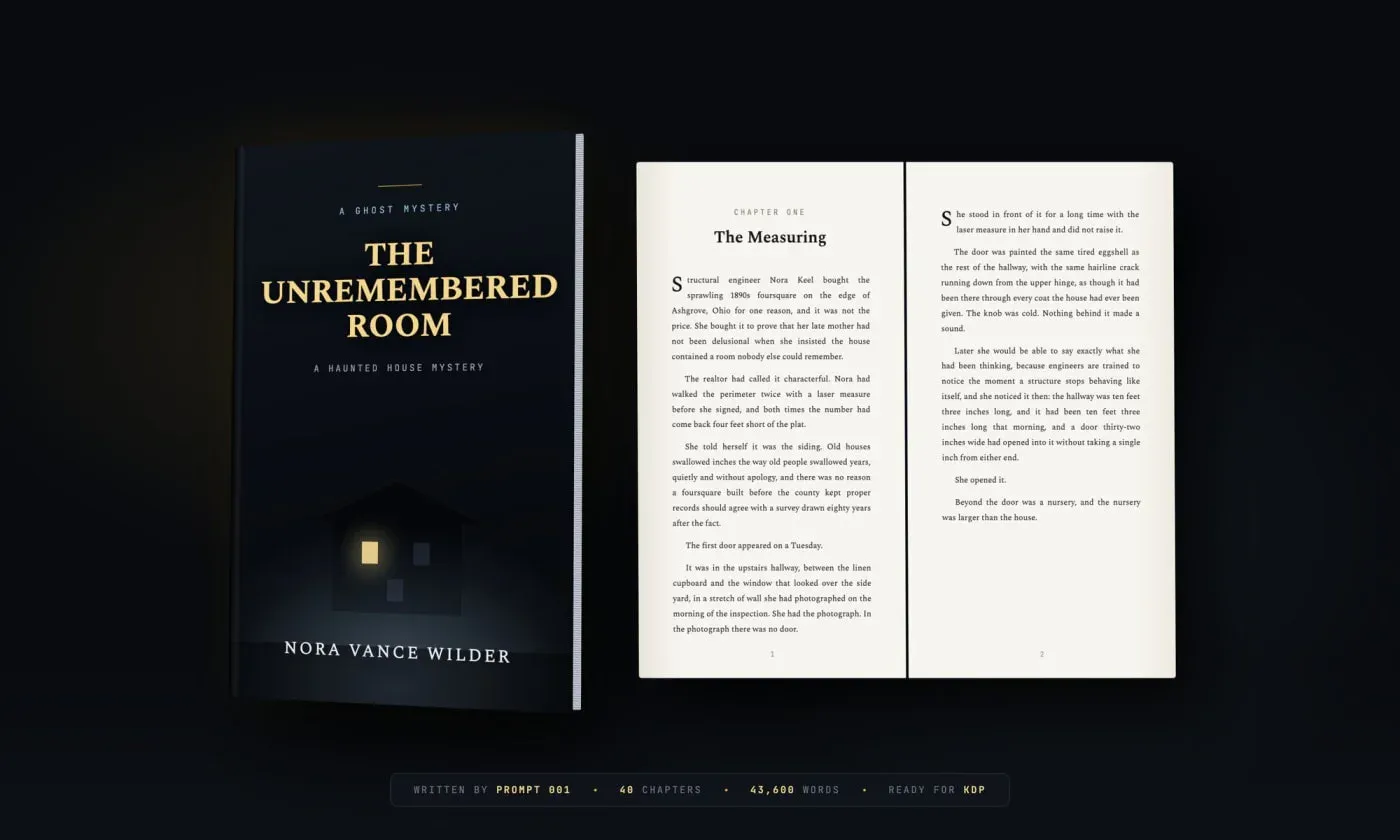
Not more prompts - you're already getting 456. These exist because of what actually happens after the download: people open the library, see 456 finished books waiting, and never start one.
Seven sittings, about eleven hours total, from download to a book in review on Amazon. Each day tells you what to do, how long it takes, how you know you're finished - and the one thing that goes wrong on that particular day. A fourteen-evening version is included too.
Takes the opening of a real chapter this system produced - reproduced exactly, nothing tidied up - and marks up thirteen decisions the prose is making on purpose. Then rewrites the same scene three ways to show how it fails, and leaves you four questions to ask of any chapter in ninety seconds.
The ten complaints that decide this genre's reviews - what causes each, what to do while the book is still a draft - plus the fair-play rules a ghost mystery must keep and the sentence habits that make readers say a book was machine-written.
On the bonus value: it's what each file would be priced at if sold on its own - $47 total, deliberately not $297. A page claiming $297 of free bonuses on a $17 product has just told you the product is worthless or the number is made up. These are three short, carefully made files for your first week. That's worth $47.
No. A complete novel runs on the free plan, and the guide inside shows the one trick that makes long books comfortable there. A paid plan means fewer waits and somewhat stronger sentences - convenience, not requirement.
No. Copy, paste, and read the result. The judgement you need is the reader's kind - does this chapter bore me, is that reveal earned - and the guides tell you the exact phrase to type when something is off.
Neither. Each prompt carries the whole writing system inside it, so it works in a plain chat window and keeps working whatever ChatGPT looks like next year. Nothing to configure, nothing to keep alive.
Every prompt names a different lead with a different job, place, decade, and haunting, and each was machine-checked against every other for near-duplicate concepts, settings, names, and phrasing. Anything too close was rewritten, not reworded.
Yes - and it asks you to declare it at upload. Declaring doesn't stop you publishing and doesn't label your book to readers. The engine reminds you at the end of every book and the guide shows you the screen. Say yes - it protects your account.
Yes. Unlimited books, under your own name or a pen name, on Amazon KDP or anywhere else - you keep 100% of the royalties. What you may not do is resell or give away the prompts, the spreadsheet, or the tool itself.
Short sessions rather than one long sitting - the free plan has message limits and you'll want to read as you go. An evening or two for the draft, then the pre-publish checklist. Anyone promising a publishable book in nine minutes is selling you the nine minutes, not the book.
Email support and they fix or replace it the same day. The Start Here PDF covers unzipping on Windows and Mac in plain language, and the tool is one file that opens in any browser you already have.
Whether a book sells depends on the concept you pick, the cover you put on it, the category you choose, and how many books are already on your shelf. Anyone selling you a number is selling you a feeling. Here's what we do stand behind, because it's ours to control:
For one book, once. Rates vary enormously - check them yourself - but nowhere is a 40,000-word novel a two-figure decision. And book two costs the same again.
One payment, no second bill. Every one a different book with its own lead, place, decade, and haunting. Under 4¢ per finished novel - less than three paperbacks at the $5.99 this shelf actually sells for.
That arithmetic says nothing about whether any book you make will sell - it's only what things cost. But if you were already willing to pay someone to write one ghost mystery, the interesting question is no longer whether this is worth it. It's which of the 456 you want to be holding on Friday.
All 456 prompts, the offline tool, the spreadsheet, three guides, Start Here PDF, and $47 of bonuses. Pay once, yours forever. First 300 buyers also get Volume 1 pre-formatted for KDP upload, free.
Buy Now - $17Secure checkout on the vendor's page · Instant download · The file opens or it's fixed the same day
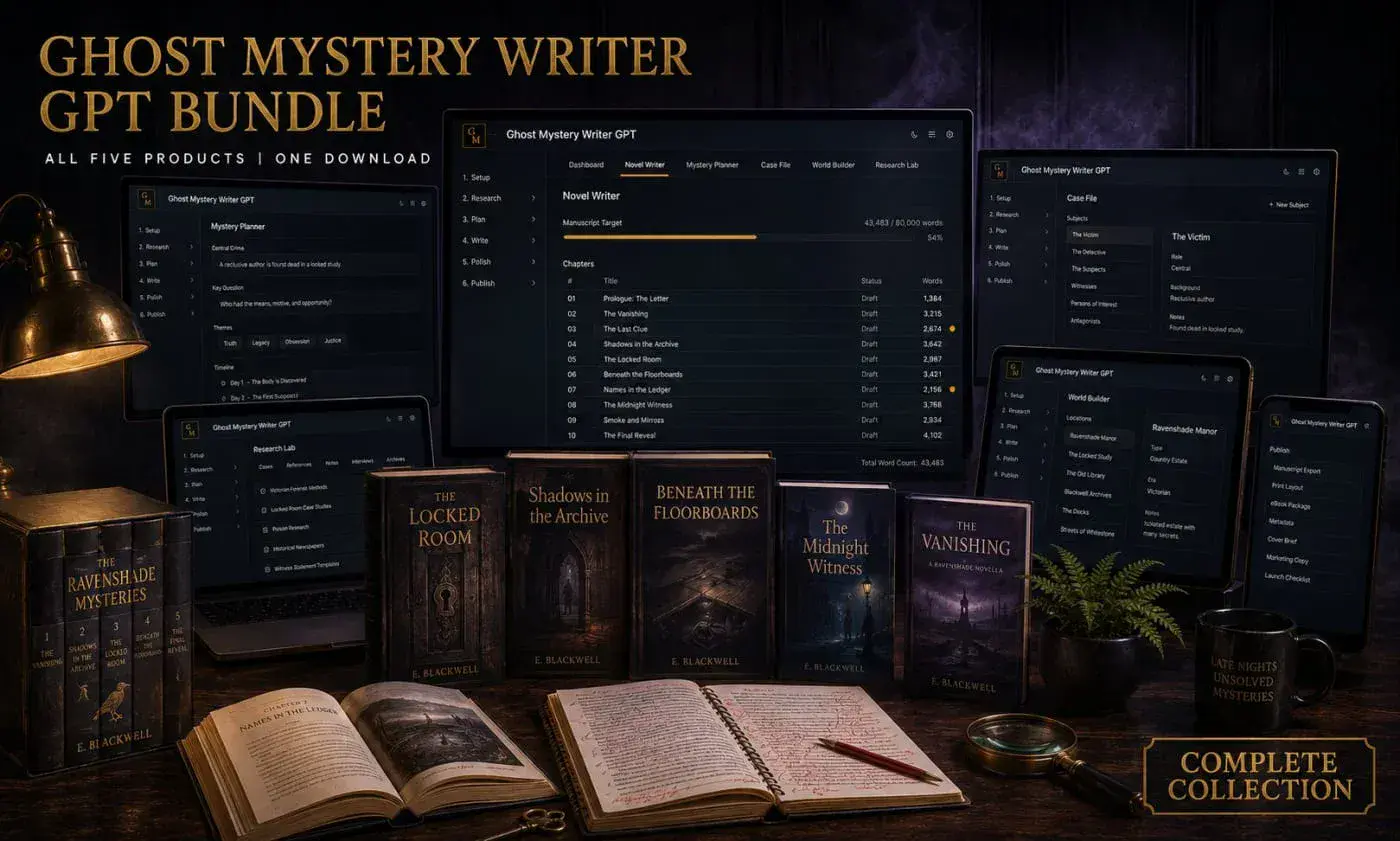
All five products in one download: the 456 novels here, plus 1,124 more across eight sub-genres, 2,467 books in eight other formats, 6,217 prompts that fix and sell a book you've already written, and the offline Author Studio - 10,264 prompts across 18 files. It's offered as an optional upgrade at checkout ($147, saves $48 vs $195 separately).
Still not sure? The honest test: read the three prompt excerpts above. If those don't read like the opening of a book you'd actually finish, this isn't for you - keep your money.
Affiliate disclosure: The Buy Now buttons on this page are affiliate links - if you purchase, we may earn a commission at no extra cost to you. It helps keep FounderPaths running. Product details on this page are based on the vendor's published materials; results vary and nothing here promises earnings. Read our full disclaimer.