
Bloodwork Decoder 2026: Read Your Lab Results Like a Pro
Open enrollment for 2027 started November 1, and most 2026 benefits reset December 31. Book the physical, use the lab orders, and read the report with confidence when it lands.
This guide explains blood test results in plain words, covering the panels on a standard lab report: CBC, CMP, cholesterol, A1C, thyroid, and vitamin D, with the usual ranges for each. Trust the range printed on your own report, because ranges vary by lab, age, and sex, and your clinician reads your numbers in context, not against a website.
Key numbers at a glance
- Reference range: the middle 95 percent of healthy people, so about 1 in 20 healthy results falls outside it by chance
- Fasting rule: most routine labs need 8 to 12 hours of fasting, water is fine
- Hemoglobin, men: 13.5 to 17.5 g/dL; women: 12.0 to 15.5 g/dL
- White blood cells: usual range 4,500 to 11,000 per microliter
- Platelets: usual range 150,000 to 450,000 per microliter
- Fasting glucose: usual range 70 to 99 mg/dL after an overnight fast
- A1C diabetes range: 6.5 percent or higher meets the diabetes range
- Total cholesterol under 200 mg/dL is desirable; LDL optimal under 100 mg/dL
- CMP bundle: about 14 tests covering blood sugar, electrolytes, kidney function, and liver function
- Year-end window: open enrollment began November 1, 2026, and most 2026 benefits reset December 31
Last reviewed: November 2026.

Most lab reports land in your inbox with no phone call and no explanation. A few numbers carry a small flag, and the flag looks alarming even when the story behind it is ordinary. That gap, between a flagged number and what it actually means, is what this guide closes.
The timing matters this year. Open enrollment for 2027 health coverage began November 1, 2026. Most 2026 health benefits reset on December 31, including HSA and FSA dollars, preventive visits, and deductibles you have already met. If you have an outstanding lab order, or a physical you keep putting off, the next six weeks are the cheapest window to use them. Book the visit, get the blood drawn, and use this guide to read the report when it arrives.
One more thing before the numbers. This guide is for information only and does not replace medical advice. Only your clinician can interpret your results in context. Read this to ask better questions at your visit, not to diagnose yourself at the kitchen table.
How to read a lab report without panicking
A lab report has the same layout almost every time. Each row shows a test name, your result, the reference range for that lab, and a flag if your number sits outside that range. The flag is the part that scares people, so start by learning what it does and does not mean.
The reference range covers the middle 95 percent of healthy people. That is the definition, and it carries a useful consequence: about 1 in 20 healthy results falls outside the range by chance alone. A single flag on an otherwise normal report is common, and it is a prompt for a conversation, not a diagnosis. Your clinician looks at the flag next to your age, your medicines, your symptoms, and your last report before deciding whether it matters.
Cholesterol is the main exception to the range rule. It is judged against target thresholds, not a population range. A total cholesterol of 190 looks fine against a population range and still sits close to the line your clinician watches. The cholesterol section below lists the targets instead of a range, for exactly that reason.
Trends matter more than one flag. A hemoglobin that drifts down a little each year tells a different story than a single low reading after a cold. Keep every report, or at least a photo of each one, and put the new numbers next to the old ones before your visit. If a value moved a lot since last time, that is worth a question even if it still sits inside the range.
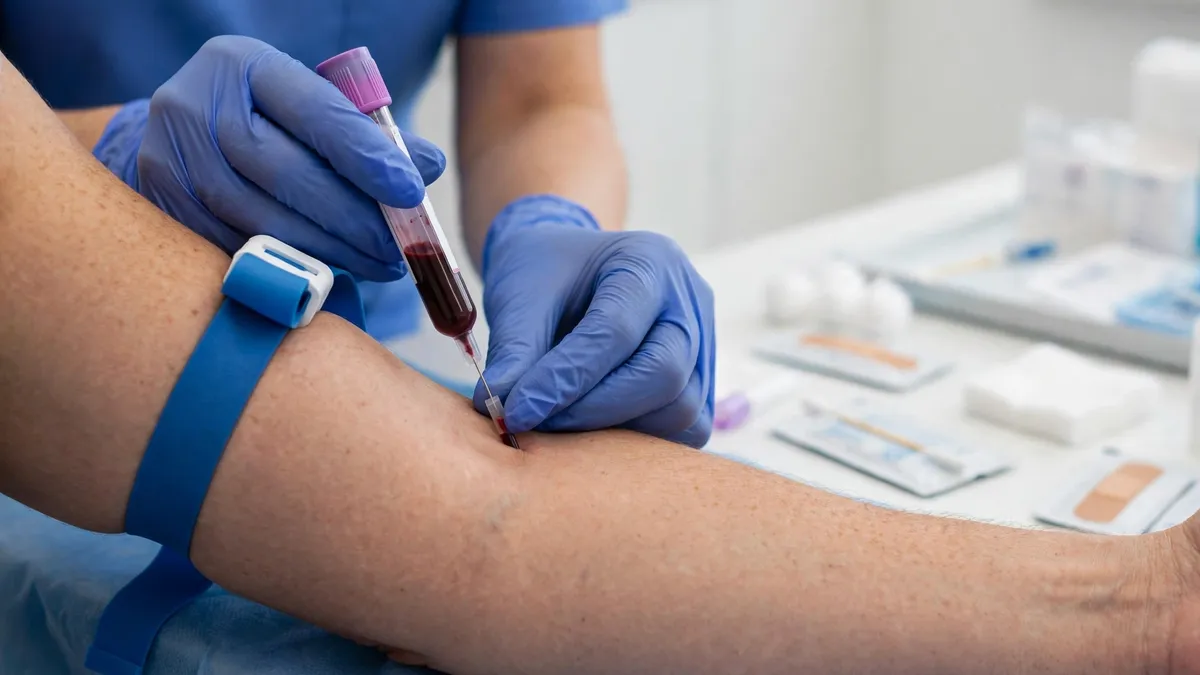
Two practical habits make the numbers more reliable. Most routine labs need 8 to 12 hours of fasting, and water is fine, so a morning draw after an overnight fast is the standard. Tell the lab if you ate when the order said fasting, since the result may need a repeat draw. Bring a medication list to the draw and to the visit, because several common medicines shift lab values, and your clinician needs the full list to read the report fairly. For a plain-language overview of what each test measures, the MedlinePlus guide to lab tests is a solid starting point.
CBC: the complete blood count
The CBC counts the cells in your blood. Red cells carry oxygen, white cells fight infection, and platelets help blood clot. When a clinician orders a CBC, they are usually checking for anemia, infection, or a clotting problem, and they read the five numbers below as a set, not one by one.
Hemoglobin is the protein inside red cells that carries oxygen. Men usually sit between 13.5 and 17.5 g/dL, and women between 12.0 and 15.5 g/dL. A low reading can point toward anemia, and it is also one of the red flags in the last section of this guide, so a very low hemoglobin deserves a prompt call rather than a wait for the next visit.
White blood cells are the infection fighters. The usual range is 4,500 to 11,000 per microliter. A high count often shows up during an infection, and a low count can follow a viral illness or certain medicines. Because a cold on draw day can move this number, clinicians often repeat a CBC before acting on it.
Platelets help blood clot, and the usual range is 150,000 to 450,000 per microliter. A count far below 150,000 is another prompt-call result, since very low platelets raise bleeding risk. A mildly low count with no symptoms is usually rechecked rather than treated.
MCV and MCHC describe the red cells themselves. MCV, the average size of a red cell, usually runs 80 to 100 fL. MCHC, the concentration of hemoglobin inside the cells, usually runs 32 to 36 g/dL. These two numbers help your clinician sort out what kind of anemia a low hemoglobin might be, which is why they appear on the same panel even though few people have heard of them.
| Test | Usual range | What it measures |
|---|---|---|
| Hemoglobin, men | 13.5-17.5 g/dL | Oxygen-carrying protein in red cells |
| Hemoglobin, women | 12.0-15.5 g/dL | Oxygen-carrying protein in red cells |
| White blood cells | 4,500-11,000 per microliter | Infection-fighting cells |
| Platelets | 150,000-450,000 per microliter | Cells that help blood clot |
| MCV | 80-100 fL | Average size of red blood cells |
| MCHC | 32-36 g/dL | Hemoglobin concentration in red cells |
Your lab's own printed range governs, because ranges vary by lab, age, and sex. If your report shows a different range than the table above, use the one on your report.
CMP: kidneys, liver, and electrolytes
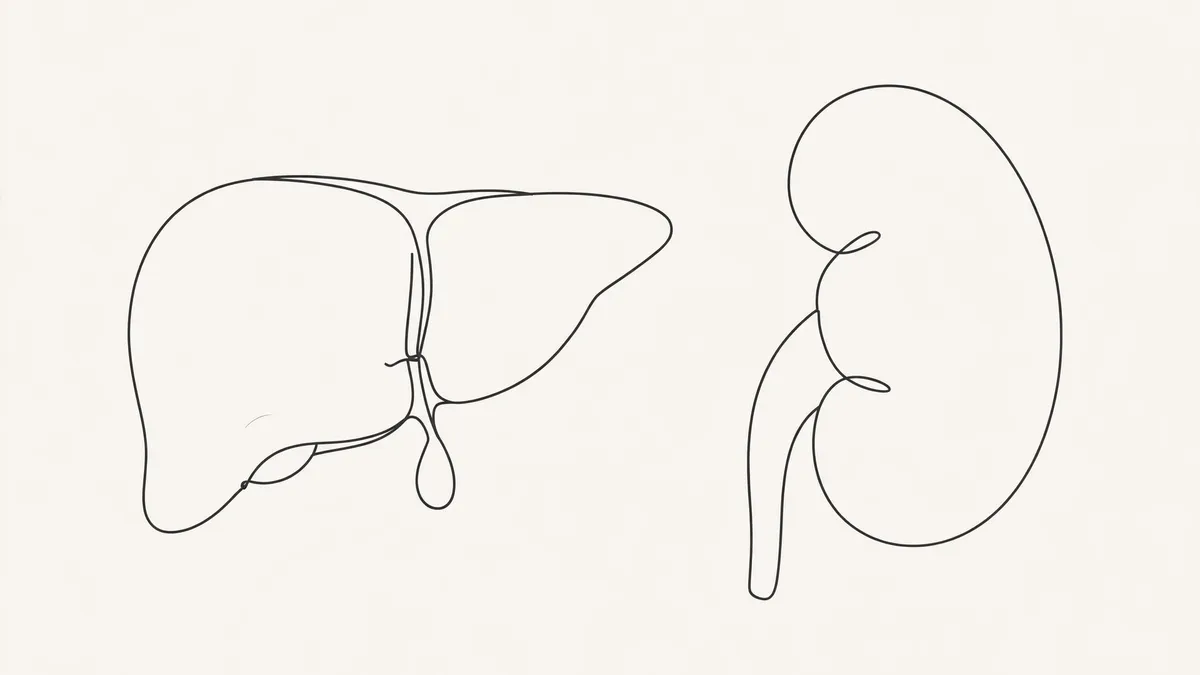
The CMP is a bundle of about 14 tests that covers blood sugar, electrolytes, kidney function, and liver function. It is the panel most people get at an annual physical, and it is the one that produces the most flags, because it measures so many things at once.
Fasting glucose is the blood sugar reading on this panel. The usual range is 70 to 99 mg/dL after an overnight fast. A fasting glucose far above range is a prompt-call result, and a mildly high one is usually repeated, because a single high reading can reflect a late snack, stress, or a poor night of sleep as well as blood sugar trouble.
Sodium and potassium are electrolytes, the minerals that keep fluid balance and nerve signals working. Sodium usually runs 136 to 145 mEq/L, and potassium 3.5 to 5.0 mEq/L. Potassium deserves respect: a value clearly out of range is a prompt-call result, because potassium affects heart rhythm. Some blood pressure medicines shift potassium, which is one more reason the medication list matters at your visit.
Creatinine and eGFR describe kidney function. Creatinine is a waste product muscles make, and the kidneys clear it, so a high creatinine can mean the kidneys are clearing less. Men usually run 0.6 to 1.3 mg/dL, and women 0.6 to 1.1 mg/dL. eGFR is an estimate of how well the kidneys filter, worked out from creatinine, age, and sex. Above 90 is normal, and 60 to 89 is a mild decrease. An eGFR under 60 deserves a prompt call, and a repeat test, because a single low reading can follow dehydration or a hard workout.
ALT and AST are liver enzymes. ALT usually runs 7 to 56 U/L, and AST 10 to 40 U/L. They rise when liver cells are stressed, which can follow alcohol, some medicines, or a viral illness, and they often settle on their own. Albumin, a protein the liver makes, usually runs 3.5 to 5.5 g/dL, and a low albumin can reflect liver trouble, kidney loss, or poor nutrition over time.
| Test | Usual range | What it measures |
|---|---|---|
| Fasting glucose | 70-99 mg/dL | Blood sugar after an overnight fast |
| Sodium | 136-145 mEq/L | Fluid balance and nerve signaling |
| Potassium | 3.5-5.0 mEq/L | Fluid balance and heart rhythm |
| Creatinine, men | 0.6-1.3 mg/dL | Waste product cleared by the kidneys |
| Creatinine, women | 0.6-1.1 mg/dL | Waste product cleared by the kidneys |
| eGFR | Above 90 normal; 60-89 mild decrease | Estimated kidney filtering ability |
| ALT | 7-56 U/L | Liver enzyme |
| AST | 10-40 U/L | Liver enzyme |
| Albumin | 3.5-5.5 g/dL | Protein made by the liver |
Your lab's own printed range governs, because ranges vary by lab, age, and sex. If your report shows a different range than the table above, use the one on your report. If you want a second source for these numbers, this list of normal blood test ranges covers the same panels in one place.
Cholesterol: LDL, HDL, and triglycerides
Cholesterol is the panel people worry about most, and it is also the one where the report itself misleads. The numbers are judged against target thresholds, not a population range, so a result can sit inside the lab's range and still sit above the target your clinician wants. Read this panel against the targets below, not against the range printed beside it.
Total cholesterol under 200 mg/dL is desirable. LDL, the cholesterol that tends to build up in artery walls, is optimal under 100 mg/dL. HDL, the cholesterol that helps carry fat away from arteries, should be 40 mg/dL or higher for men and 50 mg/dL or higher for women. Triglycerides, the fat that circulates after meals, should sit under 150 mg/dL.
Triglycerides are the most sensitive to the draw itself. A meal the night before, or a drink, can push them up sharply, which is why a fasting draw matters most for this panel. If your triglycerides come back high after a non-fasting draw, the usual next step is a repeat fasting test, not a new prescription.
A single cholesterol panel does not set your heart risk on its own. Your clinician combines it with blood pressure, blood sugar, smoking, family history, and age. That is why one of the questions in the last section asks directly about heart disease risk, and why the answer matters more than any single LDL number. Our November healthspan checklist covers the food, movement, and sleep habits that shape these numbers between tests.
| Test | Target | What it means |
|---|---|---|
| Total cholesterol | Under 200 mg/dL desirable | All cholesterol in the blood combined |
| LDL cholesterol | Under 100 mg/dL optimal | Cholesterol that builds up in artery walls |
| HDL cholesterol | 40 or higher for men, 50 or higher for women | Cholesterol that carries fat away from arteries |
| Triglycerides | Under 150 mg/dL | Fat circulating in the blood after meals |
Your lab's own printed range governs, because ranges vary by lab, age, and sex. For cholesterol, the targets above matter more than the printed range, so ask your clinician which target applies to you.

Blood sugar and A1C
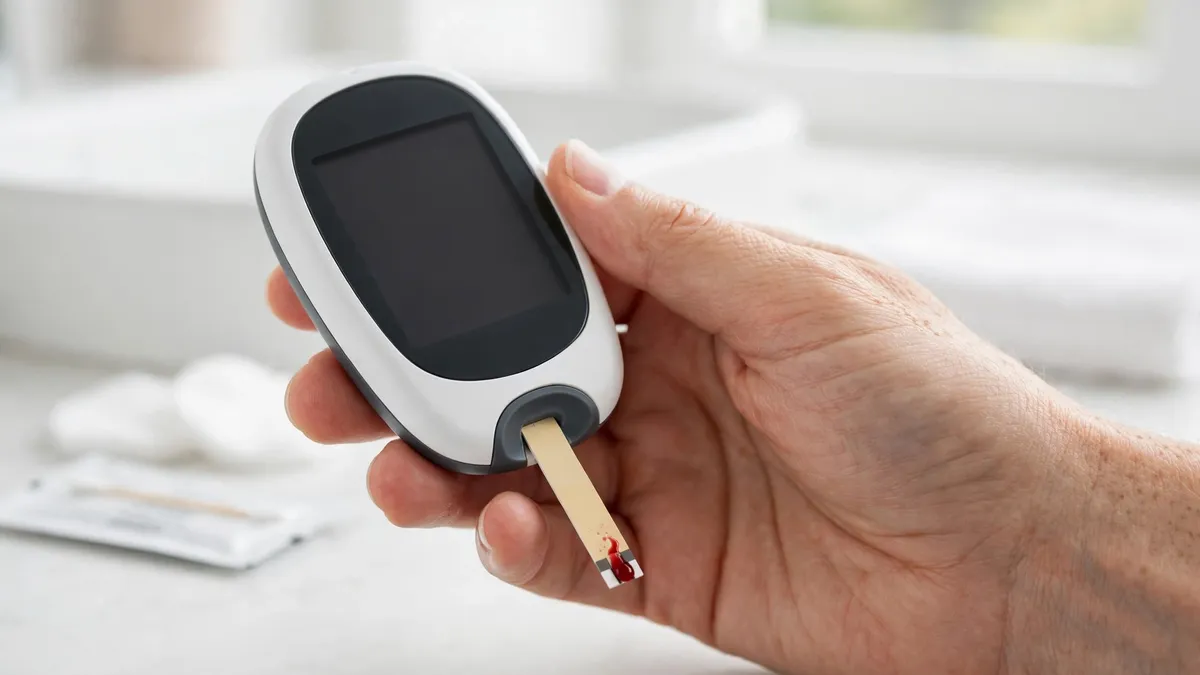
Fasting glucose is a snapshot, one morning, one number. A1C is the longer view. It reflects average blood sugar over about three months, which makes it the test clinicians use to sort normal blood sugar from prediabetes and diabetes, and to track how a plan is working over time.
An A1C under 5.7 percent is normal. From 5.7 to 6.4 percent is prediabetes. At 6.5 percent or higher, the result meets the diabetes range. Prediabetes is the band where a conversation matters most, because food, movement, and weight changes can move the number, and a repeat test a few months later shows whether the changes worked.
Fasting glucose and A1C do not always agree. A fasting glucose of 70 to 99 mg/dL with an A1C of 5.9 percent is a common mismatch, and it usually means blood sugar runs higher after meals than it does in the morning. When the two disagree, clinicians often repeat one or both, and they may add a test that checks blood sugar after eating.
If your A1C lands in the prediabetes band, the practical next step is a plan and a date, not a panic. Ask what repeat interval your clinician wants, what daily habits they would change first, and what number would count as progress. Write the answers down before you leave the room, because the visit is the easiest place to get them and the hardest place to remember them.
| Test | Usual range | What it means |
|---|---|---|
| Fasting glucose | 70-99 mg/dL | Blood sugar after an overnight fast |
| A1C, normal | Under 5.7 percent | Average blood sugar over about three months |
| A1C, prediabetes | 5.7-6.4 percent | Blood sugar above normal, below the diabetes range |
| A1C, diabetes | 6.5 percent or higher | Meets the diabetes range |
Your lab's own printed range governs, because ranges vary by lab, age, and sex. If your report shows a different range than the table above, use the one on your report.
Thyroid: TSH and free T4
The thyroid is a small gland in the neck that sets the pace for energy use across the body. Two numbers on a lab report describe it. TSH is the signal the brain sends to the thyroid, and free T4 is the hormone the thyroid makes in reply. Clinicians read them together, because the signal and the reply tell a fuller story than either one alone.
TSH usually runs 0.4 to 4.0 mIU/L, and free T4 usually runs 0.8 to 1.8 ng/dL. A high TSH with a low free T4 points one way, and a low TSH with a high free T4 points the other, but the direction is your clinician's call, not a home reading. Thyroid numbers also move with illness, medicines, and time of day, so a single odd pair is often repeated before anything changes.
People ask about thyroid labs when they feel tired, cold, or wired, and those feelings are worth raising at the visit. They are also common, and they have many causes, so a thyroid panel is one piece of a wider check, not a verdict on its own. If your TSH sits outside the range, ask whether your clinician wants a repeat test, a wider thyroid panel, or a look at medicines that can shift the result.
| Test | Usual range | What it measures |
|---|---|---|
| TSH | 0.4-4.0 mIU/L | Signal from the brain to the thyroid |
| Free T4 | 0.8-1.8 ng/dL | Thyroid hormone in the blood |
Your lab's own printed range governs, because ranges vary by lab, age, and sex. If your report shows a different range than the table above, use the one on your report.

Iron, B12, vitamin D, and Lp(a)
This panel is a mix of four different checks that often arrive on the same order. Iron and B12 relate to red cells and energy. Vitamin D relates to bone health and the winter months, when sun is scarce. Lp(a) is a separate cholesterol marker that many people first meet on a heart-risk workup.
Ferritin measures stored iron. Men usually run 24 to 336 ng/mL, and women 11 to 307 ng/mL. Ferritin also rises with inflammation, so a normal value does not always rule out low iron, and a high value does not always mean too much iron. Your clinician reads ferritin next to hemoglobin and, when needed, other iron tests, which is why a single ferritin number rarely settles the question alone.
Vitamin B12 usually runs 200 to 900 pg/mL. B12 matters for red cells and nerves, and low levels are more common in people who eat little animal food or take certain stomach medicines. A result near the low end of the range is worth a question at the visit, because the range is wide and symptoms can appear before the number drops below it.
Vitamin D, measured as 25-hydroxy vitamin D, is sufficient at 20 to 50 ng/mL, and some guidance aims for 30 to 50 ng/mL. Levels run lower in winter, which is one reason a November or December draw often shows a lower number than a summer one. If your level sits below 20, ask your clinician about food, sun, and supplements, and about when to recheck.
Lp(a) is a form of cholesterol that runs in families. Under 30 mg/dL is desirable. It is not part of the standard cholesterol panel, so it appears only when a clinician orders it, usually when heart risk runs in the family or an LDL number does not explain the full picture. Ask your clinician whether it applies to you rather than ordering it yourself.
| Test | Usual range | What it measures |
|---|---|---|
| Ferritin, men | 24-336 ng/mL | Stored iron |
| Ferritin, women | 11-307 ng/mL | Stored iron |
| Vitamin B12 | 200-900 pg/mL | B12 level in the blood |
| Vitamin D, 25-hydroxy | 20-50 ng/mL sufficient | Vitamin D level in the blood |
| Lp(a) | Under 30 mg/dL desirable | A separate cholesterol marker |
Your lab's own printed range governs, because ranges vary by lab, age, and sex. If your report shows a different range than the table above, use the one on your report. Our winter immunity guide covers the season when vitamin D and colds both tend to dip, if you want the wider winter picture.
Red flags, questions, and your year-end checklist
Most flagged results can wait for your visit. A few deserve a prompt call, not a wait. Call your clinician soon if your report shows very low hemoglobin, a fasting glucose far above range, an eGFR under 60, potassium clearly out of range, or platelets far below 150,000. These are the results where a clinician wants to hear from you before the next routine visit, even if you feel fine.
For everything else, the visit is where the report turns into a plan. Five questions cover most of what matters. Has my health changed this year? Am I at higher risk from family history? What is my heart disease risk? Which screenings am I due for? What are the side effects of any new medication? Ask them in that order, and write the answers down. The last one matters most when a new prescription starts, because a side effect you expect is easier to handle than one that surprises you.

The year-end clock gives the visit extra value. Book the annual physical before December 31, while 2026 benefits still apply. Use any outstanding lab orders now, so the results land while the visit is still fresh. Check your HSA or FSA balance, since those dollars often reset with the year. Ask whether your preventive labs are covered with no copay, since preventive labs are often covered that way. If you are uninsured, ask for the cash price before the draw, since labs often charge less for cash payment than the billed rate. Bring your medication list, and bring your last report, because trends matter more than one flag.
That is the whole method. Read the flag, check the printed range, compare with last time, and take the questions to your clinician. The report is a starting point, not a verdict, and the visit is where it becomes useful. If your fall labs are still pending, our fall health check lists the screenings to book alongside them.
This guide is for information only and does not replace medical advice. Only your clinician can interpret your results in context. If a number on your report worries you, call your clinician and ask. That call is what the report is for.
The bottom line
Book the physical before December 31, use the lab orders you already have, and read the report against your lab's own printed range. A flag means a number sits outside the middle 95 percent, not that something is wrong, since about 1 in 20 healthy results falls outside by chance alone. The numbers that deserve a prompt call are the ones this guide flags, like an eGFR under 60 or platelets far below 150,000, and a repeat test after a few months shows whether the plan is working, so keep the first report to compare.
Frequently asked questions
What does it mean when a lab result is flagged high or low?
A flag means the number sits outside the reference range printed on your report. That range covers the middle 95 percent of healthy people, so about 1 in 20 healthy results falls outside it. A single flag is a prompt to talk with your clinician, not a diagnosis on its own.
Do I need to fast before routine blood work?
Most routine labs need 8 to 12 hours of fasting, and water is fine. Morning draws are standard because fasting overnight is easiest and some values shift during the day. If your order says fasting and you ate, tell the lab, since the result may need a repeat draw.
How often should I get blood work done?
For most healthy adults, labs once a year at the annual physical are enough. Your clinician may order them more often if you take certain medicines, have a condition such as diabetes, or had a result that needs a recheck. The right schedule depends on your health and family history, so ask at your visit.
What should I do if my cholesterol is high?
Ask your clinician what your LDL target is and what steps fit your health. Food, movement, weight, and sleep all shape cholesterol, and some people also need medicine. A repeat test after a few months shows whether the plan is working, so keep the first report to compare.
Want more practical guides like this?
Browse all 122 guides across 10 categories, no fluff, no paywall.
Browse all guides →Explore Healthcare guides