
Desk Worker Winter Immunity Guide 2026: Flu Started Early, Here Is Your Plan
Flu season started weeks early in 2026, and desk workers sit in the worst spot for it: dry indoor air, short days, and long hours in front of a screen. This guide covers the shots, the sleep, the food, and the sick-day plan that keep you working.
Flu season started early in 2026, with the highest mid-October hospitalization rate since the 2010-11 season. For a desk worker, the plan is simple: get the flu shot now, protect seven to nine hours of sleep, get daylight and vitamin D, move every hour, eat real food, air out your room, and have a sick-day plan ready.
Key numbers at a glance
- Mid-October flu hospital rate: highest since the two thousand ten to eleven season
- Week forty-two: seven point six percent of specimens tested positive for flu
- Dominant strain this season: H1N1
- All three vaccine components changed for the 2026-27 season
- Flu vaccine protection takes about two weeks to build
- Flu usually peaks between December and February
- Adults sixty-five and older: high-dose, adjuvanted, or recombinant shots
- Sleep target: seven to nine hours a night
- Indoor humidity: forty to sixty percent keeps airways happier
- New mRNA flu vaccine, mFLUSIVA: approved for adults age fifty and older this season
- Humidity below thirty percent, common in heated offices in January, leaves the membranes that trap viruses struggling
Last reviewed: November 2026.

| Winter immunity fact | What the guide says |
|---|---|
| Flu season start, 2026 | Weeks early; highest mid-October hospitalization rate since the 2010-11 season (CDC FluView, week 41) |
| Week 42 test positivity | 7.6 percent of specimens positive for flu, mostly H1N1 |
| 2026-27 flu vaccine | All three virus components changed from last season; protection takes about two weeks to build |
| Sleep | Seven to nine hours a night for most adults |
| Stay-home rule | Stay home until fever-free for 24 hours without fever medicine |
Why did flu season start early in 2026?
Flu usually picks up in December and peaks in the winter months. This year it got going weeks ahead of that schedule. The CDC weekly FluView report for week 41, the week ending October 17, 2026 and published October 23, showed the highest hospitalization rate for mid-October since the 2010-11 season. Almost every flu A virus subtyped that week was H1N1. The week 42 report, ending October 24 and published October 30, found 7.6% of specimens positive for flu, with H1N1 still doing most of the work.
An early start matters because it compresses your window. In a normal year you can drift into November and still get the shot before flu takes off. This year flu was already moving in late October, which means the gap between getting the shot and facing real exposure is shorter. The good news is that the peak still usually lands between December and February, so a shot now still buys you weeks of protection before the worst of it.
Desk workers catch the early wave first for boring, physical reasons. You sit indoors for eight to ten hours in heated, dry air. You share keyboards, door handles, and meeting rooms with people who are already coughing. You eat lunch at your desk instead of going outside. None of that is a moral failing. It is the job. The fix is not to quit the desk. It is to change what happens around the desk, and that is what the rest of this guide covers.
One more thing changed this season. All three virus components in the 2026-27 flu vaccine changed from last season, including an update aimed at the H3N2 subclade K virus, which spread widely during the 2025-26 season. Last year shot does not carry over. Even if you got vaccinated last winter, you need this season shot. The CDC published interim clinical considerations on September 1, 2026, stating that the July 2025 immunization schedule recommendations remain in effect for the 2026-27 season: a yearly flu vaccine for everyone six months and older without a contraindication.
Is it too late for a flu shot in November?
No, and this is the single most useful sentence in this guide. The CDC says September or October is ideal, but vaccination should continue after October and throughout the season as long as flu viruses are circulating and unexpired vaccine is available. Protection takes about two weeks to build, and flu usually peaks between December and February. A shot in the second week of November is still ahead of the peak by a month or more.

Getting the shot is a twenty-minute errand. Pharmacies offer it on a walk-in basis, most insurance plans cover it with no copay, and many employers run on-site clinics in the fall. If your employer already ran theirs and you missed it, the pharmacy down the street is the fallback. Do not wait for a perfect day. The protection clock starts the day you get the shot, so every day you wait is a day of the season you face unprotected.
Which shot should you get? Any licensed flu vaccine for the 2026-27 season works. Adults 65 and older should ask for an enhanced shot: high-dose, adjuvanted, or recombinant. A newly approved mRNA flu vaccine, called mFLUSIVA, is available for adults age 50 and older this season. If you are pregnant, over 65, or living with a chronic condition like asthma, diabetes, or heart disease, go first. Those groups face the worst outcomes, and health officials advise high-risk groups to complete vaccination by early December.
Flu is not the only shot worth checking. The fall season also brings updated COVID-19 vaccines and, for adults 75 and older and some high-risk younger adults, RSV vaccination. Johns Hopkins Medicine published its 2026-27 vaccine recommendations on September 25, 2026, covering all three. Ask your pharmacist or doctor which ones apply to you in a single visit, so one trip covers the season. This guide is general information, not medical advice. If you have a condition or take medicine that affects vaccination, talk to your doctor first.
How does sleep protect you in winter?
Sleep is the cheapest immune support you own, and desk workers give it away first. Short sleep weakens the immune response. People who sleep less than seven hours a night catch colds more easily after exposure than people who sleep seven to nine hours. The mechanism is not mysterious: during deep sleep your body makes the signaling proteins that coordinate the immune response, and a short night cuts that production short.

The founder pattern makes this worse. Late nights to finish a launch, early alarms to catch a call with another time zone, and a phone that lights up the bedroom at 2 a.m. That pattern is normal in a small business, and it is also the fastest way to spend December sick. Our founder sleep protocol goes deep on the full routine, and our founder healthspan checklist puts sleep first among the numbers worth tracking. The short version is three rules.
First, fix your wake time, not your bedtime. A steady wake time anchors your body clock, and sleepiness follows on its own in the evening. Second, keep the bedroom dark, cool, and quiet. Blackout curtains cost little, a cool room helps you fall asleep faster, and earplugs beat a noisy street. Third, put the phone down thirty minutes before bed. The light and the work messages both keep your brain in work mode, and work mode is the opposite of sleep mode.
If you already sleep poorly, do not try to fix everything at once. Pick one change, the wake time, and hold it for two weeks. That single change does more than a new mattress or a sleep supplement, and it costs nothing. When sleep is short for a night or two because of real work, protect the next night instead of borrowing from it again. Two short nights in a row is where the cold usually starts.
What about vitamin D when the sun disappears?
Winter is the season when vitamin D runs low, and desk workers run lowest. Your skin makes vitamin D from sunlight, and from November to February the sun sits low, the days are short, and you spend most of the daylight hours indoors. Low vitamin D is common in winter, and vitamin D supports immune function. That does not mean a supplement guarantees you will not catch a cold. It means a deficiency makes everything harder, and winter is when deficiencies show up.

The practical steps are simple. Get daylight in the morning, even ten minutes outside before you sit down. Morning light also sets your body clock, which helps the sleep problem from the last section. Eat vitamin D rich foods: fatty fish like salmon and sardines, egg yolks, and fortified milk and cereals. Get your level tested if you have not in the last year. A blood test costs little and tells you whether you are actually low instead of guessing.
Talk to your doctor before taking a high-dose supplement. The dose that helps a deficient person is different from the dose a person with normal levels needs, and more is not better. Our founder fall health check covers the screenings worth booking before the year ends, and a vitamin D test fits neatly into that visit. Our ultra-processed food guide covers what the newest studies say about the foods that crowd out the good ones.
Can short movement breaks actually help immunity?
Yes, and the dose is smaller than you think. Regular moderate movement improves immune function, and it does not require a gym membership or an hour you do not have. A brisk ten-minute walk counts. So does standing up and stretching every hour. The research pattern is consistent: people who move regularly get fewer colds, and when they do get sick, the illness is shorter and milder.

The desk is the enemy here, not your willpower. Sitting for eight hours straight slows circulation and stiffens everything, and it also keeps you in the same dry room breathing the same air. The fix is a timer, not motivation. Set a phone alarm for every hour. When it rings, stand up, stretch your arms overhead, walk to the farthest water cooler, and come back. That is two minutes. Do it eight times a day and you have moved for sixteen minutes without ever changing clothes or leaving the building.
Outside matters more than inside. A twenty-minute walk at lunch does three jobs at once: daylight for your body clock, movement for circulation, and fresh air for your lungs. If your lunch is usually a sandwich at the keyboard, move the sandwich outside. Our minimum effective wellness playbook makes the same point with a smaller routine: two days of strength work and a daily walk beat an ambitious plan you quit by week two. Winter is the season to shrink the plan until it survives, not to expand it.
What should desk workers eat in winter?
Winter food should be warm, simple, and cooked at home more often than ordered in. The foods that support immunity are not exotic. Citrus fruit, bell peppers, and broccoli bring vitamin C. Garlic, ginger, and onions show up in nearly every traditional cold remedy for a reason. Fatty fish brings vitamin D and omega-3 fats. Yogurt and fermented foods support gut health, where much of the immune system lives. None of this is new, which is exactly why it works.

Soup is the desk worker winter food, and it earns the title. A pot of vegetable soup on Sunday gives you five lunches that reheat in three minutes, cost little, and beat a delivery order on every measure that matters. Add lentils or beans for protein and fiber, ginger and garlic for flavor, and a squeeze of lemon at the end. Keep the freezer stocked with two soups and you never face the 1 p.m. decision tired and hungry, which is when the bad orders happen.
Water matters more than most people think in winter. Heated indoor air dries you out, and you feel less thirsty in the cold, so you drink less without noticing. Keep a bottle on the desk and finish it twice a day. Cut back on alcohol in the evenings, since it wrecks sleep quality, and keep sugar in check, since the afternoon crash it causes usually ends with a skipped walk and a second coffee. None of this needs a diet plan. It needs a stocked kitchen and a bottle on the desk.
Does fresh air matter when it is cold outside?
Yes, and winter is when indoor air gets worst. Heating dries the air, and dry air dries the mucus membranes in your nose and throat, which are your first defense against viruses. Dry membranes crack and catch less, so viruses get further in. Indoor humidity between 40% and 60% keeps those membranes working. Below 30%, which is common in heated offices and apartments in January, they struggle.
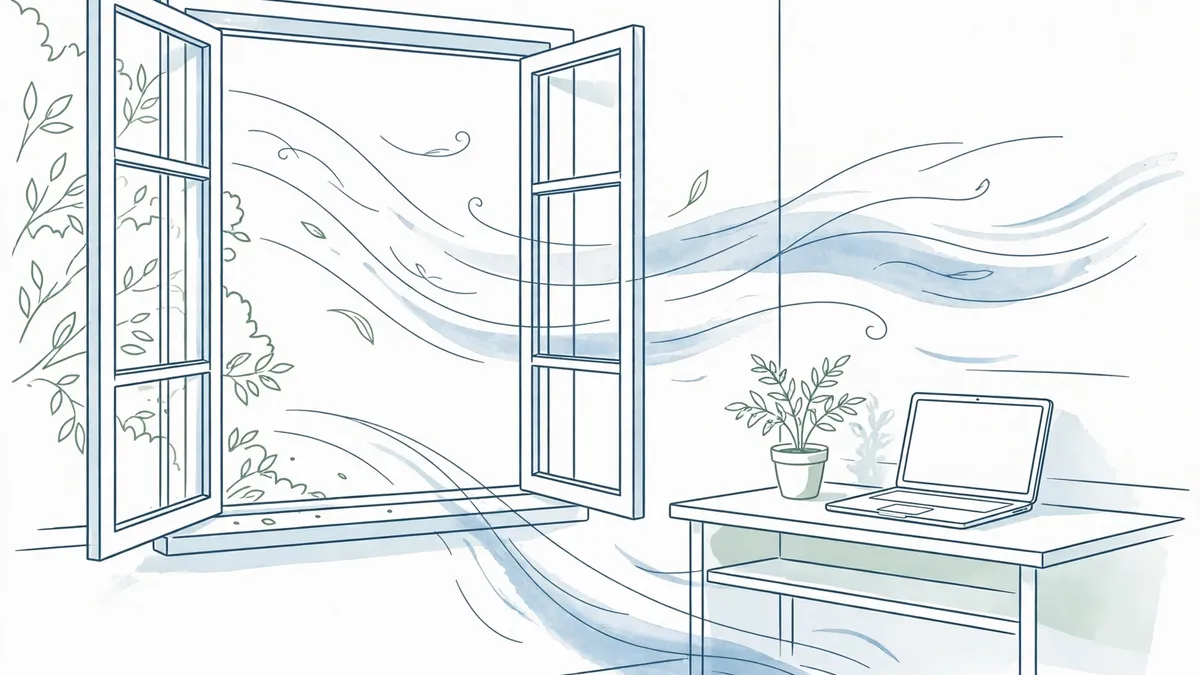
A small humidifier on the desk or in the bedroom is the cheapest fix, and a ten-dollar humidity meter tells you whether you need one. If the reading sits under 30%, run the humidifier. Clean it every few days, since a dirty humidifier grows things you do not want to breathe. Plants help a little with humidity and a lot with mood, but they are not a substitute for the meter.
Open a window for five to ten minutes a day, even when it is cold. A short burst of fresh air drops the concentration of airborne germs in the room without freezing the place out. Do it once in the morning and once after lunch. If you work in a shared office, crack the window near your desk and let the room cycle. Your coworkers will thank you, and the air will smell like outside instead of like a meeting room that has been closed since October.
What do you do when you get sick anyway?
You will get sick anyway, at least once. The plan for that day matters more than the plan for avoiding it. A good sick-day plan has four parts, and you should set it up now, while you are healthy. First, a handoff list: the two or three things only you can do this week, and who covers them. Write it down. Second, a message template that tells clients and your team you are out, when you will check in, and who to contact. Third, supplies at home: fluids, a thermometer, pain relief, tissues, and soup in the freezer. Fourth, a rule for when to call the doctor.
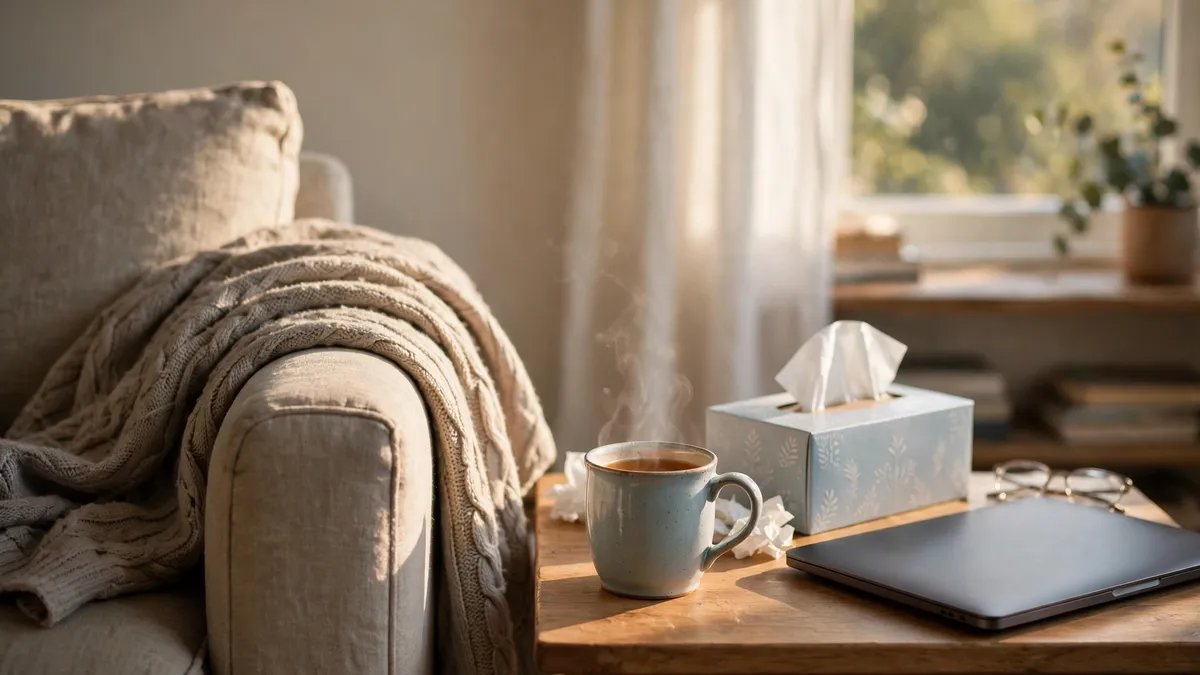
Stay home when you have a fever, a bad cough, or body aches, and stay home until you have been fever-free for twenty-four hours without fever medicine. That rule protects your team as much as it protects you. Working through flu spreads it to the people you sit next to, and it stretches your own recovery from a few days into a week or more. The work will wait. The launch will wait. A team that catches flu from the founder does not move faster.
Call your doctor promptly if you have trouble breathing, chest pain, a fever that stays high for more than three days, or symptoms that get worse after a few days of rest. Antiviral medicine for flu works best when it starts within two days of symptoms, so an early call matters more than a brave wait. Rest, drink fluids, and sleep. The emails will still be there tomorrow, and you will answer them faster healthy than sick.
The bottom line
Flu season started early in 2026, with the highest mid-October hospitalization rate since the 2010-11 season and 7.6% of specimens positive in week 42. The shot is the move that matters most, and November is not too late: protection takes about two weeks, and the peak usually lands between December and February. Get the shot this week, and ask about COVID-19 and RSV shots in the same visit.
Everything after the shot is maintenance, and maintenance is what desk workers skip. Seven to nine hours of sleep, morning daylight, a walk at lunch, soup in the freezer, a bottle of water on the desk, and a window cracked open twice a day. None of it is hard. All of it fails when you try to do it perfectly instead of doing it daily.
Set up the sick-day plan now, while you are healthy: a handoff list, a message template, and soup in the freezer. Stay home with a fever until you have been fever-free for twenty-four hours without medicine. The work waits. A founder who rests for three days ships faster than a founder who coughs through two weeks.
The vaccine changed more than the calendar did. All three components in the 2026-27 shot are new, including an update aimed at the H3N2 subclade K virus that spread widely last season, and a new mRNA option now exists for adults fifty and older. Get the shot first, then fix the room: humidity between forty and sixty percent, sleep seven to nine hours, and a sick-day plan written while you are still healthy.
Frequently asked questions
Is it too late to get a flu shot in November?
No. The CDC says September or October is ideal, but vaccination should continue after October and throughout the season while flu is circulating. Protection takes about two weeks to build, and flu usually peaks between December and February, so a shot in November still lands ahead of the peak.
Which flu vaccine should I get in 2026?
Any licensed flu vaccine for the 2026-27 season works. Adults 65 and older should ask for a high-dose, adjuvanted, or recombinant shot. A newly approved mRNA flu vaccine is available for adults age 50 and older. All three virus components in this season vaccine changed from last season, so last year shot does not carry over.
Does vitamin D prevent colds?
Vitamin D supports immune function, and low levels are common in winter when sun exposure drops, but no supplement guarantees you will not catch a cold. The practical step is to get your level tested, eat vitamin D rich foods like fatty fish and fortified milk, and talk to your doctor before taking a high-dose supplement.
How much sleep do you need to stay healthy in winter?
Most adults need seven to nine hours a night. Short sleep weakens the immune response and makes you more likely to catch a cold after exposure. A fixed wake time, a dark cool bedroom, and no screens in the last thirty minutes before bed do more than any supplement for sleep quality.
When should you stay home sick instead of working?
Stay home when you have a fever, a bad cough, or body aches, and until you have been fever-free for twenty-four hours without fever medicine. Working through flu spreads it to your team and stretches your own recovery from days into a week or more. Call your doctor promptly if you have trouble breathing, chest pain, or symptoms that get worse after a few days.
Want more practical guides like this?
Browse all 112 guides across 10 categories, no fluff, no paywall.
Browse all guides →Explore Health guides