
House Flipping for Beginners 2026: Buy Right, Renovate Smart, Sell for Profit
Margins fell to 21.5% in Q2 2026, but first-time flippers still profit when they buy by the 70% rule. Here is the real math, the costs, the financing, and the 6-month plan.
Yes, house flipping is still worth it in 2026, but only if you buy right. The typical gross margin fell to 21.5 percent in Q2 2026, so the profit is made at purchase, not at sale. Use the 70 percent rule, budget every cost before you offer, and plan to sell within 6 months.
Key numbers at a glance
- Typical gross margin, ATTOM Q2 2026: 21.5 percent, down from 27.6 percent a year earlier
- Typical gross profit, Q2 2026: 60,526 dollars, down from 71,000 dollars a year earlier
- Q1 2026 median gross profit: 66,000 dollars with 25.4 percent ROI
- Flips were 7.4 percent of all US property sales
- Hard money national average rate: 10.41 percent (Lightning Docs Q2 2026, 9,777 loans, 41 states)
- Average 30-year mortgage: about 6.76 percent (Freddie Mac, September 10, 2026)
- NAR median US home price: 412,000 dollars (Q4 2025)
- Realistic net profit target: 30,000 to 50,000 dollars per flip
- Selling costs: about 8 percent of ARV
- Hold target: 6 months or less
- $80,000 to $150,000 in liquid capital is what a typical mid-range flip needs, against a realistic net profit target of $30,000 to $50,000 per flip after all costs.
- 28 percent is the typical gross margin on a $100,000 to $200,000 purchase, the widest margin and the best place for a beginner to learn.
Last reviewed: November 2026.
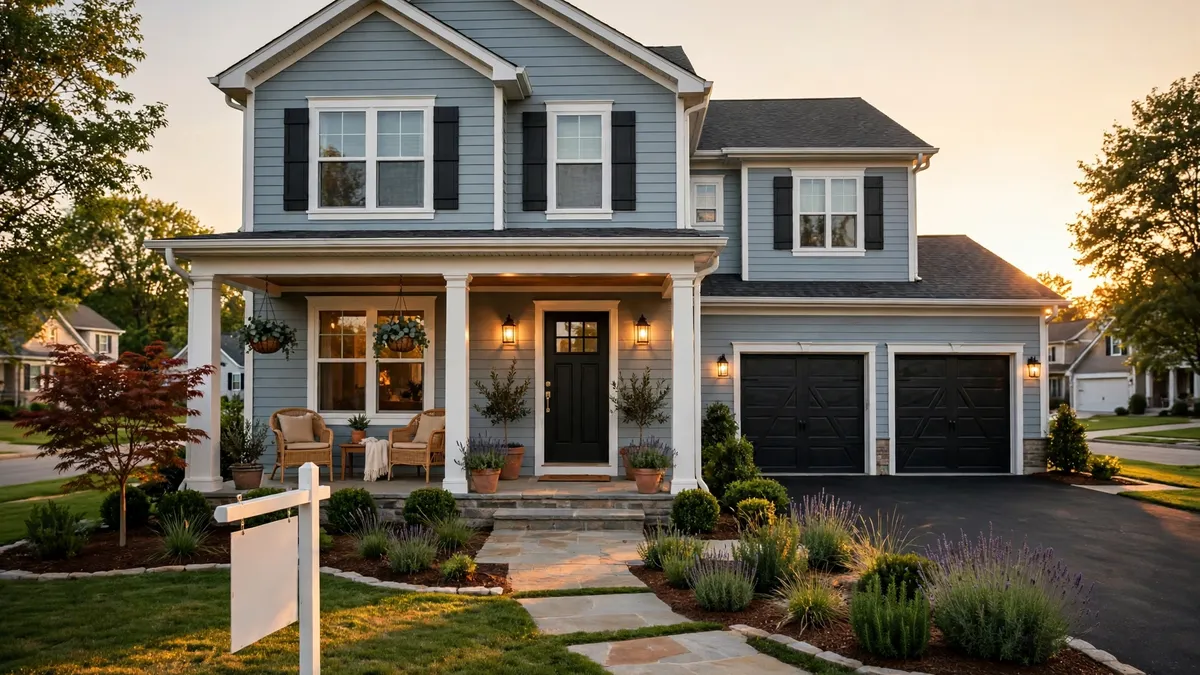
House flipping looks simple on television. Buy a tired house, fix it up, sell it for a big profit. The real version is slower, messier, and far more about math than about paint colors. The good news is that the math is learnable, and a first-time flipper who follows it has a real shot at a solid profit in 2026.
This house flipping for beginners 2026 guide is written for someone with no flipping experience and a real budget. It starts with the honest 2026 numbers, then walks through the 70 percent rule with a worked example, the full cost list, the financing choices, where to find a first deal, what to fix and what to skip, a realistic 6-month timeline, the five mistakes that sink beginners, and a checklist you can use before you make your first offer. Every number in this guide comes from the verified sources listed in the key numbers box above, and every calculation is shown so you can check it yourself.
What are the real house flipping numbers in 2026?
The 2026 numbers are tighter than a year ago, but flipping still pays when the deal is bought right. The ATTOM Q2 2026 home flipping report puts the typical gross margin at 21.5 percent, down from 27.6 percent a year earlier, and one of the lowest readings since 2008. The typical gross profit dropped to 60,526 dollars from 71,000 dollars a year earlier. Q1 2026 showed a median gross profit of 66,000 dollars with a 25.4 percent ROI. Flips made up 7.4 percent of all US property sales, so you are not alone in the market, and you are not early either. Competition for good deals is real.
Those are national averages, and your market decides your result. ATTOM data shows a clear sweet spot by purchase price. Homes bought for 100,000 to 200,000 dollars earn about 28 percent gross margin. Homes bought for 200,000 to 300,000 dollars earn about 26 percent. Homes bought for 300,000 to 400,000 dollars earn about 20 percent. The cheaper the buy, the wider the margin, which is why so many first flips happen in lower priced markets rather than in expensive coastal cities.
Entry prices for flip worthy homes show the same gap. In Detroit or Cleveland, flip worthy homes run 80,000 to 150,000 dollars. In Atlanta or Phoenix, they run 200,000 to 350,000 dollars. In Los Angeles or Seattle, they run 400,000 to 500,000 dollars. The NAR median US home price was 412,000 dollars in Q4 2025, so a typical American home is now priced above the sweet spot. That does not mean expensive markets are off limits. It means the margin math has to be even stricter there, because a 20 percent gross margin leaves little room for a surprise repair or an extra month on the market.
Set your expectations before you start. A typical mid-range flip needs 80,000 to 150,000 dollars in liquid capital, and a realistic net profit target is 30,000 to 50,000 dollars per flip after all costs. That is a good return on six months of work, but it is not a lottery win, and it is not the number you see on television. Budget about 8 percent of ARV for selling costs, and hold for 6 months or less, because every extra month of carrying costs eats directly into that 30,000 to 50,000 dollar target. If you are comparing flipping with holding a property for rent instead, our guide to buying your first rental property lays out the buy and hold math side by side.
Gross margin by purchase price, ATTOM 2026
| Purchase price | Typical gross margin | What it means for a beginner |
|---|---|---|
| 100,000 to 200,000 dollars | About 28 percent | Widest margin, best place to learn |
| 200,000 to 300,000 dollars | About 26 percent | Still strong, needs careful repair bids |
| 300,000 to 400,000 dollars | About 20 percent | Tight margin, small errors hurt |
The pattern is simple. A lower purchase price gives you more room to be wrong, and beginners will be wrong about something. A repair will cost more than the bid. A permit will take two extra weeks. A buyer will ask for a credit after inspection. On a 28 percent margin deal, those surprises are annoying. On a 20 percent margin deal, they can wipe out the profit. Pick your first market with that in mind, and let the margin table, not the city name, make the choice.
What is the 70 percent rule in house flipping?
The 70 percent rule says your maximum offer equals 70 percent of the after-repair value minus repair costs. After-repair value, or ARV, is what the finished home should sell for, based on recent sales of similar fixed-up homes nearby. The 30 percent you leave on the table is not waste. It covers selling costs, carrying costs, and your profit. Every deal you look at should pass through this one filter before you spend another minute on it.
Here is the worked example, step by step. Start with an ARV of 350,000 dollars. Get a rehab estimate of 45,000 dollars from a contractor, then add a 10 percent contingency of 4,500 dollars, because rehab estimates are almost always low. Your total repair budget is 49,500 dollars. Seventy percent of the 350,000 dollar ARV is 245,000 dollars. Subtract the 49,500 dollar repair budget, and your maximum offer price is 195,500 dollars. If you cannot buy at or below 195,500 dollars, the deal does not work, no matter how much you like the house.
Worked example: the 70 percent rule on a 350,000 dollar ARV
| Step | Calculation | Amount |
|---|---|---|
| After-repair value (ARV) | Based on 3 to 5 sold comps | 350,000 dollars |
| 70 percent of ARV | 350,000 x 0.70 | 245,000 dollars |
| Rehab estimate | Contractor bid | 45,000 dollars |
| Contingency, 10 percent | 45,000 x 0.10 | 4,500 dollars |
| Total repair budget | 45,000 + 4,500 | 49,500 dollars |
| Maximum offer price | 245,000 - 49,500 | 195,500 dollars |
Now compare two offers on the same house, so you can see how the rule protects you. Deal A is a purchase at 195,500 dollars, right at the rule. Deal B is a purchase at 230,000 dollars, because the seller talked you up by 34,500 dollars and the house has a nice yard. Both deals have the same 350,000 dollar ARV, the same 49,500 dollar repair budget, and the same 28,000 dollars of selling costs at 8 percent of ARV. In Deal A, the 30 percent buffer of 105,000 dollars covers the 28,000 dollars of selling costs and leaves room for carrying costs and profit. In Deal B, you have already spent 34,500 dollars of that buffer before the first hammer swings, which is more than the entire realistic net profit target of 30,000 to 50,000 dollars. One overpayment can turn a good flip into a break-even flip, and that is why the rule comes first and the feelings come second.
Three habits keep the rule honest. First, prove the ARV with 3 to 5 recent sold comps, not with listing prices and not with the price of the nicest house on the street. Second, get contractor bids before you make the offer, not after you close, because a bid after closing is a surprise, not a plan. Third, never skip the contingency. A 10 percent contingency on a 45,000 dollar rehab is 4,500 dollars, and it is the cheapest insurance in the whole deal. If you finish under budget, the contingency becomes extra profit. If you need it, and most first flips do, you will be glad it was in the math from day one.
What does a flip really cost, line by line?
A flip costs far more than the purchase price plus the rehab, and the hidden lines are where beginners lose money. Rehab plus carrying costs typically run 20 to 33 percent of ARV, which on a 350,000 dollar ARV is 70,000 to 115,500 dollars before you count the purchase itself. Add selling costs of about 8 percent of ARV, which is 28,000 dollars on the same home, and you can see why a deal that looks profitable at first glance can end up thin. Walk the full list before you offer, and put a number next to every line, even the small ones.
Full cost list for a flip
| Cost line | Typical range | Notes |
|---|---|---|
| Purchase price | Set by the 70 percent rule | Largest single line item |
| Closing costs on purchase | 2 to 5 percent of purchase price | Title, lender fees, recording |
| Rehab, materials and labor | Part of the 20 to 33 percent of ARV | Get 3 bids per trade |
| Permits and inspections | Varies by city | Required for structural, electrical, plumbing, HVAC work |
| Carrying costs | Part of the 20 to 33 percent of ARV | Loan payments, taxes, insurance, utilities, HOA fees |
| Selling costs | About 8 percent of ARV | Agent commissions, title fees, transfer taxes, buyer concessions |
| Capital gains tax | Depends on hold time and income | Profit on a hold under 1 year is taxed as short-term gain |
Carrying costs deserve a closer look, because they grow every single month you own the house. Loan payments if you financed the deal. Property taxes, prorated for your holding period. Insurance for a vacant or renovation property, which costs more than a normal homeowner policy and which many beginners forget to buy. Utility bills while you own the property. HOA fees if the home is in an association. None of these is large on its own. Together, over six months, they are one of the biggest lines in the whole deal, and they are the reason the 6-month hold target matters so much.
Taxes are the line most first-timers miss completely. Profit on a flip held less than one year is taxed as a short-term capital gain, which means it is taxed at your ordinary income rate, not at the lower long-term rate. Talk to a tax professional before your first flip, not after you sell, because the way you hold the property and the entity you use can change the result. And insure the property from day one. A vacant house with no insurance is a risk you cannot afford, and our landlord umbrella insurance guide explains how extra liability cover works once you own more than one property, even though a flip policy itself is a different product.
How do you pay for a flip?
Cash is simplest, hard money is fastest, and the right choice depends on how much cash you have and how fast you need to close. Most first flips use one of five funding routes, and each one trades cost against speed and control. Pick the route before you start looking at houses, because a seller who wants a fast close will not wait while you shop for a loan.

Financing options compared
| Option | Cost | Best for |
|---|---|---|
| Cash | No interest, no points | Buyers with 80,000 to 150,000 dollars liquid |
| Hard money loan | 9.5 to 13 percent plus 1 to 3 points, 6 to 18 months | Fast closes, 7 to 14 days to fund |
| HELOC | Variable, tracks prime plus margin | Owners with equity in a primary home |
| FHA 203k loan | 3.5 percent down, rehab rolled in | Owner occupants only, must live in the home |
| DSCR loan | Higher than conventional, 20 to 25 percent down | Rental investors, not designed for flips |
Cash is the simplest route. No interest, no points, no lender requirements, and no monthly payment eating your margin while you renovate. You need 80,000 to 150,000 dollars liquid for a typical mid-range flip, which is the full purchase plus rehab plus carrying costs. If you have that cash, use it for flip one. It removes the most stressful part of the deal, which is the clock ticking on an expensive loan.
Hard money is the most common route for flippers who do not have full cash. Hard money loans in 2026 run 9.5 to 13 percent interest plus 1 to 3 points, with terms of 6 to 18 months. Lightning Docs Q2 2026 data from 9,777 loans across 41 states shows a national average hard money rate of 10.41 percent and an average loan of 546,703 dollars. Do the arithmetic on that average loan: 10.41 percent of 546,703 dollars is about 56,912 dollars a year in interest, or about 28,456 dollars for six months, before points. Hard money lenders focus on the deal, not your credit, they fund fast, often in 7 to 14 days, and they lend up to 70 to 75 percent of ARV. That speed wins deals, but the interest is the price, and a slow flip on hard money is how beginners lose their profit to the lender.
A HELOC works if you have equity in your primary residence. Rates track prime plus margin, so they move, and they are typically higher and variable compared with a fixed mortgage. The Freddie Mac September 10, 2026 survey shows an average 30-year mortgage of about 6.76 percent, and HELOC rates sit above that. You can draw as needed during renovation, which is handy, but the risk is real: your primary home secures the line, so a flip that goes wrong puts your own roof at stake. Never borrow against your home for a first flip unless you can repay the line even if the flip loses money.
An FHA 203k loan is for owner occupants only. You must live in the property, it combines purchase and rehab into one loan, it needs a 3.5 percent down payment, and renovation costs roll into the mortgage. The rules on what qualifies are strict, and it is not for pure investors. A DSCR loan is built for rental property investors, based on projected rental income rather than your personal income, with 20 to 25 percent down and rates higher than conventional loans. It is not designed for flips, though some lenders allow short-term bridge use. If your exit plan is to keep the house as a rental instead of selling it, read our mid-term rental strategy guide before you choose the loan, because the loan and the exit plan have to match.
How do you find your first flip deal?
Good deals rarely sit on the public market at a discount, so you need more than one way to find them. The best first deal usually comes from a patient search across several channels at once, with the 70 percent rule applied to every single one. A deal that fails the rule is not a deal, no matter how the seller found you.

Start with the MLS and an investor friendly agent. Look for properties listed below 70 percent of ARV minus repairs, and filter for keywords like as is, handyman special, TLC needed, estate sale, and probate. An agent who works with investors will know which listings are stale, which sellers are motivated, and which neighborhoods have real comps. Tell the agent your exact buy box, meaning your price range, your target ARV, and your maximum offer formula, so they send you deals that fit instead of deals that waste your week.
Wholesalers are a second channel. They find off-market deals and assign the contract to you for a fee, and you pay their assignment fee on top of the purchase price. Verify their numbers independently, every time. Many wholesalers overstate the ARV and understate the repairs, because their fee depends on you saying yes. Run the 70 percent rule on the wholesaler price plus the assignment fee, not on the contract price alone, and walk away when the math fails.
Direct to seller marketing is slower but it finds deals nobody else sees. Driving for dollars means driving target neighborhoods and writing down tired houses, then contacting the owners. Skip tracing absentee owners, cold calling tax delinquent lists, and direct mail to high equity owners all work the same way: steady effort over months, not a single weekend. Bandit signs work only where they are legal, so check local rules first. This channel takes a marketing budget and consistent effort, so start it early, even before you are ready to buy.
Auctions, foreclosure sales, and tax sales can hold bargains, but they are the worst place for a first flip. Cash is often required the same day, there is usually no inspection period, title issues are common, and you compete with institutional buyers who have done this a hundred times. Networking is the safer long game: real estate investor meetups, contractors who hear about deals first, property managers, attorneys handling estates and divorces, and title companies who see transactions early. One good contractor contact can send you more real deals than a month of cold calls, so treat those relationships like the asset they are.
What should you fix, and what should you skip?
Fix what buyers see and what inspectors flag, and skip everything that does not pay back dollar for dollar. The rehab plan is where beginners either make their profit or spend it, and the difference is discipline. Every dollar should answer one question: will a buyer pay more for this, or will an inspector demand it anyway?
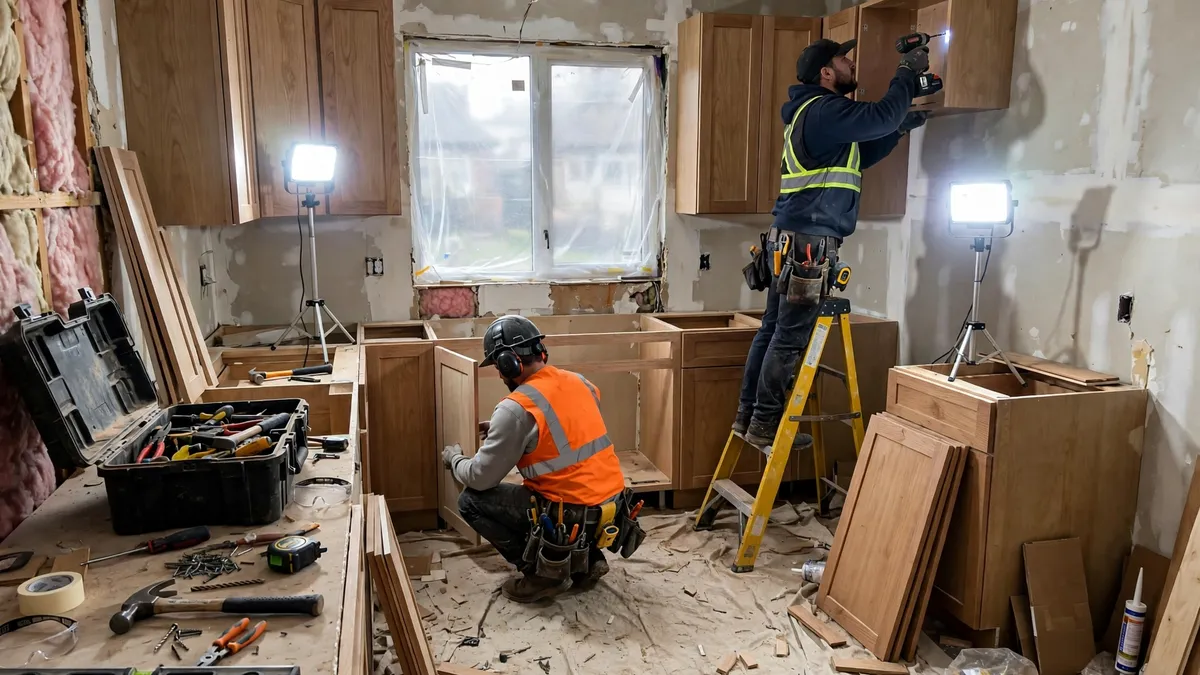
Fix the things that kill deals first. Roof leaks, foundation issues, HVAC that does not work, electrical safety hazards, plumbing leaks, water damage, and mold. A buyer inspector will find every one of these, and a lender may refuse the loan until they are fixed. Then fix what buyers see every day: kitchen cabinets, countertops, and appliances if they are dated, bathroom vanities, fixtures, and tile if they are worn, flooring throughout if it is damaged or outdated, paint inside and out, and curb appeal, meaning landscaping, the front door, the mailbox, and the lighting. These are the items that show up in photos and drive the offer price.
Skip what does not return dollar for dollar. Swimming pools, high-end smart home systems, luxury finishes in a mid-range neighborhood, room additions unless the layout is functionally broken, custom built-ins, and expensive landscaping beyond basic cleanup. A 50,000 dollar kitchen in a 200,000 dollar neighborhood does not return 50,000 dollars, because buyers in that neighborhood will not pay for it. Match the comps, not your taste. Walk the three best sold comps in person, write down their finishes, and copy that level, not a level above it.
Run the job like a small business. Get three bids for every trade, use licensed and insured contractors, and pull permits for structural, electrical, plumbing, and HVAC work. Unpermitted work kills deals at closing, when the buyer lender or insurer asks for the permit record. Order long lead time items early, meaning windows, doors, and cabinets, because a four-week wait for cabinets can stall the whole job. Stage the finished property, hire professional photos, and clean every surface before the first showing. A clean, staged, well photographed home sells faster, and faster is cheaper, because every week on the market is another week of carrying costs.
How long does a flip take, month by month?
A realistic flip takes 6 months from purchase to closing, and the schedule only works if the materials and the permits are ordered before the work starts. The timeline below is a working plan for a mid-range cosmetic to moderate rehab. A full gut job takes longer, and a paint and carpet flip takes less, but the sequence stays the same: buy, rough work, finish work, sell.
Month 1: buy and prepare
Find the deal, analyze the numbers with the 70 percent rule, make the offer, and close the purchase. Order materials, schedule contractors, and pull permits. This is also the month to confirm your insurance, set up utilities in your name, and lock the contractor start dates in writing. A week lost here is a week lost at the end, when carrying costs are highest.
Month 2: rough work
Demolition, rough electrical, plumbing, and HVAC, framing if the layout changes, inspections, then insulation and drywall. Nothing cosmetic happens yet, and that is correct. Rough work is the skeleton, and it has to pass inspection before you cover it up. Never let a contractor drywall over uninspected rough work, because the inspector can make you open it back up.
Month 3: finish work
Trim, paint, flooring, cabinets, countertops, fixtures, appliances, and the finish pass on electrical, plumbing, and HVAC. Then final inspections. This is the month the house starts to look like a home again, and it is also the month where small choices pile up, so keep a daily list of open items and close them as you go.
Month 4: list it
Punch list, deep clean, stage, professional photos, and list for sale at a competitive price based on sold comps, not on what you hope the house is worth. Price it to sell, not to sit. A listing priced right in month 4 beats a listing priced high in month 4 and cut in month 6, because buyers and agents notice price cuts and start to wonder what is wrong.
Month 5: sell it
Showings, offers, negotiation, and contract. Respond to offers within hours, not days, and negotiate inspection repairs with receipts in hand, so the buyer sees real costs, not guesses. Keep the contractor on call for small fixes the buyer asks for, because a fast yes on a small repair keeps a deal alive.
Month 6: close it
Buyer inspection, appraisal, and closing. If the house is not sold by month 6, reduce the price aggressively, because carrying costs eat profit fast. A price cut in month 6 hurts, but a seventh month of loan payments, taxes, insurance, and utilities hurts more, and a stale listing hurts most of all.
What mistakes do first-time flippers make?
Most first flips fail on boring mistakes, not on bad luck, and all five below are avoidable. Read them before your first offer, not after your first loss, because each one is cheaper to prevent than to fix.

Mistake 1: paying too much at purchase
The profit is made when you buy, not when you sell. If you violate the 70 percent rule, you start underwater, and no amount of good renovation can fix a bad purchase price. Walk away from deals that fail the rule, even when you have already spent time on them. The time is gone either way, but the money is not.
Mistake 2: underestimating rehab costs
Always add a 10 to 20 percent contingency, and get bids before you close, not after. A bid after closing is a surprise, and surprises on a rehab budget are always bad. If three contractors bid close together, trust the number. If one bid is far lower than the others, ask what it leaves out, because the missing work will show up later as a change order.
Mistake 3: over improving for the neighborhood
A 50,000 dollar kitchen in a 200,000 dollar neighborhood does not return 50,000 dollars. Buyers pay for the neighborhood first and the finishes second, and an appraiser will not give you credit for finishes the comps do not have. Match the comps, spend where buyers look, and save the luxury budget for a luxury neighborhood.
Mistake 4: doing the work yourself to save money
Your time has value, unlicensed work creates liability, and permits require licensed trades for most systems. A first-time flipper who tries to do the electrical or the plumbing usually ends up paying a licensed contractor to fix it, plus paying for the delay. Do the painting and the cleanup yourself if you want hands-on work, and hire licensed pros for everything that needs a permit or an inspection.
Mistake 5: holding too long
Every month of carrying costs reduces net profit, so price to sell at 90 days, not 180. Beginners hold because they hope for a higher price, and the hope costs more than the price cut would have. A flip that sells fast at a fair price beats a flip that sells slow at a hopeful price, every single time.
First-flip checklist
Use this list before you make your first offer, and do not skip a line because it looks like paperwork. Each item is a mistake that someone else already paid for.
- Define your target market and price range
- Build your team: agent, contractor, lender, attorney, title company
- Secure financing pre-approval or proof of funds
- Set up an LLC for liability protection
- Create a deal analysis spreadsheet with the 70 percent rule
- Identify 3 to 5 comps for ARV validation
- Get contractor bids before making an offer
- Include a 10 percent rehab contingency
- Calculate all carrying costs for 6 months
- Budget 8 percent of ARV for selling costs
- Verify permit requirements with the city
- Schedule inspections at each permit stage
- Order long lead time items early: windows, doors, cabinets
- Stage and photograph professionally
- List at a competitive price based on sold comps
- Respond to offers within hours, not days
- Negotiate inspection repairs with receipts in hand
- Close and move to the next deal
The bottom line
House flipping for beginners in 2026 is a math-first business, not a design hobby. The typical gross margin is 21.5 percent, the typical gross profit is 60,526 dollars, and a realistic net target is 30,000 to 50,000 dollars per flip. Those numbers reward the flipper who buys by the 70 percent rule and punishes the flipper who buys on hope.
Start in the 100,000 to 200,000 dollar purchase range, where margins run about 28 percent and mistakes are cheapest. Get three contractor bids before you offer, add a 10 percent contingency, budget 8 percent of ARV for selling costs, and plan to sell within 6 months. If the deal passes the 70 percent rule and the team is in place, make the offer. If it fails the rule, walk away and find the next one. The next deal is always cheaper than a bad deal.
The 70 percent rule is the whole game in one line: 70 percent of ARV minus repairs is your maximum offer. On a 350,000 dollar ARV with 49,500 dollars of repairs, that number is 195,500 dollars. Memorize it, print it, and run every deal through it before you fall in love with a house.
With the lowest margin since 2008, the offer price is the whole business. The 70 percent rule puts the maximum offer at $195,500 on a $350,000 ARV with $49,500 of repairs, and Deal B shows the cost of ignoring it: $34,500 over the rule is more than the entire $30,000 to $50,000 profit target, spent before the first hammer swings.
Frequently asked questions
Is house flipping profitable in 2026?
Yes, but margins are tighter. The typical gross margin was 21.5 percent in Q2 2026, down from 27.6 percent a year earlier. A realistic net profit target is 30,000 to 50,000 dollars per flip for a mid-range project after all costs.
How much money do I need to start flipping houses?
A typical mid-range flip needs 80,000 to 150,000 dollars in liquid capital for purchase, rehab, and carrying costs. Hard money can reduce the cash you need up front, but it adds interest and points to the total cost.
What is the 70 percent rule in house flipping?
The 70 percent rule says your maximum offer price equals 70 percent of the after-repair value minus repair costs. On a home with a 350,000 dollar after-repair value and 49,500 dollars of repair costs, the maximum offer is 195,500 dollars.
How long does a typical flip take?
Six months or less from purchase to closing is the target. Longer holds add carrying costs every month and raise market risk, so price to sell within 90 days of listing.
Do I need a license to flip houses?
No license is required to buy and sell your own properties. Contractors you hire must be licensed for permitted work. Check local rules on entity formation and dealer status if you flip often.
Want more practical guides like this?
Browse all 116 guides across 10 categories, no fluff, no paywall.
Browse all guides →Explore Real Estate guides